









Last reviewed 07/09/2025
Sustainability status
Not currently on risk lists but complete data may be missing on the status of the species. Read more in our sustainability guide.

Contraindications
A contraindication refers to a situation in which a herb should be avoided as it may exacerbate a medical condition or pose undue risk. Contraindications may arise through pharmacodynamic mechanisms (e.g., liquorice in uncontrolled hypertension or uterine stimulants during pregnancy) or pharmacokinetic effects that alter metabolism, absorption or elimination (e.g., tannin-rich herbs in iron-deficient anaemia).
In some cases, herbal actions may aggravate underlying pathologies (e.g., the use of bitter herbs in GERD). Recognition of contraindications requires thorough assessment of patient history, co-morbidities and medications. Consultation with a qualified medical herbalist will provide guidance to ensure safe and appropriate prescribing.
Please read the Contraindications section in this monograph.
-
Herb overview
Safety
Avoid in constipation, iron deficiency anaemia and malnutrition
Sustainability
No risk/Green
Key constituents
Flavonoids
TanninsQuality
Europe, North America, temperate Asia
Most commercial available supplies are cultivated
Low adulteration and contamination riskKey actions
Parturient
Uterine tonic
Antioxidant
NutritiveKey indications
Heavy menstruation
Diarrhoea
Partus preparator
DysmennorrheaKey energetics summary
Cooling
DryingSee below for discipline-specific energeticsPreperation and dosage
Leaf
Tincture (1:5 | 25%): 6–12 ml daily
Infusion: 12–24 g daily
-
How does it feel?
Raspberry leaf has a powerfully astringent action which is felt directly on tasting. The presence of astringency in a herb indicates tannin content, the taste of tannins is sour due to their natural acidity. The taste develops into bitter, sharp and slightly aromatic with hints of fresh mown grass and raspberry fruit. A herb that feels fresh and tonifying to drink as tea, whether used fresh or dried.

The taste of raspberry
The below qualities are derived from organoleptic assessment.
-
Into the heart of raspberry

Raspberry leaf (Rubus idaeus) Raspberry leaf is a cooling, drying medicine that brings tone to the inner landscape through its restorative, astringing and stimulating qualities. Astringent herbs like raspberry leaf constrict mucous membranes, an action by which raspberry also supports the healing of wounds and burns when applied externally (5).
This toning effect is a result of the tannin compounds found in raspberry leaf, which are abundantly present. Tannins create a tough impermeable ‘leather-like’ film over the mucous membranes, creating a protective layer between the inner and outer regions.
Energetically, this can also be considered a herb that helps to maintain boundaries (3), perhaps this could be seen also as a boundary keeper. This therapeutic action could be translated as one that may support a person to have stronger boundaries, perhaps given in lower ‘energetic’ doses to a patient for this application.
In the Galenic key of temperaments, all parts of the raspberry plant can be used as medicine, the roots, stalks, leaves, flowers and unripe fruit are cold and drying in the first degree. Which can be used for excess secretions, such as with menorrhagia (heavy menstruation), loose bowels, ulcers, sores and for the cooling of burns (6).
In traditional Chinese medicine (TCM), the Chinese raspberry (fu pen zi) belongs to the TCM category of herbs that ‘stabilise and bind’ meaning it has astringent qualities and acts primarily to address urinary and seminal dysfunctions, such as frequent urination, urinary incontinence, excessive or involuntary ejaculation (spermatorrhea), premature ejaculation and nighttime ejaculation. It does so by strengthening the Kidney organ system and nourishing, in particular, Kidney yang energy to prevent leakage of these substances.
This is particularly important for ejaculatory issues as, aside from their obvious physical and emotional toll, excessive semen production drains our vital essence (jing). This depletes the systems generally and will, in turn, exacerbate the condition.
Chinese raspberry also supports combined Kidney and Liver organ systems deficiency manifesting with visual deterioration, impotence, fertility issues and lower back pain (7).
-
What practitioners say
 Reproductive system
Red raspberry leaf is best known as a safe and widely used as a partus preparator, which Trickey recommends using in the last five months of pregnancy (9). Not only does this support the uterus in preparation for giving birth and ease the birth process, but it also helps in involuting the uterus after delivery, as well as stimulate the production of breast milk (3,9). In hand with the parturient (partus preparator) action of raspberry leaf, it is also a uterine tonic, astringent, spasmolytic and nutritive.
The leaf is also recommended in cases of heavy and painful menstrual bleeding, as well as for postoperative care of the uterus. This is due to its tonic and vulnerary action. It may also be applied in cases of excessive or abnormal vaginal discharge, although it is important to seek medical attention if discharge has changed.
Raspberry leaf may also be used to support an individual with endometriosis. In pregnancy it may also be effective for morning sickness and nausea that extends into the second trimester (3).
Skin health
Raspberry leaf tea can be made into a wash to aid the healing of wounds, burns, bleeding gums, tonsillitis, and conjunctivitis, and acts as helpful as a mouthwash for inflammation of the mouth and throat. It is also useful as an eye lotion for conjunctivitis (1,9).
Digestive system
Raspberry leaf has astringent and toning qualities which can be applied to soothe inflammation in the gastrointestinal tract, including for diarrhoea, indigestion and bloating (1,9).
Other
Raspberry leaf is also found to have antioxidant activity, making it a herb that may be additionally supportive for cellular health. It may be used as a conjunctive treatment for cell abnormalities (11). Raspberry leaf is rich in trace minerals such as iron, manganese, potassium, zinc, copper, calcium, magnesium and phosphorous, making it an excellent blood tonic and source of nutrients, an additional benefit to the expectant mother and her baby, or for anyone using the tea (10).
-
Raspberry research

Raspberry leaf (Rubus idaeus) Considering its long standing history of use and popularity, there have been remarkably few clinical trials for the efficacy and safety of red raspberry leaf.
Raspberry leaf in pregnancy: Its safety and efficacy in labor
This double blind, randomised, placebo controlled trial consisted of 192 low-risk women who gave birth between May 1999 and February 2000 at a hospital in Australia. Participants in the treatment group consumed raspberry leaf tablets at a dose of 2 x 1.2 g per day starting from 32 weeks until labour. Results found raspberry leaf was safe with no adverse effects on the mother or baby. The second stage of labour was shortened by an average of 9.59 minutes, and there was a lower rate of forceps delivery (19.3%) in the raspberry leaf group compared to placebo (12).
Use of herbal drugs during pregnancy among 600 Norwegian women in relation to concurrent use of conventional drugs and pregnancy outcome
In another study to investigate the use of herbal medicines by pregnant women, a structured questionnaire was given under interview of 600 women at Stavanger University Hospital Norway within five days after birth. Medical birth charts were reviewed with respect to pregnancy outcome. There was a significant association between the use of raspberry leaves and the reduced incidence of caesarean delivery (13).
Bioactivity and chemical profile of Rubus idaeus L. leaves steam-distillation extract
This study was carried out to examine the biological activities and the chemical composition of the extract of leaves of R. idaeus, obtained by steam distillation. The extract showed a strong antioxidant capacity and a modest antibacterial activity against two bacterial strains, as well as significant cytotoxic activity against tumor cell lines (Caco-2 and HL60). Additionally, raspberry leaf was found to be proliferative of healthy cells (11).
-
Historical use of raspberry

Raspberry leaf (Rubus idaeus) Although it has been a favourite of midwives for easing labour and encouraging milk production, red raspberry leaf has a history of being used for diarrhoea.
It has also been used for wound care. The infusion was used as a wash for conjunctivitis, bleeding gums, and a lotion for ulcers and other wounds. It can also be applied as a gargle for sore throats. A poultice of the leaf, combined with slippery elm, is recommended by Grieve for wounds and burns, and to draw infection (6).
Raspberry fruit has been used medicinally as well. Culpepper favoured the syrup of the fruit for digestive and dental complaints, for preventing miscarriage, and to prevent “sickness and retching”(8).
The leaves and roots are anti-inflammatory, astringent, decongestant, ophthalmic, oxytocic and mildly stimulant. Traditionally blackberry and raspberry leaves were used together to improve energy levels. The tea has also been used traditionally as a remedy for relieving painful menstrual cramps (9).
Externally, the leaves and roots are used as a gargle to treat tonsillitis and mouth inflammations, as a poultice and wash to treat sores, conjunctivitis, minor wounds, burns and varicose ulcers (6).
-
Raspberry’s herbal actions
Herbal actions describe therapeutic changes that occur in the body in response to taking a herb. These actions are used to express how a herb physiologically influences cells, tissues, organs or systems. Clinical observations are traditionally what have defined these actions: an increase in urine output, diuretic; improved wound healing, vulnerary; or a reduction in fever, antipyretic. These descriptors too have become a means to group herbs by their effects on the body — herbs with a nervine action have become the nervines, herbs with a bitter action are the bitters. Recognising herbs as members of these groups provides a preliminary familiarity with their mechanisms from which to then develop an understanding of their affinities and nuance and discern their clinical significance.
-
Raspberry’s energetic qualities
Herbal energetics are the description that herbalists have given to plants, mushrooms, lichens, foods and some minerals based on the direct experience of how they taste, feel and affect the body. All traditional health systems use these principles to explain how the environment impacts health, according to each of their philosophies and frameworks. These assessments of individual herbs, though they often do align, can differ from one another due to cultural differences regarding perspectives on how herbs taste versus their physiological effects. Find out more about traditional energetics in our article An introduction to herbal energetics.
Western energetics
Western energetics here are informed by The Energetics of Western Herbs by Peter Holmes, as well as traditional materia medica from Culpeper and Dioscorides.
Chinese energetics
Chinese energetics align with Bensky’s Chinese Herbal Medicine: Materia Medica.
-
What can I use raspberry for?

Raspberry leaf (Rubus idaeus) Raspberry is a common garden plant as the fruit is a well-known favourite. The leaves are the part that is most often used medicinally, which may be harvested for this purpose in early summer.
Raspberry leaf is a well-known and widely used herb for strengthening and toning the uterus and thus preparing the body for labour. It has a very long history of use for this purpose. It can also help to strengthen contractions and can prevent haemorrhage during labour (1,2). It has been seen to help improve labour outcomes, helping to reduce medical interventions and reducing the risk of excessive bleeding after birth (3).
Additionally, raspberry can help stimulate lactation as well as aid the body in recovery from childbirth. For these applications, it is most commonly drunk as at tea. Due to its uterine tonic action, raspberry leaf can also be used to treat dysmenorrhoea and menorrhagia, helping to reduce pain and heavy bleeding associated with menstruation (1,2).
The astringency of the leaf is due to its rich tannin content. Herbs with high tannins can be applied in cases of diarrhoea, if there is no serious underlying cause. The astringency helps to protect the gastric mucosa from inflammation and irritation. They can also be applied topically to wounds as a lotion or poultice to stop bleeding and aid healing (1,2).
Raspberry leaf infusion is also sometimes used for eye conditions, such as styes, conjunctivitis and blepharitis, much in the same way as eyebright (Euphrasia officinalis). The two together can be used in combination for this purpose (4).
-
Did you know?
According to Greek legend, raspberries were originally white. Whilst caring for the infant Zeus on Mount Ida, the nymph Ida pricked her finger on a thorny raspberry bush while picking the berries as an offering to Zeus to calm his crying. Her blood stained the fruits red forever (14).









 Reproductive system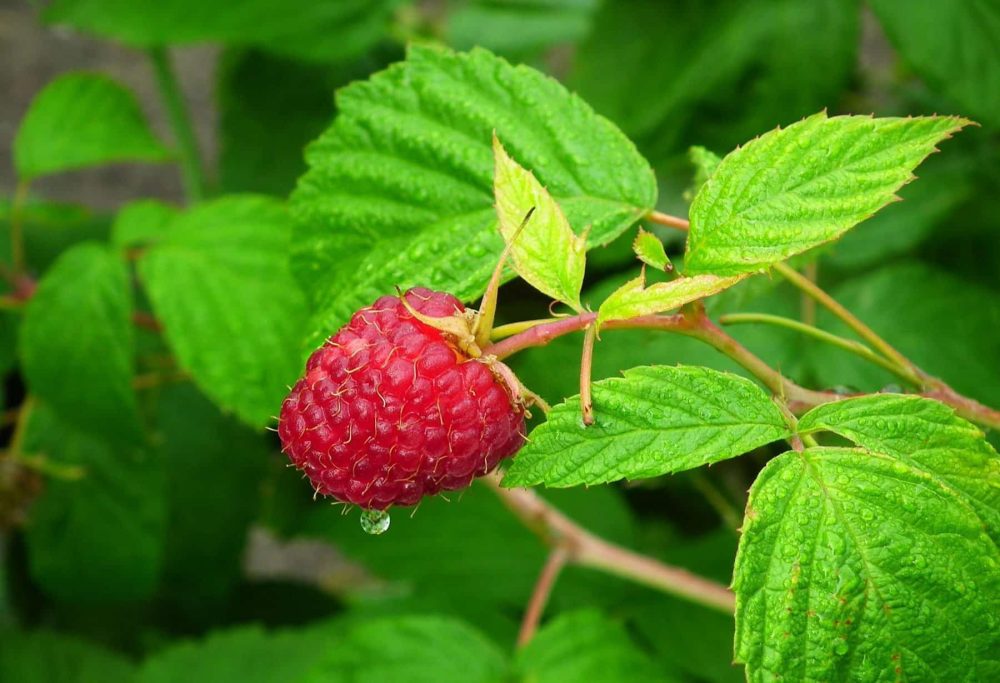
-
Botanical description
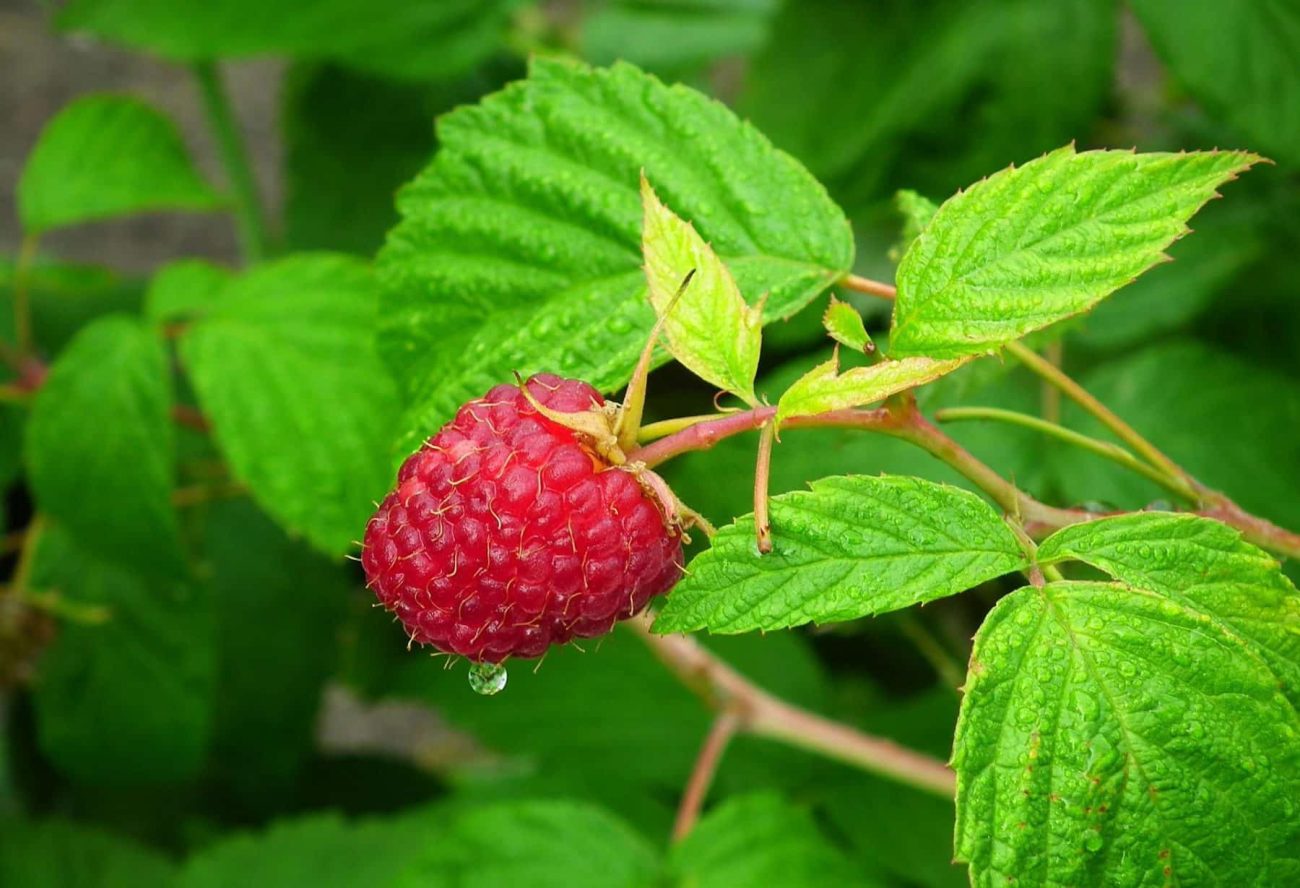
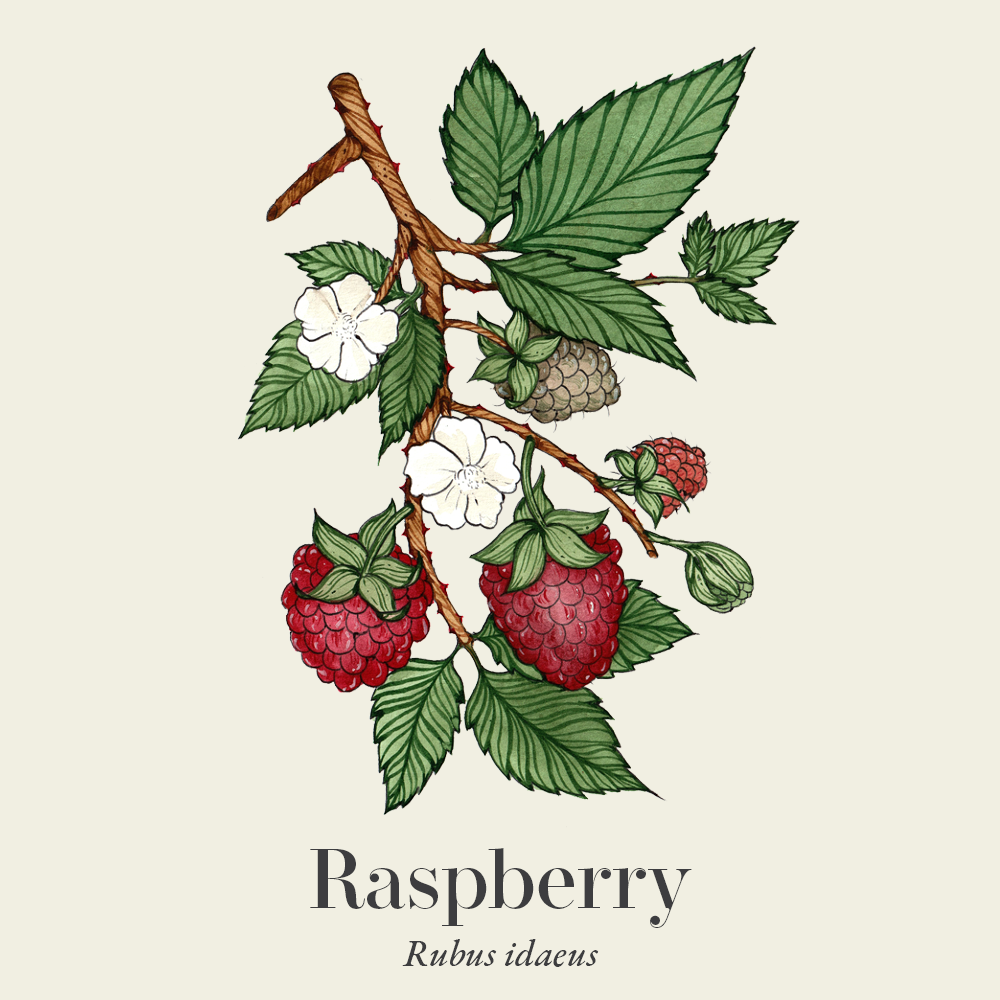
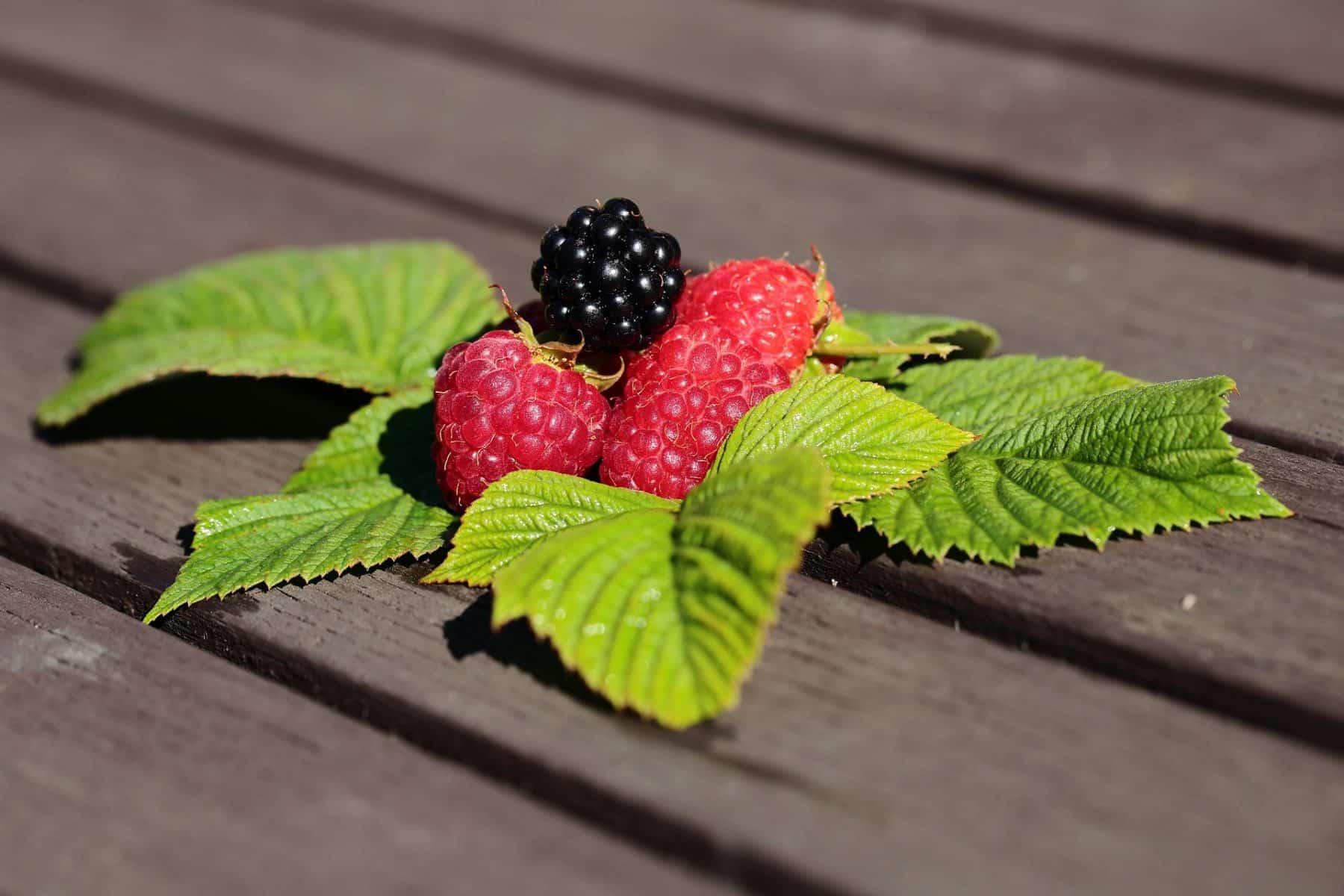
Raspberry is a deciduous biennial shrub that can grow up to two meters in height. It has many thick, reddish, woody stems that are usually prickly.
The pale green leaves are pinnate with three to seven oval, toothed leaflets and white hairs on the underside.
The flowers are white and appear in dense clusters from spring to summer. The fruits are red.
It is a common garden plant that is grown from suckers. The fruits are a common food, while the leaves are used medicinally (16).
-
Common names
- Raspberry
- Hindberry
- Bramble of Mount Ida
- Fu pen zi
-
Habitat
The plant is native to Europe and Asia, and is found in mountainous regions in cold climates, usually growing in forest, shrubland, wetlands (inland) or hedgerows (17).
-
How to grow raspberry
Plant raspberry canes 45 cm apart with 1.8 m between rows in moist but well-drained, fertile soil. For best results, plant in an open, sunny location. Firm in and water well. Tie in summer-fruiting canes as they grow, cutting back weak stems (autumn-fruiting varieties do not require support).
In spring, feed with a general fertiliser and mulch around plants to keep their roots slightly moist and to suppress weeds. Keep the plants well watered during dry spells. Harvest raspberries as and when they ripen. Cut autumn-fruiting canes back to the ground after fruiting, and cut back old canes of summer-fruiting varieties, leaving new canes for next year’s crop (19).
-
Herbal preparation of raspberry
- Fresh or dried leaf tea
- Tincture
-
Plant parts used
- Leaf (commonly used)
- Fruit
- Flower
- Root
-
Dosage
- Tincture (1:5 | 25%): 2–4 ml three times per day
- Fluid extract (1:1 | 25%): 4–8 ml three times per day
- Infusion/decoction: 4–8 g three times daily (9)
-
Constituents
Raspberry leaf constituents
- Flavonoids (up to 5%): Kaempferol and quercetin
- Tannins (up to 10%): Gallo- and ellagi-tannins
- Phenolic acids: P-coumaric, caffeic and gallic acids
- Volatile oils
- Minerals: Iron, manganese, potassium, zinc, copper, calcium, magnesium, phosphorous
- Vitamins: A, B complex, C and E (9)
Raspberry fruit constituents
- Anthocyanins
- Tannins
- Flavonoids
- Vitamin A
-
Raspberry recipe
A tea for heavy menstruation
Ingredients
- 15 g raspberry leaf
- 15 g lady’s mantle
- 20 g nettle leaf
How to make a delicious raspberry tea
Mix all ingredients together in a bowl. Mix 1 tsp of the blend into one cup boiling of water and let steep for 5–10 minutes. Drink one cup three times daily.


-
Safety
Raspberry leaf should be avoided in the first trimester of pregnancy due to the uterine stimulant properties (1,2,9). It is also advisable to take raspberry leaf under the supervision of a medical herbalist throughout the remainder of pregnancy and lactation (15).
As raspberry leaf contains tannins, it may affect the absorption of minerals and some drugs, and so it is recommended to take it two hours away from food or medicine (1,2,9).
-
Interactions
None known (1,2,9,15)
-
Contraindications
Avoid in constipation, iron deficiency anaemia and malnutrition due to high tannin content (1,2,9).
-
Sustainability status of raspberry
According to the IUCN Red List, raspberry is classified as ‘least concern’, as it grows abundantly and has no major threats to its habitat (18).
Raspberries are considered invasive, and can very quickly spread out of control when planted in a garden. It is advised to contain or manage its growth by creating a boundary around any existing plants (16).
Habitat loss and over-harvesting from the wild are two of the biggest threats faced by medicinal plant species. There are an increasing number of well-known herbal medicines at risk of extinction. We must, therefore, ensure that we source our medicines with sustainability in mind.
The herb supplement industry is growing at a rapid rate and until recent years a vast majority of medicinal plant produce in global trade was of unknown origin. There are some very real and urgent issues surrounding sustainability in the herb industry. These include environmental factors that affect the medicinal viability of herbs, the safety of the habitats that they are taken from, as well as the welfare of workers in the trade.
The botanical supply chain efforts for improved visibility (transparency and traceability) into verifiably sustainable production sites around the world is now certificated through the emergence of credible international voluntary sustainability standards (VSS).
Read our article on Herbal quality & safety: What to know before you buy and Sustainable sourcing of herbs to learn more about what to look for and questions to ask suppliers about sustainability.
-
Quality control
Herbal medicines are often very safe to take; however, their safety and efficacy can be jeopardised by quality issues. So, it is important to buy herbal medicines from a reputable supplier, from sources known to test their herbs to ensure there is no contamination, adulteration or substitution with incorrect plant matter, as well as ensuring that recognised marker compounds are at appropriate levels in the herbs.
Some important quality assurances to look for are certified organic labelling, the correct scientific/botanical name, and the availability of information from the supplier about ingredient origins. A supplier should be able to tell you where the herbs have come from, what contaminants are not in the herb, and what the primary compounds are.


-
References
- Mcintyre A. Complete Herbal Tutor : The Definitive Guide to the Principles and Practices of Herbal Medicine (Second Edition). Aeon Books Limited; 2019.
- Thomsen M. Phytotherapy Desk Reference. 6th ed. Aeon Books; 2022.
- Romm A. Botanical Medicine for Women’s Health. Elsevier; 2018.
- Mills SY. The Essential Book of Herbal Medicine. Editorial: Penguin; 1993.
- Holmes P. The Energetics of Western Herbs . Snow lotus press; 2020.
- Grieve M. A Modern Herbal | Raspberry. Botanical.com. Published 2025. Accessed September 7, 2025. https://www.botanical.com/botanical/mgmh/r/raspbe05.html
- Chen JK, Chen TT, Crampton L. Chinese Medical Herbology and Pharmacology. Art Of Medicine Press, Inc; 2004.
- Culpeper N. Culpeper’s Complete Herbal : Over 400 Herbs and Their Uses. Arcturus Publishing Limited; 2019.
- Fisher C. Materia Medica of Western Herbs. Aeon Books; 2018.
- Trickey R. Women, Hormones and the Menstrual Cycle.; 2024.
- De Santis D, Carbone K, Garzoli S, Laghezza Masci V, Turchetti G. Bioactivity and Chemical Profile of Rubus idaeus L. Leaves Steam-Distillation Extract. Foods. 2022;11(10):1455. https://doi.org/10.3390/foods11101455
- Simpson M. Raspberry leaf in pregnancy: Its safety and efficacy in labor. Journal of Midwifery & Women’s Health. 2001;46(2):51-59. https://doi.org/10.1016/s1526-9523(01)00095-2
- Nordeng H, Bayne K, Havnen GC, Paulsen BS. Use of herbal drugs during pregnancy among 600 Norwegian women in relation to concurrent use of conventional drugs and pregnancy outcome. Complementary Therapies in Clinical Practice. 2011;17(3):147-151. https://doi.org/10.1016/j.ctcp.2010.09.002
- Greathead P. Raspberry, Herb of the Year and Herb of the Month: History and Lore. The Herb Society of America Blog. January 13, 2020. Accessed December 23, 2025. https://blog.herbsociety.org/herb-of-the-month/raspberry-herb-of-the-year-and-herb-of-the-month-history-and-lore/
- Natural Medicines Database. Raspberry leaf. Therapeuticresearch.com. Published 2025. Accessed September 7, 2025. https://naturalmedicines.therapeuticresearch.com/Data/ProMonographs/Red-Raspberry#safety
- RHS. Rubus idaeus | common raspberry Fruit Edible/RHS Gardening. www.rhs.org.uk. https://www.rhs.org.uk/plants/16137/rubus-idaeus/details
- Royal Botanical Gardens Kew. Rubus idaeus L. | Plants of the World Online | Kew Science. Plants of the World Online. https://powo.science.kew.org/taxon/urn:lsid:ipni.org:names:298089-2
- Khela S. IUCN Red List of Threatened Species: Rubus idaeus. IUCN Red List of Threatened Species. Published May 30, 2012. https://www.iucnredlist.org/species/203456/2765767
- RHS. Raspberries. www.rhs.org.uk. https://www.rhs.org.uk/fruit/raspberries/grow-your-own
Meet our herbal experts
Our monographs are written by our monograph authors and edited, reviewed and updated by Herbal Reality.
Meet our Herbal Reality team or explore our Herbal Reality authors.