












10 mins prep time | 6 weeks fermenting time | Suitable for beginners | Vegetarian
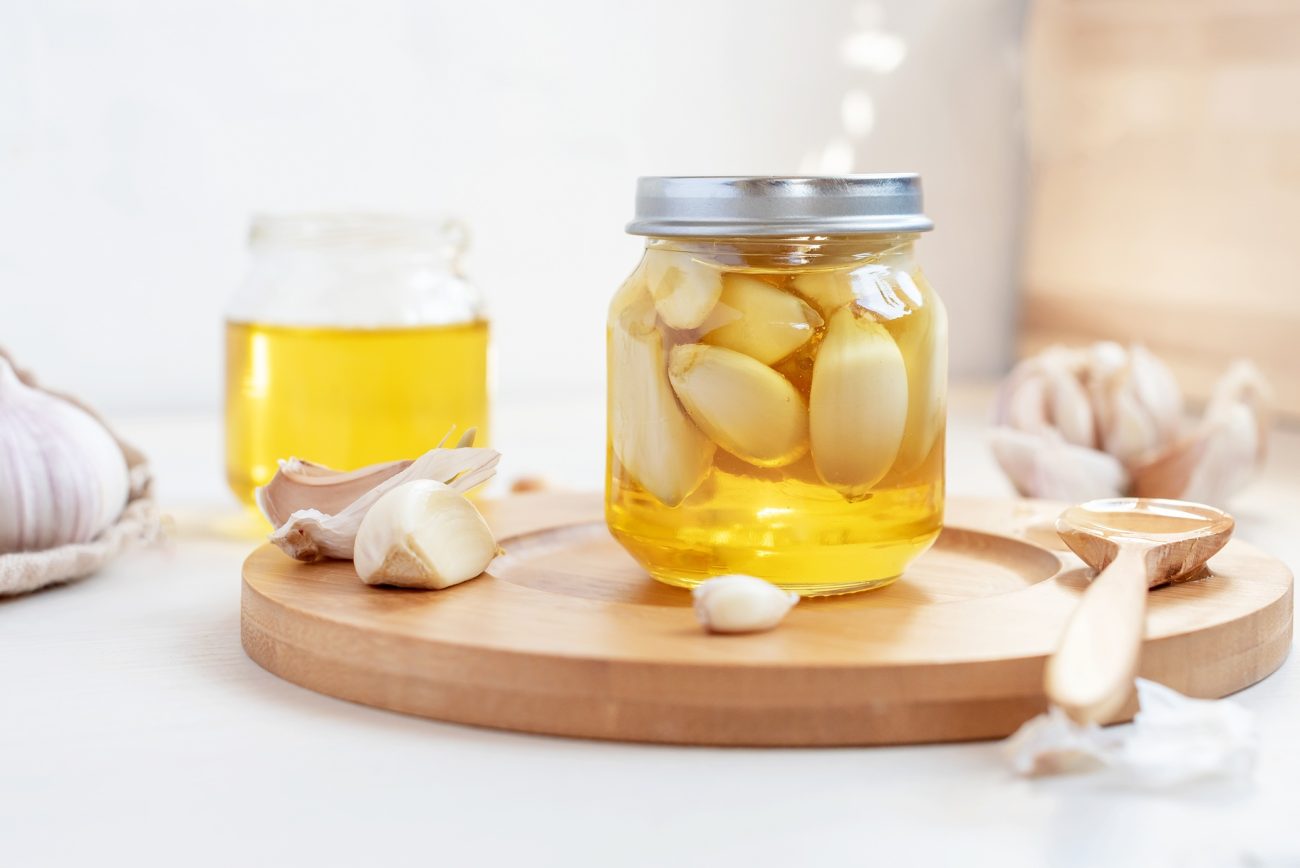
This simple and traditional fermented garlic honey recipe is suitable for beginners and also makes a great activity to do with children. Honey has a rich history of use as a medicine — with some sources dating back over 8000 years (1). The use of honey spans different cultures around the globe, from ancient Egyptian, Greek, Roman and Persian medical practices, to Ayurveda and traditional Chinese medicine still today.
Some of its traditional uses include as a remedy for wounds, digestive complaints and lung issues (1). Modern research confirms many of these applications, including its antimicrobial, antioxidant, antifungal and anti-inflammatory properties (1,2). This recipe combines the varied medicinal effects of honey with those of garlic, another plant with a wealth of uses. This recipe can be used to support respiratory, cardiovascular, digestive and immune health.
Fermentation occurs slowly as a result of the osmotolerant yeasts and lactic acid bacteria in the honey coupled with the water content in the garlic. The release of water from the garlic into the honey solution promotes the yeasts and bacteria to gently ferment the sugars. This type of fermentation is mild and self limiting — meaning it will cease fermenting on its own accord once the microbes have consumed all they can (3). The high sugar and acidic environment of the honey also prevents the microbes from continually fermenting (3,4).
Ingredients
- 3 large garlic bulbs
- 500 g raw, organic, unpasteurised honey
How to make fermented garlic honey
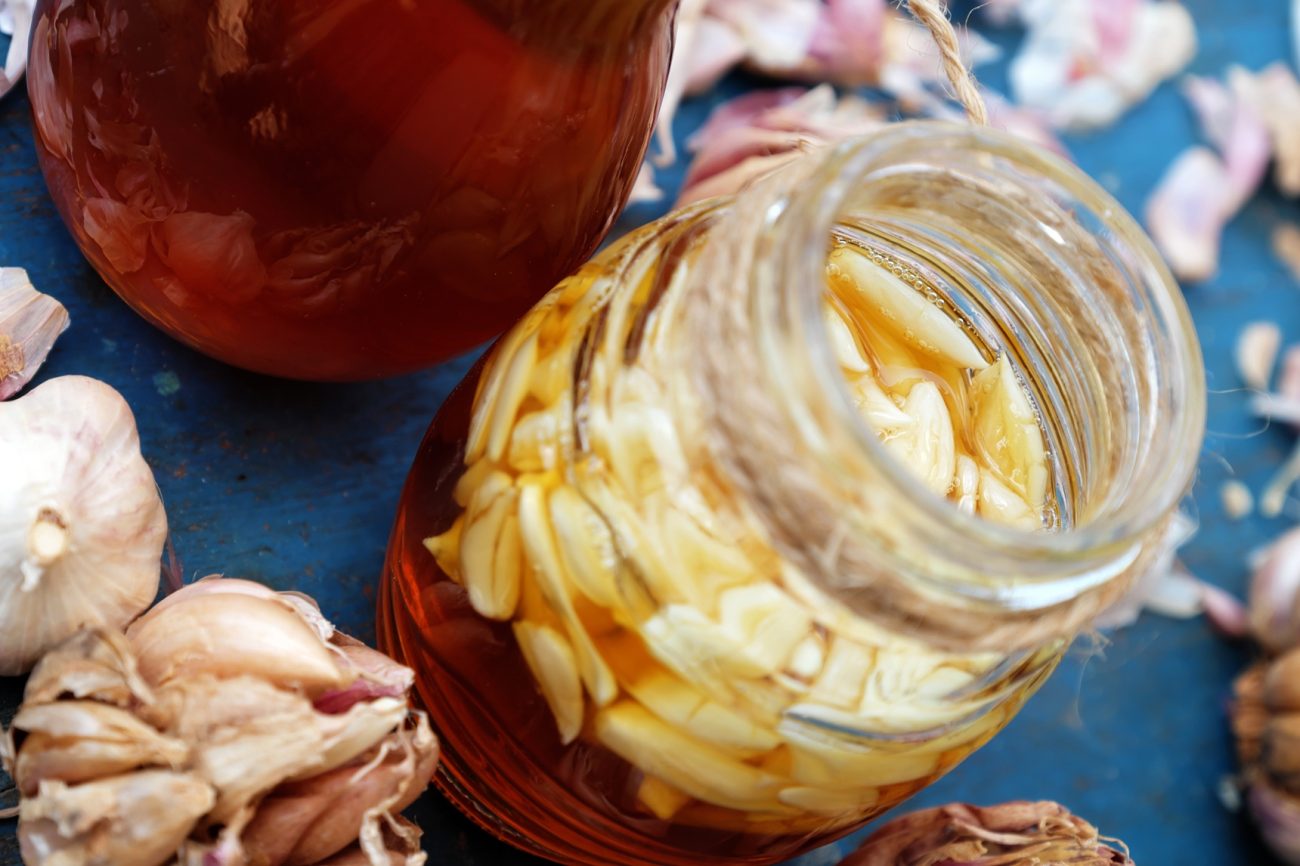
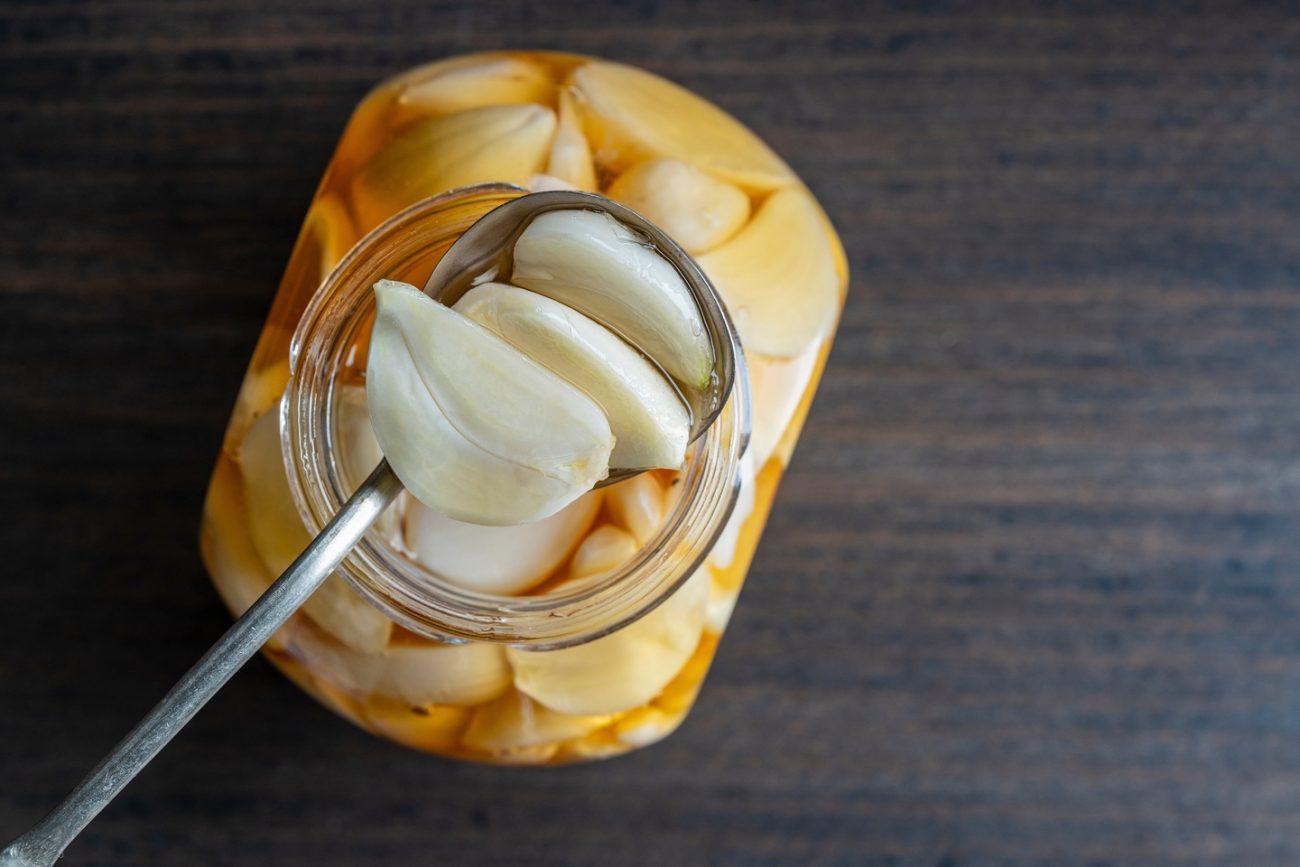
- Peel the cloves and slightly crush or bruise each clove but do not cut or mince.
- Place the garlic into a 750 ml kilner jar.
- Pour the honey over the garlic, making sure all the garlic is fully submerged.
- Leave 2–3 cm of space at the top.
- Stir gently to remove all air bubbles.
- Ensure no garlic is exposed above the honey. There is the option to use a fermentation weight, or a small saucer to ensure all the garlic is fully submerged.
- Allow to ferment for between 4–6 weeks.
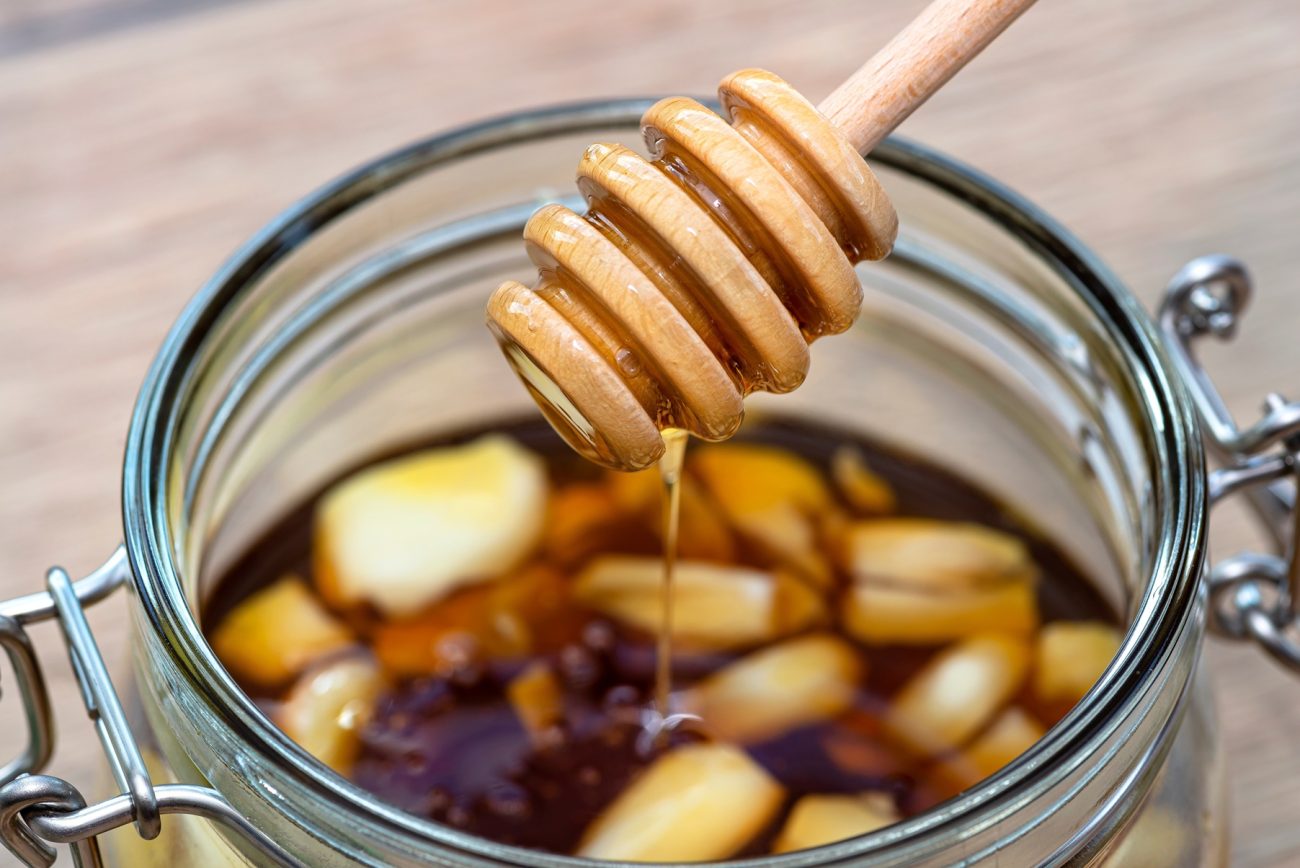
How to use homemade garlic honey
Take one teaspoon of the honey at the first sign of symptoms. For a more potent dose, include a garlic clove in the spoonful.
Honey has a demulcent action, and therefore this remedy can be used to soothe sore throats and coughs.
Avoid in infants under one year old.
How to store fermented honey
Storing the honey at room temperature will allow the gentle fermentation to occur, whereas cooler temperatures will limit fermentation.
Medicinal benefits of garlic
Garlic (Allium sativum): A broad spectrum antimicrobial herb, expressing antibacterial, antiviral and antifungal properties, including against gram positive, gram negative and some antibiotic resistant strains in vitro (5,6).
Garlic also provides considerable cardiovascular support, and research shows it can reduce both systolic and diastolic blood pressure, helping to support those with hypertension (7,8). Many of its medicinal actions result from levels of alliin and allicin, the latter of which is released upon breaking a clove, whilst the former is stable in intact garlic (9).


FAQs
What other herbs can I add to fermented honey?
Additional herbs such as thyme (Thymus vulgaris), rosemary (Rosmarinus officinalis) or ginger (Zingiber officinale) can be added for additional antibacterial and antiviral actions. The ginger has its own natural sugars and water content and so, will increase fermentation activity slightly and more bubbles may be noticeable, however it will still be self limiting (3).
How do I know if my garlic honey ferment has gone off?
Normal signs of fermentation include smelling sweet, garlicky or slightly savoury; gentle bubbling and garlic darkening or softening. The honey will also naturally become thinner over time. If there are any signs of mould (white, green, black or blue); the garlic is exposed above the honey with mould growth or there is a rotten smell then discard the ferment on the compost (3,4).
Can garlic honey cause botulism?
The risk is extremely low as honey is acidic and has a high sugar concentration. No extra water is added to the ferment. Follow the precautions mentioned above to minimise the risk including submerging the garlic and not adding water (3).
References
- Eteraf-Oskouei T, Najafi M. Traditional and Modern Uses of Natural Honey in Human Diseases: A Review. Iranian Journal of Basic Medical Sciences. 2013;16(6):731. https://pmc.ncbi.nlm.nih.gov/articles/PMC3758027/
- Palma-Morales M, Huertas JR, Rodríguez-Pérez C. A Comprehensive Review of the Effect of Honey on Human Health. A Comprehensive Review of the Effect of Honey on Human Health. 2023;15(13):3056-3056. https://doi.org/10.3390/nu15133056
- Katz SE. The Art of Fermentation : An In-Depth Exploration of Essential Concepts and Processes from around the World. Chelsea Green Pub; 2012.
- Redzepi R, Zilber D, Sung E, Troxler P. The Noma Guide to Fermentation. New York Artisan; 2018.
- Li G, Ma X, Deng L, et al. Fresh Garlic Extract Enhances the Antimicrobial Activities of Antibiotics on Resistant Strains in Vitro. Jundishapur Journal of Microbiology. 2015;8(5). https://doi.org/10.5812/jjm.14814
- Mcintyre A. The Complete Herbal Tutor : The Definitive Guide to the Principles and Practices of Herbal Medicine. Aeon; 2019.
- Wang HP, Yang J, Qin LQ, Yang XJ. Effect of Garlic on Blood Pressure: A Meta-Analysis. The Journal of Clinical Hypertension. 2015;17(3):223-231. https://doi.org/10.1111/jch.12473
- Ried K. Garlic Lowers Blood Pressure in Hypertensive Individuals, Regulates Serum Cholesterol, and Stimulates Immunity: An Updated Meta-analysis and Review. The Journal of Nutrition. 2016;146(2):389S396S. https://doi.org/10.3945/jn.114.202192
- Amagase H. Clarifying the Real Bioactive Constituents of Garlic. The Journal of Nutrition. 2006;136(3):716S725S. https://doi.org/10.1093/jn/136.3.716s