











SSRIs are the mainstay treatment for depression, but how does their mechanism, tolerability, efficacy and safety profile compare with St John’s wort, a herb with millennia of use?
Major depressive disorder (MDD) is a leading cause of disability worldwide, with the World Health Organisation estimating that approximately 332 million people are currently affected, representing close to four per cent of the global population, and disproportionately impacting women (1).
Despite this scale, fewer than one in three affected individuals receive adequate treatment, a gap that reflects both access barriers and, for many patients, dissatisfaction with existing options once treatment is started (1).
Two markedly different treatment paradigms currently dominate clinical practice and public interest alike: selective serotonin reuptake inhibitors (SSRIs), the pharmaceutical mainstay of modern psychiatry, and St John’s wort, a botanical remedy with a documented history stretching back over two thousand years. Both are now supported by a substantial and, in places, directly comparative body of clinical evidence.
This article examines the two side by side, considering their pharmacological mechanisms, the strength of the clinical evidence for each, and the safety and interaction profile a patient or prescriber should reasonably weigh before choosing between them.
Historical and traditional context of St John’s wort
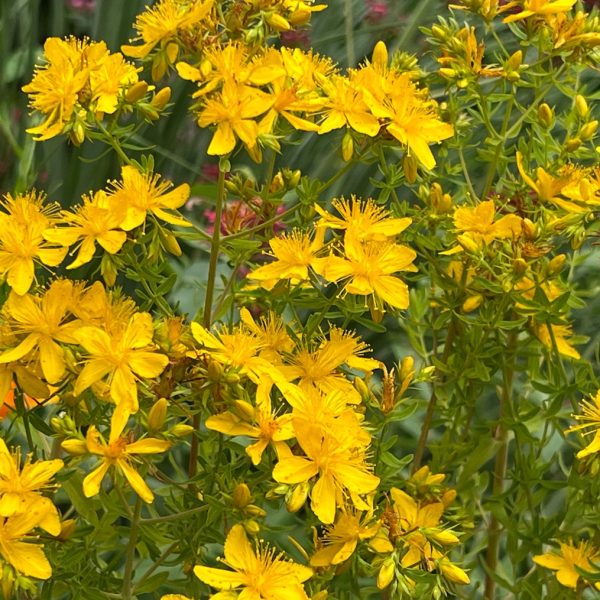
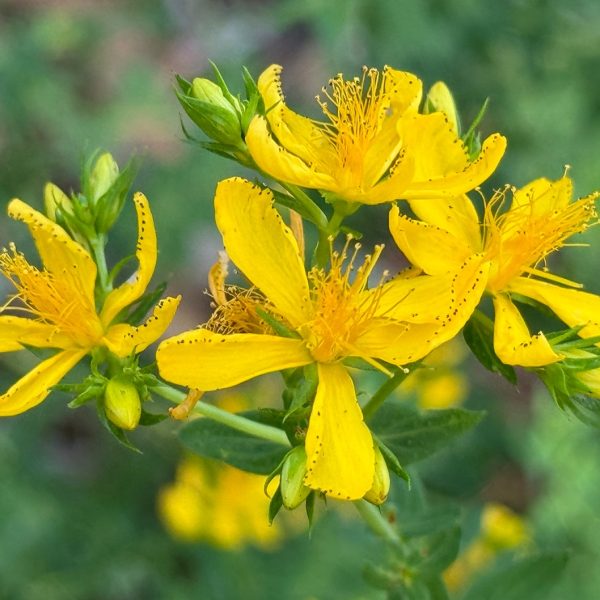
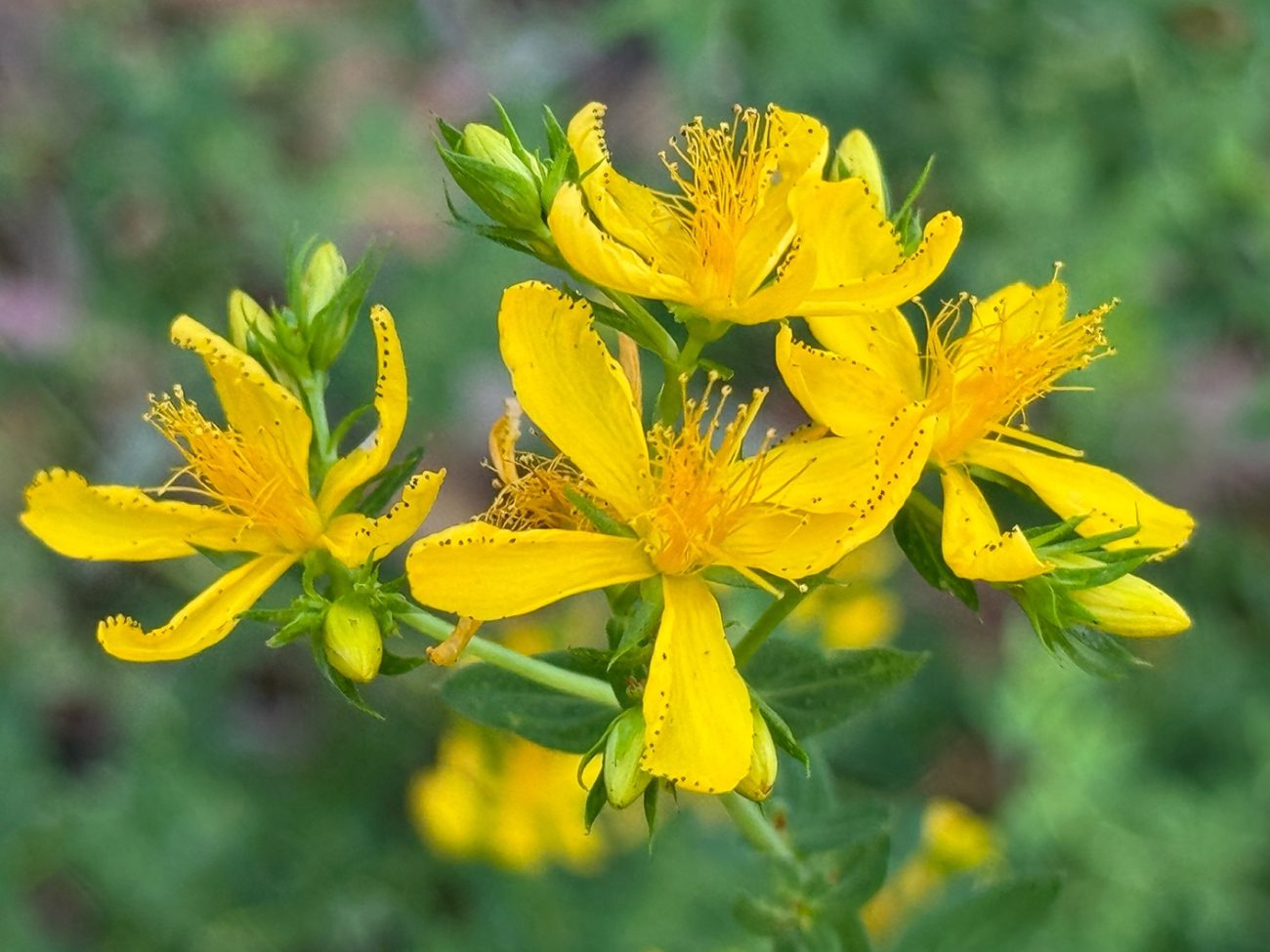
St John’s wort (Hypericum perforatum) is one of the most extensively documented botanical medicines in the Western herbal tradition, with its recorded use for internal and external ailments dating to the ancient Greeks (2). Historically, the plant was applied to wound healing and a range of nervous complaints, and its common name is generally attributed to its flowering period, which coincides with the feast of St John the Baptist in late June (2).
What distinguishes this particular herb from many others carrying similar folkloric weight is the extent to which its traditional reputation has since been formally tested: in Germany, it holds licensed medicinal status and is prescribed for mild to moderate depression with a frequency comparable to conventional antidepressants, a regulatory position not mirrored in the United Kingdom nor United States. This trajectory, from folk remedy to a subject of controlled clinical trials, provides the necessary context for the pharmacological comparison that follows.
Mechanism of action: SSRIs
Selective serotonin reuptake inhibitors (SSRIs) act primarily by binding to the serotonin transporter on the presynaptic neuronal membrane, blocking the reuptake of serotonin following its release into the synaptic cleft (3). In practical terms, this means more serotonin remains available in the space between neurons, prolonging its effect on postsynaptic receptors. Somewhat counterintuitively, this initial increase in synaptic serotonin does not produce an immediate clinical benefit; rather, it first stimulates inhibitory presynaptic 5-HT1A autoreceptors, which temporarily suppress neuronal firing.
Only after a period of approximately two to six weeks, as these autoreceptors gradually desensitise, does serotonergic transmission increase more substantially (4). This adaptive delay is the most widely accepted explanation for the well-documented lag between starting an SSRI and experiencing meaningful symptomatic improvement, a feature with real clinical significance, as it contributes to early discontinuation in some patients.
Three commonly prescribed agents in this class are sertraline, fluoxetine and escitalopram, which differ chiefly in half-life and tolerability profile. More recent pharmacological research has additionally implicated modulation of nicotinic acetylcholine receptors in SSRI action, suggesting that the classical serotonin-reuptake model, while foundational, may not represent the complete mechanistic picture (5).
Mechanism of action: St John’s wort
Where SSRIs achieve their effect through a single, well-characterised molecular target, St John’s wort operates through a considerably broader pharmacological profile. Its two principal active constituents, hyperforin and hypericin, are understood to inhibit reuptake of serotonin, noradrenaline and dopamine with roughly comparable potency, a property researchers have termed non-selective reuptake inhibition (6). This distinguishes the herb mechanistically from virtually all conventional antidepressant classes, which typically act on one or two neurotransmitter systems rather than three.
Hyperforin, generally considered the principal contributor to this activity, is thought to act through a non-competitive mechanism involving elevation of intracellular sodium ion concentration, rather than through direct transporter blockade as seen with SSRIs (6). The extract has also been associated with additional receptor-level changes with chronic use, including modulation of beta-adrenergic and serotonin receptor density, alongside weak monoamine oxidase inhibitory activity at the level of the whole plant extract (9).
It is worth stating plainly, in the interest of scientific accuracy, that researchers examining this herb have consistently found its behaviour in living systems more complex than laboratory reuptake assays alone would predict, and a fully agreed mechanistic account remains elusive (6,9). This pharmacological breadth, while plausibly contributing to its clinical effect, is also directly relevant to the interaction risks discussed later in this article.
Clinical evidence: Efficacy comparison
The most robust evidence directly comparing the two treatments comes from a meta-analysis pooling twenty-seven randomised controlled trials and 3,808 patients (7). This analysis found response and remission rates for St John’s wort to be statistically comparable to those achieved with SSRIs, with pooled rate ratios close to 1.0 for both outcomes, indicating no clinically meaningful difference in how many patients improved or achieved full remission (7).
Two further findings from this same body of evidence are worth highlighting specifically. First, patients receiving St John’s wort were significantly less likely to discontinue treatment prematurely than those receiving SSRIs, reflected in a pooled odds ratio well below 1.0 (7). Second, the overall rate of adverse events was significantly lower in the St John’s wort groups, a finding consistent across the pooled trials (7). Taken together, these results suggest that, for the population studied, St John’s wort performs comparably to SSRIs on core efficacy measures while being somewhat better tolerated over the treatment course.
This evidence has proven sufficiently robust to inform clinical guidance from established psychiatric bodies, several of which now recognise St John’s wort monotherapy as a reasonable option specifically for mild to moderate depression. A limitation deserves emphasis here, and it is an important one: the overwhelming majority of trials in this evidence base recruited patients with mild-to-moderate illness, and reliable data addressing severe depression remain sparse. Consequently, SSRIs, alone or in combination with other treatment modalities, continue to represent the more appropriate first-line choice where illness severity is greater or where risk of self-harm is present.
Safety, side effects and drug interactions

SSRIs, despite a favourable overall safety margin relative to older antidepressant classes, carry a well-documented side effect profile. Sexual dysfunction is among the most consistently reported, affecting a substantial proportion of patients across studies and varying by specific agent (8). Nausea, insomnia and a recognised discontinuation syndrome, which can include dizziness and brief sensory disturbances sometimes described by patients as “brain zaps,” are additional concerns, particularly with shorter half-life agents (5).
St John’s wort’s comparatively favourable trial-level tolerability, described in the previous section, should not be interpreted as an absence of risk. Its principal hazard lies not in direct toxicity but in pharmacokinetic drug interaction: the herb is a potent inducer of cytochrome P450 enzymes, most notably CYP3A4, meaning it accelerates the liver’s breakdown of numerous other medications (10,11). This can meaningfully reduce the effectiveness of oral contraceptives, anticoagulants such as warfarin, ciclosporin, and several antiretroviral agents, with documented clinical consequences including unintended pregnancy, inadequate anticoagulation, and, in transplant recipients, graft rejection (10,11).
Critically, the degree of this risk correlates directly with the hyperforin content of the specific preparation consumed, meaning interaction potential differs meaningfully between commercially available products rather than being a fixed property of the herb itself (12). A separate and mechanistically distinct concern arises from the herb’s own serotonergic activity: when combined with an SSRI, St John’s wort carries a pharmacodynamic risk of serotonin syndrome, entirely independent of the metabolic interactions described above (11). The clinical message here is unambiguous: a natural origin carries no inherent guarantee of safety, and this distinction warrants clear communication to any patient considering either option.
Widening the lens: Benzodiazepines and passionflower
Depression and anxiety disorders frequently co-occur, and a comparable conventional-versus-herbal contrast exists within anxiolytic treatment specifically. Benzodiazepines act through positive modulation of the gamma-aminobutyric acid type A (GABA-A) receptor, producing rapid and pronounced anxiolytic and sedative effects.
Their clinical use, however, is generally restricted to short-term management, given the well-established risks of tolerance and physical dependence associated with prolonged exposure. Passionflower (Passiflora incarnata) presents a herbal counterpart with its own long tradition as a calming remedy, and contemporary evidence suggests a comparatively favourable safety profile, albeit with a more modest and slower-onset anxiolytic effect than that achieved with benzodiazepines.
The underlying pattern mirrors that observed between St John’s wort and SSRIs earlier in this article: herbal options frequently trade rapid, potent efficacy for a gentler and generally better-tolerated therapeutic course. Given the depth of evidence available specifically in this area, a fuller comparison between benzodiazepines and passionflower would merit dedicated treatment in its own right, extending beyond the scope of the present discussion.
Conclusion: An empowered, balanced perspective
Neither St John’s wort nor SSRIs can reasonably claim universal superiority; each occupies a defensible place within the treatment landscape, with the appropriate choice depending on illness severity, a patient’s medical history, and their individual tolerance for particular categories of risk. SSRIs remain the more appropriate first-line option where depression is moderate to severe, supported by an extensive and varied evidence base spanning decades.
St John’s wort, meanwhile, offers a genuinely evidence-supported alternative for milder presentations, provided its interaction risks are properly understood, and its use is guided by a qualified healthcare professional rather than assumed safe by virtue of its natural origin. That a remedy once carried to ward off evil spirits should now sit within evidence-based psychiatric guidance is, arguably, the strongest possible argument for taking traditional medicine seriously enough to test it properly.
References
Statement on the use of artificial intelligence: Artificial intelligence was used to assist with research gathering and to produce an initial structural draft, which was subsequently substantially rewritten, edited and fact-checked by the author. All final interpretations, conclusions and prose reflect the author’s own work.
- World Health Organization. Depressive disorder (depression). Updated August 29, 2025. Accessed September 23, 2026. https://www.who.int/news-room/fact-sheets/detail/depression
- Peterson B, Nguyen H. St. John’s wort. StatPearls Publishing; updated May 16, 2023. Accessed September 23, 2026. https://www.ncbi.nlm.nih.gov/books/NBK557465/
- Chu A, Wadhwa R. Selective serotonin reuptake inhibitors. StatPearls Publishing; updated May 1, 2023. Accessed September 23, 2026. https://www.ncbi.nlm.nih.gov/books/NBK554406/
- Sangkuhl K, Klein TE, Altman RB. Selective serotonin reuptake inhibitors pathway. Pharmacogenet Genomics. 2009;19(11):907-909. https://doi.org/10.1097/fpc.0b013e32833132cb
- Arias HR, Targowska-Duda KM, García-Colunga J, Ortells MO. Is the antidepressant activity of selective serotonin reuptake inhibitors mediated by nicotinic acetylcholine receptors? Molecules. 2021;26(8):2149. https://doi.org/10.3390/molecules26082149
- Nathan PJ. Hypericum perforatum (St John’s wort): a non-selective reuptake inhibitor? A review of the recent advances in its pharmacology. J Psychopharmacol. 2001;15(1):47-54. https://doi.org/10.1177/026988110101500109
- Zheng Y, Cui Y. A meta-analysis on the efficacy and safety of St John’s wort extract in depression therapy in comparison with selective serotonin reuptake inhibitors in adults. Neuropsychiatr Dis Treat. 2016;12:1715-1723. https://doi.org/10.2147/ndt.s106752
- Ferguson JM. SSRI antidepressant medications: adverse effects and tolerability. Prim Care Companion J Clin Psychiatry. 2001;3(1):22-27. https://doi.org/10.4088/pcc.v03n0105
- Osis L, Bishop JR. Pharmacogenetics of SSRIs and sexual dysfunction. Pharmaceuticals (Basel). 2010;3(12):3614-3628. https://doi.org/10.3390/ph3123614
- Borrelli F, Izzo AA. Herb-drug interactions with St John’s wort (Hypericum perforatum): an update on clinical observations. AAPS J. 2009;11(4):710-727. https://doi.org/10.1208/s12248-009-9146-8
- Nicolussi S, Drewe J, Butterweck V, Meyer Zu Schwabedissen HE. Clinical relevance of St. John’s wort drug interactions revisited. Br J Pharmacol. 2020;177(6):1212-1226. https://doi.org/10.1111/bph.14936
- Chrubasik-Hausmann S, Vlachojannis J, McLachlan AJ. Understanding drug interactions with St John’s wort (Hypericum perforatum L.): impact of hyperforin content. J Pharm Pharmacol. 2019;71(1):129-138. https://doi.org/10.1111/jphp.12858