







Explore the traditional Chinese medicine approach to musculoskeletal health, examining classical patterns, herbal medicine approaches and holistic strategies for supporting bones, muscles and joints.
Musculoskeletal complaints — aching joints, stiff necks, painful backs, weakening limbs — are among the most common reasons people have sought herbal help for the better part of two thousand years.
Traditional Chinese medicine (TCM) does not divide the body into the isolated parts of bones, muscles and connective tissue, but understands movement and structural strength as the outward expression of the organ systems, the smooth flow of qi and blood, and the body’s relationship with its environment. This article explores how TCM frames musculoskeletal health, the patterns it recognises, and the herbs and lifestyle measures traditionally used to support it.
Understanding musculoskeletal health in TCM

In classical TCM theory, three organ systems govern the structures of movement. The Kidney system governs the bones and produces marrow, so bone density, growth and repair are tied to Kidney essence (jing). The Liver system governs the sinews — the tendons, ligaments and the supple, contractile quality of soft tissue — and depends on Liver blood to keep them nourished.
The Spleen system governs the flesh and the four limbs, transforming food into the qi and blood that build muscle. Li Shizhen, citing Wang Haogu in the Bencao Gangmu (1578), states it plainly: “the liver governs the sinews and the kidney governs the bones, so when the kidney is replete the bones are strong and when the liver is replete the sinews are healthy (1).
Healthy movement therefore reflects sufficient Kidney essence, abundant Liver blood, a strong Spleen system, and the free circulation of qi and Blood through the channels. A guiding principle summarises the symptom most people arrive with: Bu tong ze tong — “when there is no free flow, there is pain”. Where qi and Blood are obstructed, pain follows; where they are vacuous, weakness and degeneration follow (2).
How musculoskeletal problems arise
TCM organises most musculoskeletal disorders into two broad patterns.
The first is bi syndrome (“impediment pattern”), the classical category for painful obstruction of the joints and channels. The Yellow Emperor’s Inner Classic attributes it to three external influences — wind, cold and dampness — which arrive together, lodge in the channels and block circulation. The dominant influence gives a recognisable picture: wind-predominant “wandering” impediment, with pain that moves from joint to joint; cold-predominant “painful” impediment, with severe, fixed pain relieved by warmth; and damp-predominant “fixed” impediment, with heaviness, swelling and numbness (3).
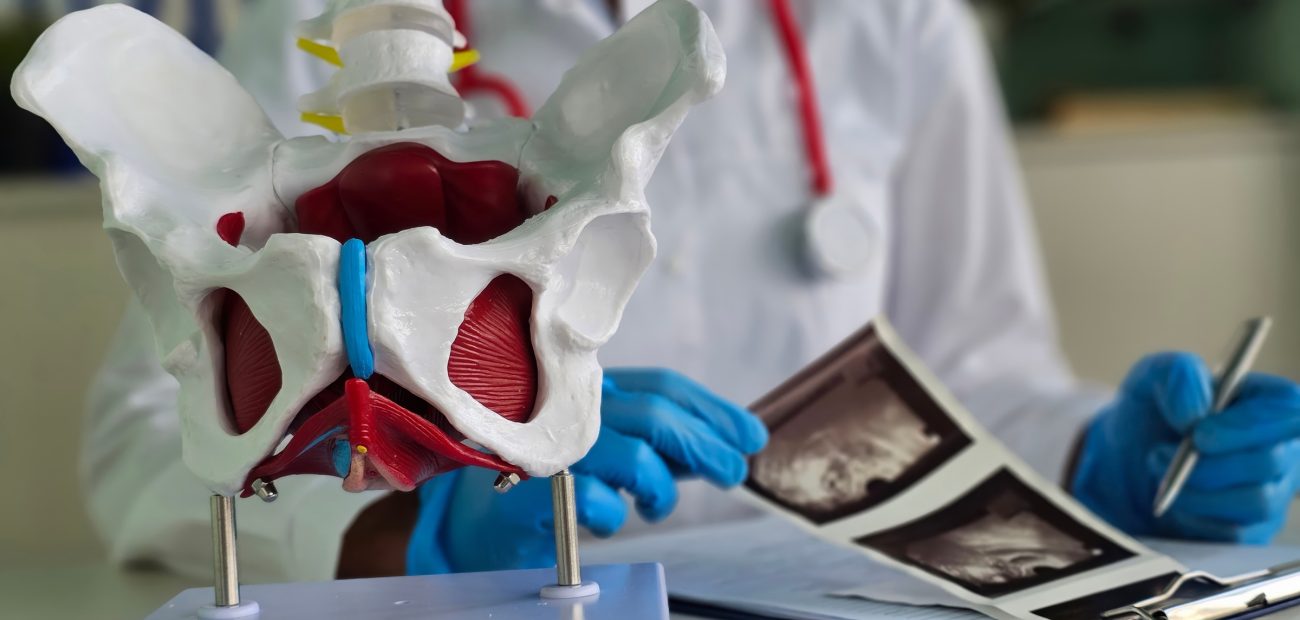
Zhang Jingyue, in his Complete Works (1624), defines the category directly: “Impediment means closure — disease arising when qi and Blood are closed off by an ‘evil,’ i.e., pathogenic factor, and can no longer flow.” He suggested that impediment syndrome lies mostly in the yin aspect and stems from vacuous true yin and depleted essence and blood, so the foremost treatment is to supplement the true yin until blood and qi move and the cold evil departs (4).
When obstruction generates heat, or arises in a constitutionally hot person, heat impediment appears with red, hot, swollen joints — the pattern that maps onto inflammatory arthritis such as rheumatoid disease. Long-standing impediment consumes the Liver and Kidney systems, so chronic cases combine obstruction with underlying vacuity and may progress to joint deformity. Most lower back pain, the single most common complaint, is understood primarily as Kidney vacuity, often compounded by cold, damp or blood stasis from injury.
The second pattern is wei syndrome (“wilting pattern”) — weakness, atrophy and loss of muscle function without prominent pain, typically a vacuity picture. Zhang Jingyue ties it to the same organ relationships: “When essence and blood are depleted they cannot nourish the hundred bones, so the sinews slacken and the bones develop wilting weakness. Age-related loss of muscle and bone, where the body’s foundational essence naturally declines, belongs largely to wilting syndrome” (4).
Signs and symptoms
Practitioners look for the quality of the complaint as much as its location:
- Pain that wanders, or is fixed; relieved by warmth, or by cold
- Heaviness, swelling and numbness (damp signs)
- Redness and heat over a joint (heat signs)
- Stiffness and reduced range of motion
- Weakness, wasting and fatigue (vacuity signs)
- Worsening with weather changes, damp conditions or overexertion
The tongue and pulse refine the picture — a pale tongue and weak pulse pointing to vacuity, a greasy coating to dampness, a red tongue to heat.
Herbs to support musculoskeletal health
Herbal strategy follows the pattern. Acute, externally-driven impediment calls for herbs that dispel wind-dampness and unblock the channels; chronic and vacuous cases call for herbs that tonify the Liver and Kidney systems and strengthen sinew and bone. The herbs below are a few of the most important used in this tradition and are usually combined into formulas, often very complex, rather than used alone, their classical profiles below come from the Bencao Gangmu, the most famous materia medica in the Chinese medicine corpus.
Duhuo, angelica root (Angelica pubescens)
The principal herb for dispelling wind-dampness from the lower body, duhuo is acrid, bitter and warm. Listed in the superior class of the Divine Husbandman’s Classic, it is described as treating wind-cold-damp impediment with aching and numbness and dispelling wind evil from the Kidney region.
Tao Hongjing noted that its single stalk rises upright, unshaken by wind — hence its name, “solitary mover” — and Liu Wansu remarked that it does not sway in the wind yet treats wind. It suits chronic, cold-damp impediment of the lower back, hips and legs, and is the chief herb of Duhuo and Sangjisheng Decoction, which Zhang Jingyue lists for wind-cold-damp impediment (4).
Sangjisheng, Chinese mistletoe (Taxillus chinensis)
Mulberry mistletoe — named for dwelling on another tree “like a bird perched atop” — both dispels wind-dampness and tonifies the Liver and Kidney systems, making it ideal where obstruction overlies vacuity. The Bencao Gangmu records it for lumbar pain, hardening the teeth and hair, quieting the foetus and removing impediment, and notes that it aids the sinews and bones and boosts the blood and vessels. It is the namesake partner of duhuo in the formula above (4).
Duzhong, hardy rubber tree (Eucommia ulmoides)
Sweet and warm, with the characteristic silver, elastic/rubbery, threads in its bark, duzhong supplements Kidney yang and the Liver system, directed specifically at the lower back and knees. Classical sources record it for lumbar and knee pain, hardening sinew and bone, and aching legs reluctant to tread the ground. Li Shizhen explained that because it enters the Liver and supplements the Kidney — “the child enabling the mother to be replete” — it strengthens both sinew and bone, citing a case in which it relieved a young man’s lumbar and knee pain when taken in wine (4).
Niuxi, ox knee root (Achyranthes bidentata)
Listed in the superior class of the Divine Husbandman’s Classic for cold-damp wilting and impediment, contracted limbs and knee pain that cannot bend or stretch, niuxi invigorates the Blood, unblocks the channels and strengthens the lower back and knees. Zhu Danxi noted that it leads other medicines downward, so for sinew-and-bone painful wind in the lower body it should be added; Li Shizhen classed it as a Liver and Kidney herb that, prepared with wine, supplements those systems and, used raw, dispels static Blood (4).
Qinjiao, large leaf gentian (Gentiana macrophylla)
A cooling, moistening wind-damp herb, qinjiao is the choice when impediment has generated heat or in patients who run hot. Li Shizhen described it as a hand and foot yangming herb that also enters the Liver and Gallbladder channels, used for limbs that will not move and for bone-steaming heat because it removes damp-heat from the yangming. It relaxes the sinews, eases joint pain and is gentle enough for long-term use, and is often added to warmer formulas to temper them (4).
Weilingxian, Chinese clematis root (Clematis chinensis)
Acrid, warm, and unblocking — its name conveying a fierce nature and a divine efficacy — weilingxian frees the five yin organ systems (Kidney, Liver, Spleen, Lung and Heart) and the twelve channels and relieves cold pain of the lower back and knees and generalised joint stiffness. Zhu Danxi called it a key herb for painful wind, suitable for the upper and lower body alike, because its nature is “good at moving.” Li Shizhen described the herb as acting quickly to affect wind-damp and phlegm-fluid disease, but cautioned that prolonged use may wear on the true qi (4).
Mugua, Chinese quince (Chaenomeles speciosa)
Sour and warm, mugua is recorded in classical sources for damp impediment and cramping of the sinews, especially in the lower legs— Tao Hongjing held that it best treats sinew cramp. Kou Zongshi wrote that its sourness enters the Liver, so it boosts the sinews and blood and is indispensable for weakness of the lumbus, knees and legs. Li Shizhen added the subtle note that it eases cramp less by “boosting the sinews” than by regulating the Spleen system and thereby acting on the liver (4).
Jixueteng, chicken blood vine (Spatholobus suberectus)
This vine both invigorates and nourishes the Blood and relaxes the sinews, well suited to numbness, weakness and pain arising from blood vacuity and stasis together — a common picture in chronic and post-injury complaints.
Topical traditions
Externally, warming herbs are applied to draw circulation to a cold, obstructed joint. Ginger (Zingiber officinale) and aconite-class herbs are used in liniments and medicated wines, the latter requiring professional preparation because of toxicity.
Holistic solutions
As with the rest of TCM, herbs are only one part of care; lifestyle considerations are inseparable from the desired outcome.

Diet
A warm, easily digestable, mostly cooked diet protects the Spleen system so it can build qi and Blood for the muscles. Damp-forming foods — excess raw and cold food, greasy or sweet food, overly-rich dairy — are limited where heaviness and swelling dominate. Warming foods suit cold patterns, while heat impediment favours cooling, less rich fare. Bone-strengthening foods and adequate protein support the Kidney system’s governance of bone, particularly with age.
Movement
The principle of free flow makes appropriate movement essential: stagnation worsens pain, but overexertion and repetitive strain injure the sinews. Taiqi and qigong, with their slow weight-bearing, flowing motion, maintain joint mobility, build the steady strength of the legs and lower back, and encourage circulation through the channels without jarring the joints.
Protecting against external influences
Because impediment begins with wind, cold and damp, classical advice is preventive: Keep the lower back and joints warm, avoid sleeping in draughts or on cold damp ground, change out of wet clothes promptly, and shelter vulnerable joints in cold, damp weather. People whose joints ‘predict the weather’ are, in this framework, sensing external influences lodged in the channels (3).
Rest, stress and the spirit
Chronic pain and emotional strain feed one another: Tension constrains the Liver system and disturbs the free flow of qi, while persistent pain wears on the spirit. Adequate rest preserves the Kidney essence on which bone and long-term recovery depend, and calming practices support both the emotional and the physical picture.
References
- Li S. Bencao Gangmu [Compendium of Materia Medica]. Huaxia Press; 2009. Originally published 1578.
- Wiseman N, Feng Y. A Practical Dictionary of Chinese Medicine. 2nd ed. Paradigm Publications; 1998.
- Unschuld PU, Tessenow H, trans. Huang Di Nei Jing Su Wen: An Annotated Translation of Huang Di’s Inner Classic—Basic Questions. University of California Press; 2011.
- Zhang J. Jingyue Quanshu [Complete Works of Jingyue]. Shanghai Science and Technology Press; 1959. Reprint of 1624 edition.