














Last reviewed 15/10/2026
Sustainability status
At risk from overharvesting and habitat loss. Read more in our sustainability guide.

Avoid in pregnancy and lactation
Herbs are generally best-avoided in pregnancy, unless working with them under the guidance of a medical herbalist. However, some herbs pose a risk to pregnancy as they are potentially: toxic to the mother, toxic to the neonate, teratogenic (risk developmental malformation), may increase miscarriage risk, or could cause foetal distress leading to miscarriage or premature birth. Herbs with teratogenic, emmenagogue, or stimulant laxative actions are all contraindicated in pregnancy. Furthermore, herbs containing volatile oils, thujone, apiol, phyto-oestrogens also should be avoided.
During lactation, there is the possibility for transfer of plant compounds through the breast milk, which can have an effect (detrimental or beneficial) on the infant.
Please read the Safety section in this monograph.

Drug interactions
Herbs may interact with pharmaceutical medications through both pharmacokinetic and pharmacodynamic mechanisms. Pharmacokinetic interactions involve alterations in the absorption, metabolism, distribution, or excretion of a drug. Many herb–drug interactions occur through liver enzyme modulation: by inducing CYP enzymes — increasing drug concentration and toxicity risk; or by inducing CYP enzymes — decreasing drug concentration and therapeutic efficacy.
Pharmacodynamic interactions occur when herbs and drugs influence the same physiological systems. These interactions can cause synergistic, additive or antagonistic effects at the receptor or tissue level, enhancing or opposing the intended pharmacological action. The clinical consequences of herb-drug interactions can be complex and nuanced. Consultation with a medical professional is, therefore, recommended to ensure safe use and appropriate dosing.
Please read the Interactions section in this monograph.

Contraindications
A contraindication refers to a situation in which a herb should be avoided as it may exacerbate a medical condition or pose undue risk. Contraindications may arise through pharmacodynamic mechanisms (e.g., liquorice in uncontrolled hypertension or uterine stimulants during pregnancy) or pharmacokinetic effects that alter metabolism, absorption or elimination (e.g., tannin-rich herbs in iron-deficient anaemia).
In some cases, herbal actions may aggravate underlying pathologies (e.g., the use of bitter herbs in GERD). Recognition of contraindications requires thorough assessment of patient history, co-morbidities and medications. Consultation with a qualified medical herbalist will provide guidance to ensure safe and appropriate prescribing.
Please read the Contraindications section in this monograph.

-
Herb overview
Safety
Do not use in pregnancy.
Interactions with cytochrome P450 enzymes.Sustainability
At risk from overharvesting and habitat loss. FairWild certified.
Key constituents
Hydrolysable tannins: ellagitannin and chebulic ellagitannin
Gallic acidQuality
Native to the Himalayas and Sri Lanka
Wild harvested and cultivated
Adulteration and contamination risksKey actions
Laxative
Astringent
Anthelmintic
NervineKey indications
Constipation
Cough
Diarrhoea
Digestive issuesKey energetics summary
Warm
Dry
Astringent
BitterSee below for discipline-specific energeticsPreperation and dosage
Fruit
3–9 g/per day
Tincture 1:3 | 25%: 3–12 ml per day
-
How does it feel?
The taste is predominantly very astringent and bitter, though it has five of the six tastes recognised by Ayurveda.

The taste of haritaki
The below qualities are derived from organoleptic assessment.
-
Into the heart of haritaki
In Ayurveda, haritaki is considered as one the primary herbs for supporting the health of the digestive system and is part of the well known triphala formula. It is considered unique in that it will encourage bowel cleansing motions, whilst also toning and strengthening the digestive mucosa. It is cooked with castor oil (1:4) to make gandharva haritaki, a demulcent purgative for alleviating vata (4).
It has such widespread therapeutic use due to it having five of the six tastes recognised by Ayurveda (aside from salty). It is a common feature for rejuvenative plants to possess a full spectrum of tastes, also seen in amla (Phyllanthus emblica). It has a special action to balance any excesses and all three doshas: Pitta due to its sweet, bitter and astringent tastes, kapha due to its astringent, bitter and pungent tastes, and vata due to its sour, sweet and pungent tastes. It is regarded as nourishing to the brain and nerves, and imparting the energy of Shiva (pure awareness) (4).
-
What practitioners say
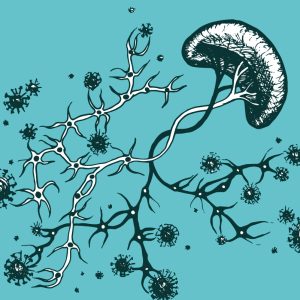
 Digestive system
Haritaki increases the digestive fire and clears undigested residues ama). It combats gut infections and soothes inflammation and ulcers. Its sennosides treat constipation and the tannins treat diarrhoea; use a high dose (6 g) for the former and low dose (2 g) for the latter. It is helpful for digestive upset or dysentery caused by parasites or yeast infection, dysbiosis, inflammation of mucous membranes, flatulence and borborygmus.
Haritaki’s astringent and mucous membrane soothing effects can benefit peptic ulcers, intestinal permeability, malabsorption, and ‘leaky gut syndrome. It combines well with psyllium (Plantago ovata) and hemp seed (Cannabis indica) in vata constipation; amla in pitta constipation; bibhitaki (Terminalia bellirica) and pippali (Piper longum) in kapha constipation; cardamom (Elettaria cardamomum) and fennel (Foeniculum vulgare) for indigestion and bloating (4). The bark of haritaki can be chewed to improve digestion (6).
Cardiovascular system
Haritaki helps the metabolism of lipids and can reduce cholesterol accumulation in the liver and other tissues (7). It also offers protection for the heart and arteries from free radical damage and helps to reduce blood pressure. Traditionally, it is mixed with honey to help reduce cholesterol. It can also be applied to help with treatment of gout (6).
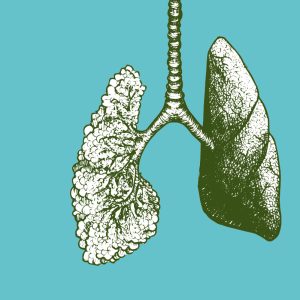
Respiratory system
Haritaki can be applied for coughs, bronchitis, catarrh, asthma, laryngitis, rhinitis and dyspnoea. It is particularly indicated for wet, kapha-type coughs. Haritaki has astringent qualities which help to dry secretions including mucus and phlegm. It sends accumulated vata downwards and helps to clear wheezing, weak voice and asthma (3). Combines well with pippali (Piper longum) for cough and asthma.
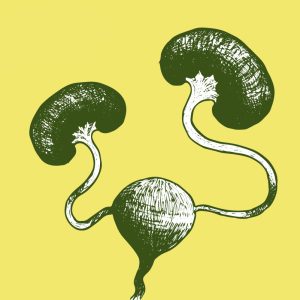
Urinary system
Useful in dysuria, urinary retention, calculus and kapha type diabetes (6).
Eye health
Used in all sorts of eye disorders including inflammation, it can be applied to eyelids for conjunctivitis (3). For these cases, it can be applied as a wash. Haritaki supports all mucous membranes so it can be used as a gargle in sore throat. Swilling with cold water for stomatitis, gingivitis and periodontal disease offers a soothing astringent remedy.
-
Haritaki research

Haritaki (Terminalia chebula) While modern pharmaceuticals have historically relied on animal testing to ensure safety and efficacy — a requirement in the approval process of novel therapeutic agents for human use — Herbal Reality does not endorse nor support animal testing when determining the efficacy of time-tested natural herbal ingredients.
Our stance is aligned with ethical frameworks that strive to reduce, refine, and replace animal experiments, emphasising the importance of welfare and continual pursuit of innovative, non-animal-based testing methods
A clinical study of haritaki and Saindhava Lavana (rock salt) in kapha type cough with special reference to Samyoga Guna (6)
A clinical trial evaluating haritaki, Saindhava Lavana (rock salt), and their combined administration investigated therapeutic outcomes in patients with Kaphaja Kasa (an Ayurvedic classification of cough defined by an imbalance of kapha and vata doshas), with particular attention to the Ayurvedic principle of Samyoga Guna (synergistic action). Participants were divided into three groups receiving haritaki alone, Saindhava Lavana alone, or a combined formulation for seven days, with outcomes assessed through subjective symptoms and basic laboratory investigations.
The combined therapy (Group C) demonstrated significantly greater improvement than either single intervention, supporting classical Ayurvedic claims that Paradi Gunas, especially Samyoga, enhance therapeutic efficacy. The study concludes that haritaki and Saindhava Lavana exert a more potent effect when administered together than individually (8).
A compendious review of Chitraka Haritaki Avaleha – A polyherbal Ayurveda formulation for bronchial asthma
This review synthesises classical and contemporary evidence on Chitraka Haritaki Avaleha (CHA), a long‑standing Ayurvedic polyherbal formulation traditionally prescribed for bronchial asthma and other respiratory disorders. Drawing on descriptions from seven major classical treatises and two gazetted texts, the authors document substantial historical variation in nomenclature, ingredients, preparation methods, therapeutic indications and recommended adjuvants, reflecting both evolving clinical practice and sustained demand.
Collated analytical data from modern research reveal discrepancies in organoleptic and physicochemical parameters, such as pH and water‑soluble extract values, when compared with standards in the Ayurvedic Pharmacopoeia of India, highlighting the need for improved pharmaceutical standardisation. Overall, the review affirms CHA’s longstanding clinical relevance in asthma management while emphasising the importance of harmonising manufacturing processes to ensure quality and consistency (9).
Efficacy of ‘Itrifal Saghir’, a combination of three medicinal plants in the treatment of obesity; A randomized controlled trial (10)
In a well‑designed 12‑week randomised controlled trial (RCT), obese adults were randomised to receive 5 g/day Itrifal Saghiror placebo. Participants in the herb group experienced clinically meaningful reductions in body weight, including an average 4 cm decrease in waist circumference and 3 cm reduction in hip circumference, compared with minimal changes in the placebo group.
These improvements reflect enhanced metabolic efficiency and reduced central adiposity, both strongly correlated with healthier lipid profiles and reduced cardiovascular risk. Although haritaki was not isolated, its traditional role as the lipid‑modulating component of Itrifal Saghir makes this study particularly relevant (10).
-
Historical use of haritaki
Images of the Medicine Buddha show him holding haritaki, representing the respect and awe in which haritaki was held for maintaining health and curing disease. It is known as ‘the King of medicines’ in Tibetan medicine. It has contrasting actions, as both a laxative and astringent, revealing the diverse nature of this herb. As a decoction it is more astringent as the tannins are water-soluble, and as a tincture or powder it is more laxative. Using the unripe fruit increases its laxative effect but lessens its rejuvenative qualities (4).
It is also of value as it is considered a yogavahi substance in Ayurveda, a substance that helps to enhance the therapeutic action of the other herbs when used in combination.
It is traditionally used with rock salt for kapha, with sugar for pitta and with ghee for vata (5). Using it with warm water also promotes its anuloma or laxative effect. Its prabhava or unique action is to balance all three doshas. Its other prabhava is that while it is a laxative it is also nourishing. Its sweet post-digestive quality nourishes sukra dhatu and enhances immunity (5).
-
Haritaki’s herbal actions
Herbal actions describe therapeutic changes that occur in the body in response to taking a herb. These actions are used to express how a herb physiologically influences cells, tissues, organs or systems. Clinical observations are traditionally what have defined these actions: an increase in urine output, diuretic; improved wound healing, vulnerary; or a reduction in fever, antipyretic. These descriptors too have become a means to group herbs by their effects on the body — herbs with a nervine action have become the nervines, herbs with a bitter action are the bitters. Recognising herbs as members of these groups provides a preliminary familiarity with their mechanisms from which to then develop an understanding of their affinities and nuance and discern their clinical significance.
Ayurvedic actions
-
Haritaki’s energetic qualities
Herbal energetics are the description that herbalists have given to plants, mushrooms, lichens, foods and some minerals based on the direct experience of how they taste, feel and affect the body. All traditional health systems use these principles to explain how the environment impacts health, according to each of their philosophies and frameworks. These assessments of individual herbs, though they often do align, can differ from one another due to cultural differences regarding perspectives on how herbs taste versus their physiological effects. Find out more about traditional energetics in our article An introduction to herbal energetics.
Ayurvedic energetics
Ayurvedic energetics are assigned according to Bhavaprakash by Acharya Bhavamishra and Ayurvedic Medicine: The Principles of Traditional Practice by Sebastian Pole.
Chinese energetics
Chinese energetics align with Bensky’s Chinese Herbal Medicine: Materia Medica.
Western energetics
Western energetics here are informed by The Energetics of Western Herbs by Peter Holmes, as well as traditional materia medica from Culpeper and Dioscorides.
-
What can I use haritaki for?

Haritaki (Terminalia chebula) Haritaki demonstrates antibacterial, antiviral and antiamoebic activity, with a particular affinity for the digestive tract. It effectively targets pathogens within the digestive system and encourages their expulsion from the system. It is regarded as a rejuvenative (rasayana) that promotes longevity and vitality (1).
It is a specific herb for use in the treatment of a wide range of digestive infections, but particularly those caused by the presence of parasites (2). Haritaki stimulates digestive metabolism and improves general absorption rate, digestive efficiency and also supports the body’s ability to process lipids such as cholesterol. Haritaki will strengthen, nourish and rejuvenate the entire digestive tract (3).
The sennosides (anthraquinone laxatives) present in haritaki treat constipation and the tannins treat diarrhoea. It is salutary in digestive upset or dysentery caused by parasites or infection (Shigella spp) and inflammation of mucous membranes, flatulence and borborygmus. It increases the digestive metabolism and clears undigested toxins and residues. Haritaki’s astringency and mucous membrane healing effects can benefit prolapse, ulcers, intestinal permeability and leaky gut syndrome (4).
Beyond digestion, it also has wide applications for treatment of the respiratory system, as well as for various disorders of the eye and oral health.
-
Did you know?
There are seven types of haritaki; vijaya, rohini, putana, amrita, abhaya,jivanti and cetaki which grow in different areas of India. Vijaya, growing in the Vindhaya Mountains, is a rounder fruit and is said to be the best for medicinal use.
Rohini grows in Northern India (Paithan), Putana grows in Southern Pakistan (Sindhu), Amrita and Abhaya varieties grow in Bhagalpur district in Eastern India in Bihar,Jivanti in Saurashthra in Gujerat and Cetaki in the Himalayas (4). Images of the Medicine Buddha show him holding Terminalia chebula. This represents the respect and awe that haritaki was held in for maintaining health and curing disease.







 Digestive system

-
Botanical description
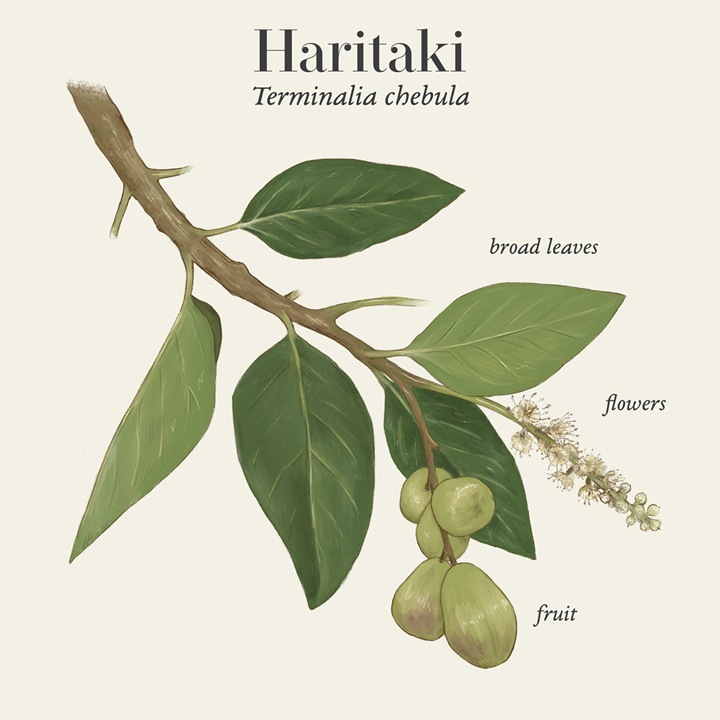
Haritaki is a large and deciduous tree that can reach 30 m in height and a trunk girth of 2.5 m.
The bark is characteristically cracked and ‘exfoliating’ in appearance and it produces small yellowish-white flowers that have an unpleasant odour.
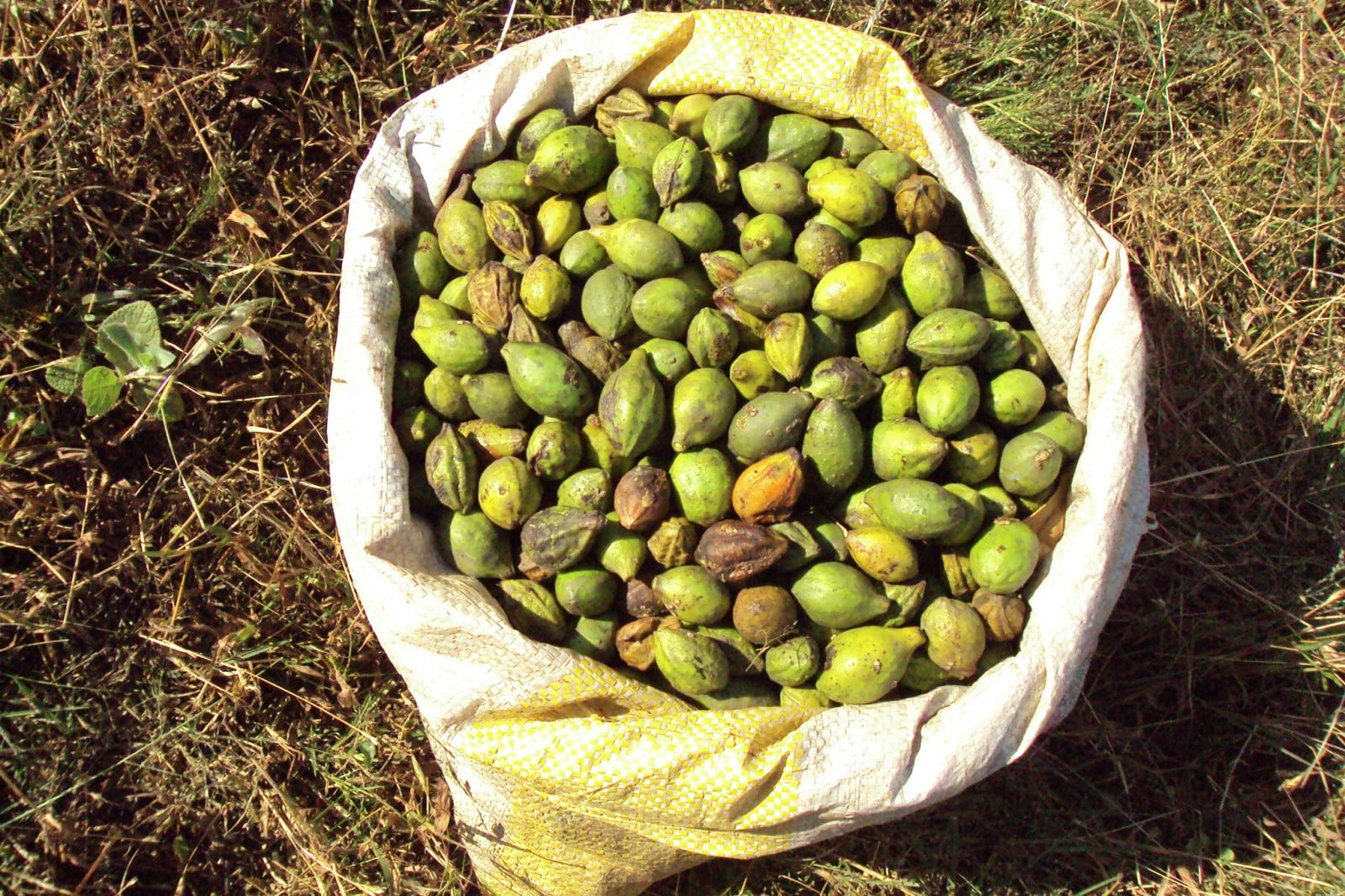
The fruit is a drupe that grows to approximately 5 cm and ranges from yellow to an orange-brown colour and becomes hard to the touch when it is ripe.
It is the fruits that are valued medicinally (3).
-
Common names
- Myrobalans
- Chebulic myrobalan
-
Habitat
Haritaki is native to the Himalayas and Sri Lanka, typically growing at altitudes of up to 1500 m (11).
-
How to grow haritaki
To grow a haritaki tree, follow these steps:
- Select a spot with well-drained soil and full sun exposure.
- Sow seeds or cuttings in a pot with a well-drained potting mix at a depth of about 1 cm
- Maintain a consistently moist environment.
- Ensure the plant receives ample sunlight.
- Keep the plant in a humid environment by covering the pot with a plastic bag or using a propagation dome.
- Haritaki is a “legacy tree.” It grows significantly large and develops a powerful root system, so it should be planted far away from walls or foundations (12).

-
Herbal preparation of haritaki
- Gandharva haritaki (fried with castor oil)
- Triphala
- Abhaya aristha (4)
-
Plant parts used
- Fruit
- Galls
- Leaves
- Bark (4)
-
Dosage
- 3–9 g/day in a decoction
- 3–12 ml/day of a 1:3 in 25% tincture
- 250 mg–5 g as powder (2)
- Gogte describes the classical dosage variations as 3–6g for purgation, 1 g as a rasayana tonic (4).
-
Constituents
- Anthraquinones
- Tannins: Gallotannins (chebulinic acid, corilagin), ellagitannins (chebulagic acid, chebulanin, terchebulin, punicalagin)
- Phenolic acids: Gallic acid, ellagic acid, chebulic acid, protocatechuic acid
- Flavonoids: Quercetin, kaempferol, rutin, catechin
- Triterpenoids: Arjunolic acid, arjugenin, chebupentol
- Phytosterols: β-SitosterolPolysaccharides: Glucose and fructose (13,14)
-
Haritaki recipe
Home-made triphala
Make your own triphala at home (using dried fruits or powdered herbs). This is the most traditional method if starting with whole, dried fruits.
Ingredients
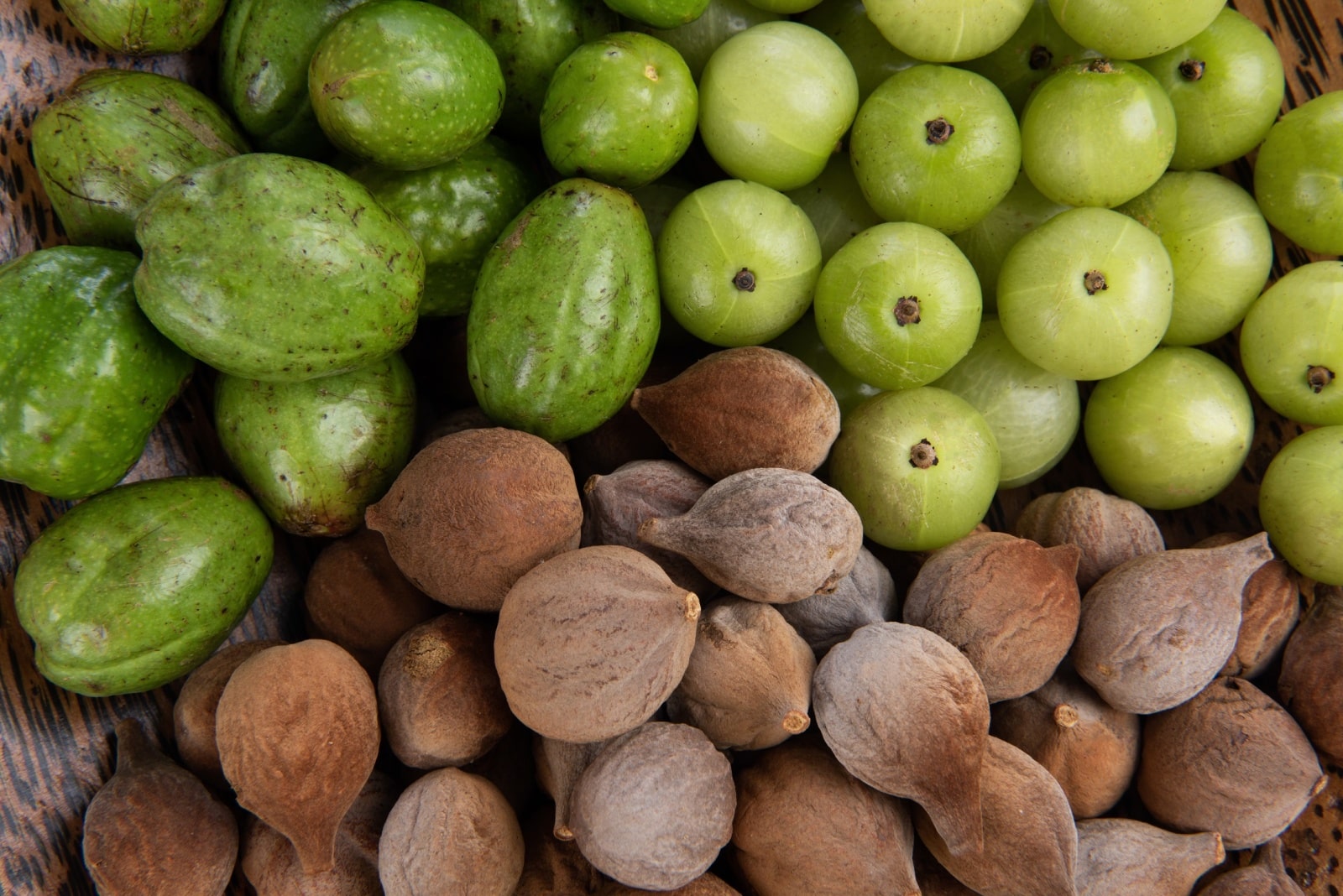
- 100 g haritaki (Terminalia chebula) – dried fruit
- 100 g bibhitaki (Terminalia bellirica) – dried fruit
- 100 g amla (Emblica officinalis) – dried fruit
- A spice grinder, coffee grinder or high‑speed blender
- A fine sieve or muslin cloth
- An airtight jar
How to make your own triphala at home
- Remove any visible dust or debris. Wiping the fruit gently with a dry cloth is an effective way to remove this.
- Use a mortar and pestle or the back of a heavy knife to crack the fruits into chunks. This protects the grinder.
- Grind each fruit separately to a fine powder; pulse in short bursts to avoid overheating the herbs.
- Pass each powder through a fine sieve. Re‑grind any coarse pieces.
- Combine in equal parts (1:1:1) and keep in an airtight jar away from heat, light, and moisture. Properly stored, it keeps its potency for 6–12 months.
Ground-powder triphala
Alternatively, this recipe can be done with pre‑ground powders; this is quicker and still perfectly acceptable in Ayurvedic practice.
Ingredients
- 100 g haritaki powder
- 100 g bibhitaki powder
- 100 g amalaki powder
- A clean bowl and spoon
- Airtight jar
How to make a ground-powder triphala
- Mix thoroughly until the colours are uniform.
- Store airtight
- Keep away from moisture and sunlight.

-
Safety
Do not use in pregnancy due to its laxative and descending nature (2).
-
Interactions
Haritaki is rich in tannins, phenolic acids, and ellagitannins, which means most interactions arise from effects on absorption, antioxidant activity, or gastrointestinal motility.
Direct clinical evidence is limited, so most interactions remain theoretical or extrapolated from mechanistic studies. Research examining the interaction potential of haritaki has shown that its polyphenol‑rich extracts can inhibit several major cytochrome P450 enzymes in vitro, particularly CYP3A4, CYP2D6 and CYP1A2, suggesting a theoretical capacity to influence the metabolism of drugs processed through these pathways.
Although these findings do not establish clinical interactions, they highlight a plausible mechanistic basis for altered drug metabolism when Haritaki is co‑administered with pharmaceuticals, underscoring the need for further pharmacokinetic and clinical research to clarify real‑world relevance (15,16).
Caution with antihypertensive medication (17).
-
Contraindications
Do not use in cases of dehydration, severe exhaustion or emaciation, or with high pitta dosha (18).
-
Sustainability status of haritaki
Terminalia chebula is listed as least concern on the IUCN redlist (19).
Sourcing haritaki raises several sustainability concerns, largely because the tree is slow‑growing and its fruits are harvested extensively for Ayurveda, cosmetics and global herb markets. In parts of India and Nepal, overharvesting of immature fruits has been reported, which reduces seed regeneration and weakens long‑term population stability. Habitat loss from deforestation and land‑use further puts pressure on wild species, while inconsistent regulation in the herbal supply chain can lead to unsustainable collection practices and reduced biodiversity in forest ecosystems.
Climate variability, especially shifts in monsoon patterns, also affects fruit yield and quality, increasing pressure on remaining populations. These challenges highlight the need for certified sustainable wild‑collection, community‑based forest management, and expanded cultivation programmes to reduce reliance on wild harvesting and protect the species’ ecological resilience (20,21). Haritaki is also FairWild certified and so can be sourced from sustainable suppliers that support ethical production methods and growing conditions (22).
Read our article on Herbal quality & safety: What to know before you buy and Sustainable sourcing of herbs to learn more about what to look for and questions to ask suppliers about sustainability.
-
Quality control
Haritaki is still primarily wild‑harvested across India, Nepal, Bhutan and Sri Lanka, especially from dry deciduous forests where the tree grows naturally, though small‑scale cultivation exists in South India to support Ayurvedic pharmacies. Quality‑control issues have been documented: Haritaki powders may show microbial contamination, heavy‑metal residues from polluted collection areas, or adulteration with cheaper tannin‑rich species such as bibhitaki (Terminalia bellerica ) or T. catappa. These risks highlight the importance of traceable sourcing, third‑party testing, and certified sustainable wild‑collection to ensure both ecological and product integrity (23).


-
References
- Dakpa T. Unique aspect of Tibetan medicine. Acupunct Electrother Res. 2014;39(1):27-43. doi: 10.3727/036012914X13966138791145
- Acharyya S, Sarkar P, Saha DR, Patra A, Ramamurthy T, Bag PK. Intracellular and membrane-damaging activities of methyl gallate isolated from Terminalia chebula against multidrug-resistant Shigella spp. J Med Microbiol. 2015;64(8):901-909. doi:10.1099/jmm.0.000107
- Bag A, Bhattacharyya SK, Chattopadhyay RR. The development of Terminalia chebula Retz. (Combretaceae) in clinical research. Asian Pac J Trop Biomed. 2013;3(3):244-252. doi:10.1016/S2221-1691(13)60059-3
- Pole S. Ayurvedic Medicine: The Principles of Traditional Practice. Singing Dragon; 2013.
- Mishra B. Bhavaprakasha. 1944.
- Gogate VM. Ayurvedic Pharmacology & Therapeutic Uses of Medicinal Plants: Dravyagunavignyan. Chaukhambha Publications; 2012.
- Tillotson AK. The One Earth Herbal Sourcebook. Kensington Books; 2001.
- Rout A, Dwivedi R. A clinical study of Haritaki and Saindhava Lavana in Kaphaja Kasa with special reference to Samyoga Guna. AYU. 2011;32(3):357. doi:10.4103/0974-8520.93914
- Bhinde S, Bhinde S, Kori V, Patel K. A compendious review of Chitraka Haritaki Avaleha—a polyherbal Ayurveda formulation for bronchial asthma. AYU. 2020;41(1):12. doi:10.4103/ayu.ayu_340_20
- Kamali SH, Khalaj AR, Hasani-Ranjbar S, et al. Efficacy of ‘Itrifal Saghir’, a combination of three medicinal plants in the treatment of obesity: a randomized controlled trial. DARU J Pharm Sci. 2012;20(1):33. doi:10.1186/2008-2231-20-33
- Royal Botanic Gardens, Kew. Terminalia chebula Retz. Plants of the World Online. Accessed October 15, 2026. https://powo.science.kew.org/taxon/urn:lsid:ipni.org:names:171037-1
- Anandi Green’s. Harad seeds (Haritaki / Terminalia chebula). Anandi Green’s. 2026. Accessed October 15, 2026. https://anandigreens.com/products/harad-seeds-haritaki-terminalia-chebula
- Wang C, Zhang H, Wang X, et al. Comprehensive review on fruit of Terminalia chebula: traditional uses, phytochemistry, pharmacology, toxicity, and pharmacokinetics. Molecules. 2024;29(23):5547. doi:10.3390/molecules29235547
- Sultan MT, Anwar MJ, Imran M, et al. Phytochemical profile and pro-healthy properties of Terminalia chebula: a comprehensive review. Int J Food Prop. 2023;26(1):526-551. doi:10.1080/10942912.2023.2166951
- Memorial Sloan Kettering Cancer Center. Triphala. Updated January 5, 2022. Accessed October 15, 2026. https://www.mskcc.org/cancer-care/integrative-medicine/herbs/triphala
- Ponnusankar S, Pandit S, Venkatesh M, Bandyopadhyay A, Mukherjee PK. Cytochrome P450 inhibition assay for standardized extract of Terminalia chebula Retz. Phytother Res. 2011;25(1):151-154. doi:10.1002/ptr.2993
- McIntyre A, Boudin M. Dispensing With Tradition. 2012.
- Frawley D, Lad V. The Yoga of Herbs: An Ayurvedic Guide to Herbal Medicine. Motilal Banarsidass; 2016.
- Barstow M. Terminalia chebula. The IUCN Red List of Threatened Species. Published September 25, 2020. Accessed October 15, 2026. https://www.iucnredlist.org/species/61990218/61990220
- Varghese A, Ticktin T, Mandle L, Nath S. Assessing the effects of multiple stressors on the recruitment of fruit harvested trees in a tropical dry forest, Western Ghats, India. PLoS One. 2015;10(3):e0119634. doi:10.1371/journal.pone.0119634
- Jalonen R, Ziegert RF, Lamers HAH, Hegde N. From within and without: gender, agency and sustainable management of non-timber forest products in two Indian states. Small Scale For. 2023;22(2):323-349. doi:10.1007/s11842-022-09531-x
- FairWild Foundation. Haritaki. FairWild Foundation. 20 February 2019. Accessed 15 October 2026. https://www.fairwild.org/ingredients/haritaki
- Xu J, Wang X, Yu H, et al. Study on quality characteristic of Chebulae Fructus and its adulterants and degradation pathway of hydrolyzable tannins. Molecules. 2024;29(10):2399. doi:10.3390/molecules29102399

Meet our herbal experts
Our monographs are written by our monograph authors and edited, reviewed and updated by Herbal Reality.
Meet our Herbal Reality team or explore our Herbal Reality authors.