







Last reviewed 13/03/2026
Sustainability status
Not currently on risk lists but complete data may be missing on the status of the species. Read more in our sustainability guide.

Avoid in pregnancy and lactation
Herbs are generally best-avoided in pregnancy, unless working with them under the guidance of a medical herbalist. However, some herbs pose a risk to pregnancy as they are potentially: toxic to the mother, toxic to the neonate, teratogenic (risk developmental malformation), may increase miscarriage risk, or could cause foetal distress leading to miscarriage or premature birth. Herbs with teratogenic, emmenagogue, or stimulant laxative actions are all contraindicated in pregnancy. Furthermore, herbs containing volatile oils, thujone, apiol, phyto-oestrogens also should be avoided.
During lactation, there is the possibility for transfer of plant compounds through the breast milk, which can have an effect (detrimental or beneficial) on the infant.
Please read the Safety section in this monograph.

Contraindications
A contraindication refers to a situation in which a herb should be avoided as it may exacerbate a medical condition or pose undue risk. Contraindications may arise through pharmacodynamic mechanisms (e.g., liquorice in uncontrolled hypertension or uterine stimulants during pregnancy) or pharmacokinetic effects that alter metabolism, absorption or elimination (e.g., tannin-rich herbs in iron-deficient anaemia).
In some cases, herbal actions may aggravate underlying pathologies (e.g., the use of bitter herbs in GERD). Recognition of contraindications requires thorough assessment of patient history, co-morbidities and medications. Consultation with a qualified medical herbalist will provide guidance to ensure safe and appropriate prescribing.
Please read the Contraindications section in this monograph.

-
Herb overview
Safety
Not suitable for pregnancy or breastfeeding.
Avoid for those with a history of kidney stones.Sustainability
Status: Lower risk
Key constituents
Glucosinolates
Flavonoids
Amines
Volatile oilsQuality
Europe, Asia and North Africa
Wild harvested
No known adulteration or contamination risksKey actions
Astringent
Diuretic
Antihaemorrhagic
Uterine tonicKey indications
Menorrhagia
Fibroids
Dysmenorrhoea
UTIsKey energetics
Warm
Dry
Tonifying
AstringentPreperation and dosage
Aerial parts
3–20 g per day
1:5 25%: 3–6 ml per day
-
How does it feel?
When you make a cup of shepherd’s purse tea the smell is salty, seaweedy, rich and nutritious, like a savoury vegetable soup is simmering in the background. This indicates the rich array of nutritional constituents including vitamins and minerals.
The taste is similar, rich in savoury flavour and slightly sweet. It feels hearty and nutritious with a slight pungency but no unpleasant aftertaste. The salty and sweet tastes indicate the nutritious nature of the herb, with a high mineral content which is energizing, tonifying and building (1). There is a slight astringency, indicating the flavonoid content, and suggesting this herb will be drying, tonifying and suited to boggy, damp or bleeding conditions (1).
It leaves the mouth feeling slightly coated from the volatile oils, with a tackiness as the mucous membranes of the mouth tighten in response to the flavonoids. It moves through the body quickly, and you may feel the blood shifting to the periphery as a warming wave or a slight tightening in the head as the blood flow increases.

The taste of shepherd’s purse
The below qualities are derived from organoleptic assessment.
-
Into the heart of shepherd’s purse

Shepherd’s purse (Capsella bursa-pastoris) Shepherd’s purse is warm, dry and constricting (5,6). It is warming due to the stimulating action to move blood, suited specifically to bleeding conditions where the blood is stagnant, dark and slowly oozing (7). This contrasts the haemostatic action of a herb like yarrow, which is cooling, and suited to conditions where the blood is red and haemorrhaging (7).
Shepherd’s purse is suited to tissue states which are depressed, stagnant and damp. A depressed tissue state requires stimulation to get things moving, such as stimulating the circulation to warm up cold extremities (7).
Damp and stagnant tissues occur when there is a build of fluids which are not moving and become thick, stagnant and cold (7). Sheperd’s purse stimulates the movement of blood and tones the muscular tissues of the blood vessels, uterus, bladder and intestines to support the return to normal functioning of the organs.
Energetically, shepherd’s purse is indicated for people who give too much of themselves and deplete their vital energy (8). Being exhausted and depleted makes it difficult to generate motivation and momentum, and shepherd’s purse can provide the support needed to set healthy boundaries and make positive changes (8). It is indicated for those who are highly strung, ambitious and tend to do the work of two or three people (7).
-
What practitioners say
 The astringent and haemostatic properties of shepherd’s purse extend across many systems of the body, where is can be used to stop bleeding and tighten surface membranes.
 Reproductive system
Shepherd’s purse is one of the best herbs for heavy bleeding during menstruation (6). This has been demonstrated in a recent clinical trial (13). It is very effective for dysfunctional uterine bleeding associated with fibroids (4,14).
It is a useful herb to use at menarche and the start of the menstrual journey when the cycle can be erratic with dysfunctional bleeding (15). Equally, it can be effective during menopause when the cycle is unpredictable or with a heavy flow (15).
When taken throughout the month it can help to lighten heavy menstrual bleeds, prevent spotting between periods and reduce the flooding associated with menopause and endometriosis (2). Medical herbalist Lucy Jones reports that she uses it as a simple (single herb formular) to be taken during the menstrual bleed in cases of menorrhagia, or combined with cramp bark (Viburnum opulus) if there is period pain (8).
Shepherd’s purse is suited to conditions where the uterine muscle tone is poor and it does not expel the menstrual blood effectively, which can stagnate and form clots (7). As well as toning the muscular walls, it helps to reduce venous blood stagnation and is useful in cases of congestive dysmenorrhea (period pain) and uterine congestion (14). Shepherd’s purse is suited to menstruating women with uterine weakness, fibroids, endometriosis, profuse bleeding of dark, clotted blood (7).
It is an important herb in midwifery to help delivery of the placenta and to reduce post-partum bleeding (16). The astringent and toning action can help with prolapses, particularly the uterus and bladder (8).
Shepherd’s purse will also help with excessive secretions in candidiasis and leukorrhea, combining well with calendula and white dead nettle.
Urinary system
Shepherd’s purse is a valuable herb for the urinary system, due to the diuretic, astringent and antimicrobial actions. The diuretic action is important to increase the flow of urine through the kidneys and bladder (12). Combined with the antimicrobial action, this diuretic action makes shepherd’s purse a useful herb to use in urinary tract infections (UTI’s) such as cystitis, to help remove the infection (5).
Shepherd’s purse stimulates the excretion of uric acid, making it useful when there is irritation in the urinary tract from uric acid, urinary gravel and in the treatment of gout (5,12). I
t combines well with other stimulating and soothing diuretics such as couch grass (Agropyron repens), marshmallow leaf (Althea officinalis) and cornsilk (Zea mays). Shepherd’s purse will also tone the muscular walls of the bladder, indicating its use when the bladder is weak, with difficulty either holding or fully expelling urine (7). The astringent action is useful if there is haematuria (blood in the urine) accompanying any of the aforementioned conditions.
Digestive system
As an astringent the toning action of this herb is effective in the treatment of diarrhoea, dysentery and intestinal bleeding (4). It can be taken both internally and externally for the treatment of haemorrhoids (3).
Cardiovascular system
Shepherd’s purse is both hypotensive (decreases blood pressure) and hypertensive (increases blood pressure), depending on the internal constitutional state of the individual. Where the tissue state is relaxed and flaccid the mechanism of haemostasis is constriction of the blood vessels, making it one of the few herbs which will increase blood pressure (6,7).
Shepherd’s purse stimulates circulation to the extremities, redistributing the blood around the body, and potentially creating a hypotensive action, especially in those with pre-existing low blood pressure.
The diuretic action is also indicated where there is water retention or oedema which can occur in heart failure and other cardiovascular conditions (3). Shepherd’s purse stimulates the circulation and supports the integrity of the venous system, making it a helpful herb for haemorrhoids and varicose veins (8).
Skin health
The vulnerary action makes shepherd’s purse a suitable herb to use as a poultice or compress to staunch bleeding and reduce bruising and inflammation (5). It can be used for nosebleeds by inserting a cotton pad soaked in the infusion into the nose (12).
-
Shepherd’s purse research

Shepherd’s purse flowers (Capsella bursa-pastoris) Effect of hydroalcoholic extract of Capsella bursa pastoris on early postpartum haemorrhage: A clinical trial study
A randomised clinical trial was conducted to determine the effect of shepherd’s purse extract in post-partum haemorrhage in 100 women (16). The participants were randomly assigned to receive 10 sublingual drops of shepherd’s purse extract or a placebo, immediately after placental expulsion.
In the first three hours after birth, the reduction in postpartum bleeding was significantly greater (32%) after the shepherd’s purse extract compared with the placebo group (16).
Effect of hydroalcoholic extracts of Capsella bursa-pastoris on heavy menstrual bleeding: A randomised clinical trial
This randomised clinical trial was carried out to determine the effect of shepherd’s purse on heavy menstrual bleeding in 84 women with clinical menorrhagia (13). The women were randomly assigned to receive either shepherd’s purse extract (640 mg twice daily) or a placebo, for seven days during menstruation, for two consecutive menstrual cycles.
Menstrual bleeding was measured in the third consecutive cycle, and decreased by 50% in the shepherds purse group compared to a 45% reduction in the placebo group. The decrease in menstrual bleeding was statistically significantly greater in the intervention group. Although the difference between the groups is small, the authors concluded that shepherd’s purse is effective at reducing excessive menstrual bleeding (13).
-
Historical use of shepherd’s purse

Shepherd’s purse plant (Capsella bursa-pastoris) Culpeper refers to shepherd’s purse in his Complete Herbal in 1653 as a remedy for “all fluxes of blood caused by inward of outward wounds…bloody urine…spitting blood…and to stop the term’s in women’s” (9). The 1898 King’s American Dispensatory described shepherd’s purse as mildly stimulating, astringent, and diuretic, with the fresh herb being more active than the dried (10).
It was considered very effective as either an infusion or tincture for urinary and renal ailments presenting with haematuria (blood in the urine), frequent urges to urinate, or mineral deposits in the urine (10). It was used for the promotion of flow in cases of amenorrhoea, and as a remedy for chronic menorrhagia, frequent or long menstrual bleeds (10). It was found to be beneficial for bleeding piles, chronic diarrhoea, and dysentery (10).
The fresh, bruised herb was applied to bruises or muscle strains, rheumatic joints and bleeding haemorrhoids (11). During the first world war a fluid extract of shepherd’s purse was used to staunch wounds on the battlefield (12).
Grieve wrote of shepherd’s purse being considered by herbalists as one of the best specifics for stopping haemorrhages of all kinds: stomach; lungs; uterus or kidneys (12). It was employed for haematuria (blood in the urine), haemorrhoids, chronic diarrhoea, dysentery, uterine haemorrhage and chronic menorrhagia (heavy menstrual bleeds) (12).
-
Shepherd’s purse’s herbal actions
Herbal actions describe therapeutic changes that occur in the body in response to taking a herb. These actions are used to express how a herb physiologically influences cells, tissues, organs or systems. Clinical observations are traditionally what have defined these actions: an increase in urine output, diuretic; improved wound healing, vulnerary; or a reduction in fever, antipyretic. These descriptors too have become a means to group herbs by their effects on the body — herbs with a nervine action have become the nervines, herbs with a bitter action are the bitters. Recognising herbs as members of these groups provides a preliminary familiarity with their mechanisms from which to then develop an understanding of their affinities and nuance and discern their clinical significance.
-
Shepherd’s purse’s energetic qualities
Herbal energetics are the description that herbalists have given to plants, mushrooms, lichens, foods and some minerals based on the direct experience of how they taste, feel and effect the body. All traditional health systems use these principles to explain how the environment impacts health, according to each of their philosophies and frameworks. These assessments of individual herbs, though often do align, can differ from one another. Find out more about traditional energetics in our article An introduction to herbal energetics.
Western energetics
Western energetics here are informed by The Energetics of Western Herbs by Peter Holmes, as well as traditional materia medica from Culpeper and Dioscorides.
-
What can I use shepherd’s purse for?
Shepherd’s purse is an astringent, diuretic herb and antihaemorrhagic herb, which can be used to stop bleeding internally and externally (2).
It is used for the diuretic, antimicrobial and anti-inflammatory actions in urinary tract infections (UTI’s) such as cystitis.
It has great value in female reproductive conditions such as premenstrual syndrome (PMS), menorrhagia (heavy periods), metrorrhagia (bleeding between periods), postpartum complications and haemorrhage (3,4).
Shepherd’s purse will tighten inflamed tissues and reduce excessive secretions, and can be used to reduce diarrhoea, intestinal irritations and infections (2).
Topically, it is used for nosebleeds, superficial burns, wounds, bruises, and varicose veins (5).
-
Did you know?
The heart-shaped seed pods of shepherd’s purse resemble the leather pouches that medieval shepherds used to carry, which is how it got its common name (5).


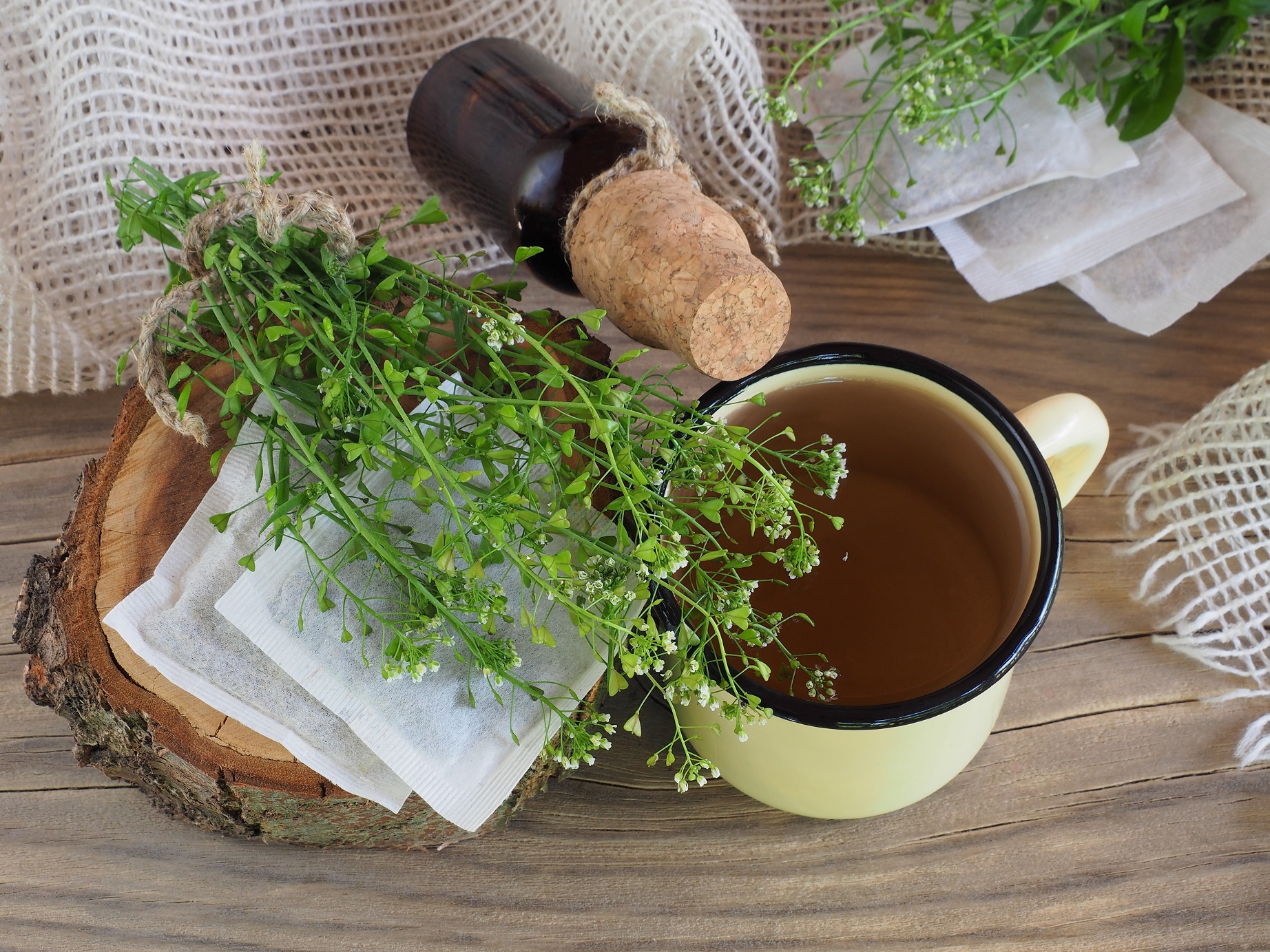





 The astringent and haemostatic properties of shepherd’s purse extend across many systems of the body, where is can be used to stop bleeding and tighten surface membranes.

-
Botanical description
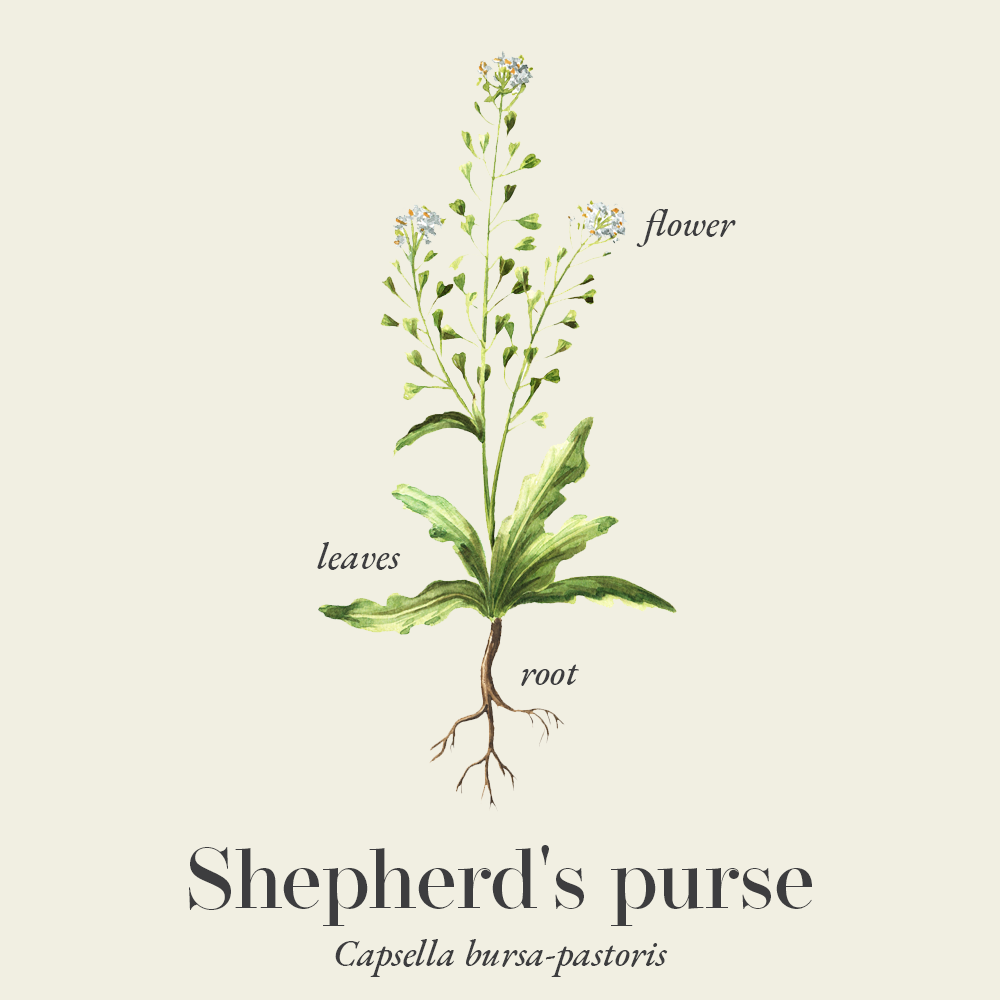
Shepherd’s purse is a small annual plant in the mustard family (Brassicaceae). It grows from a rosette of basal leaves and can reach heights of 10–50 cm (4–20 inches), though it can sometimes be as tall as 70 cm (28 inches) or as short as 2 cm (0.8 inches) (23).
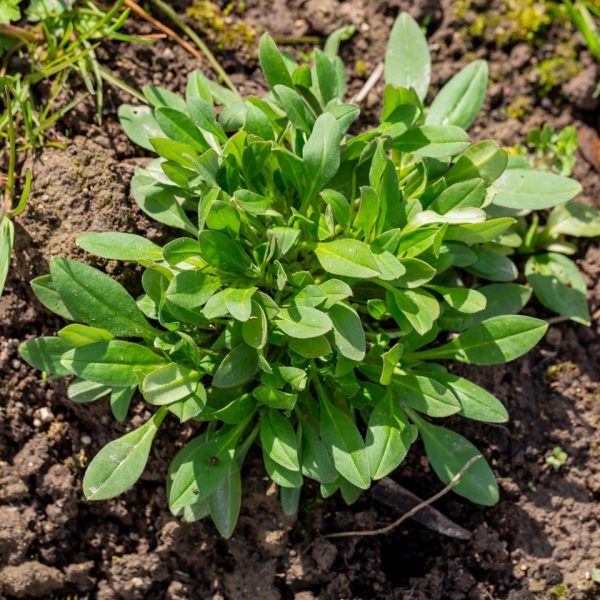
The basal leaves are lobed and form a rosette at the base (24). A slender, branched stem rises from the centre of the rosette, bearing a few oblong, arrow shaped leaves clasping the stem, which are either smooth or toothed (5,12).
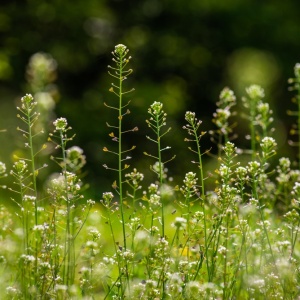
The flowers are small, white, and about 2.5 mm (0.1inches) in diameter, with four petals and six stamens in loose racemes (23).
The plant is easily recognisable by the flat, triangular, heart-shaped seed pods (24).
It reproduces entirely from seed and can produce several generations each year, flowering and producing seeds almost all year round (23).
-
Common names
- Shepherd’s bag
- Shepherd’s scrip
- Shepherd’s sprout
- Shepherd’s heart
- Lady’s purse
- Witches’ pouches
- Rattle pouches
- Case-weed
- Pick-pocket
- Blind-weed
- Salt and pepper
- Mother’s heart
- Cocowort
-
Habitat
Shepherds purse is native to Europe, Asia and North Africa and has been introduced in the UK, America, Africa and Australia, and is now naturalised globally (25). It is an annual plant which can germinate throughout the year in many conditions from disturbed to nutrient rich habitats (26). It is considered to be a highly successful weed, growing on cultivated land amongst crops, baron landscapes, waysides, embankments, waste ground, and gardens (26, 27).
-
How to grow shepherd’s purse
Shepherd’s purse is a fast-growing, prolific weed which produces vast quantities of seed throughout the year and self-seeds freely (23).
-
Herbal preparation of shepherd’s purse
- Infusion
- Tincture
- Vinegar
- Culinary
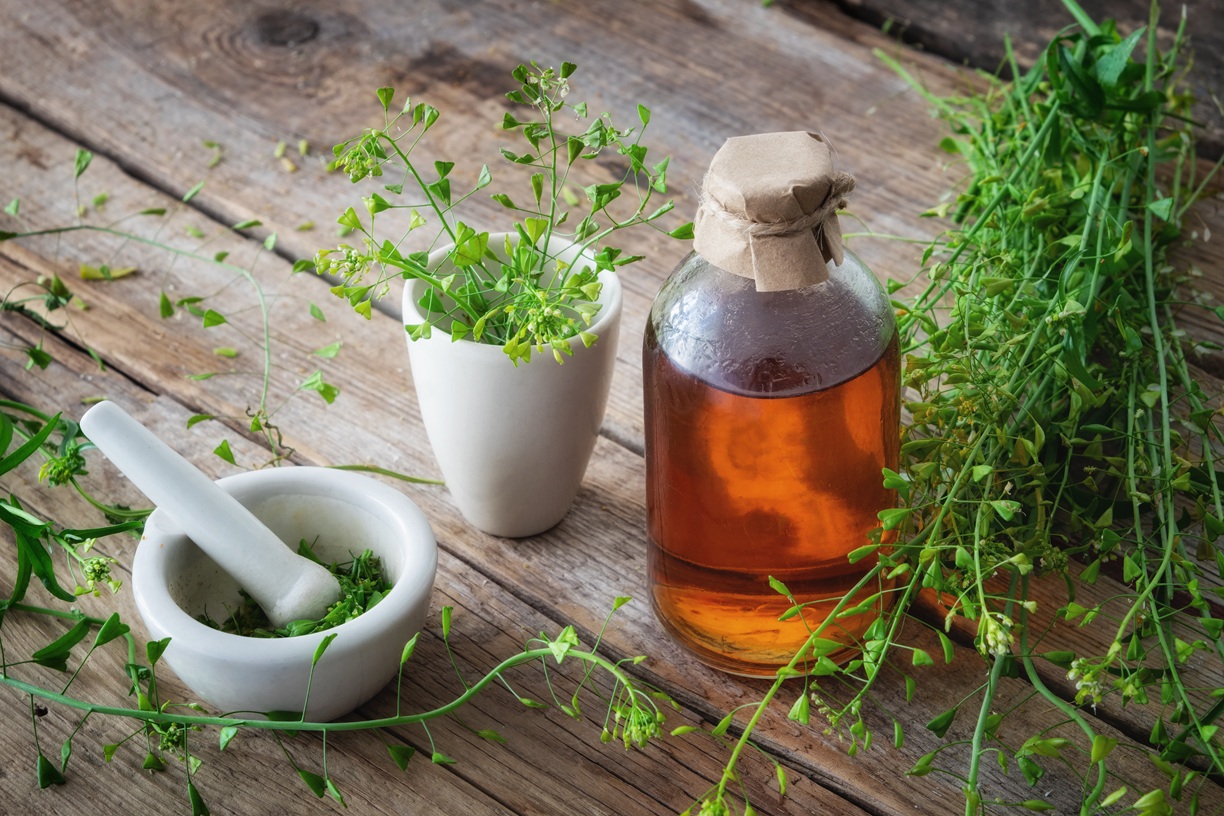
The plant is best prepared with fresh plant material, and loses medicinal potency quickly, do not store the dried herb for more than a year (2,8).
-
Plant parts used
Aerial parts
-
Dosage
- Tincture (ratio 1:5| 25%): 1–2 ml, three times a day (3–6 ml per day) (3,6). Up to 20–40 ml/week of a 1:2 extract (20).
- Fluid extract (1:1 | %): 1–4 ml, three times a per day (3)
- Infusion/decoction: One teaspoon (1–5 g) dried herb per cup, 1–3 cups (3–20 g) per day (3,6). For menstrual conditions one cup (1–5 g) every 2–3 hours just before and during the menstrual period (3).
- Other preparations: 1.9–2.6 g per day (20).
- Topical use:
- Infusion: Steep 3–5 g in 180 ml boiled water for 10–15 minutes, applied to the injured area (21).
- Fluid extract: 5–8 ml applied to the injured area (21).
-
Constituents
- Flavonoids: Quercetin, diosmetin, luteolin, hesperetin, rutin; diosmin; hesperidin (15,17)
- Glucosinolates: Sinigrin (15,22)
- Amines: acetylcholine, choline, tyramine, amino acids 2.33% (proline), histamine (15,17)
- Saponins (15)
- Volatile oils (0.02%): Camphor (17)
- Other constituents: Carotenoids, fumaric acid, oxalic acid, ascorbic acid (vitamin C), vitamin A, vitamin K, calcium, iron, potassium (8,17,22)
-
Shepherd’s purse recipe
Heavy flow tea
This tea can be taken to help reduce heavy menstrual bleeding.
Ingredients
- 15 g shepherd’s purse
- 10 g raspberry leaf
- 10 g Lady’s mantle
- 10 g nettle leaf
- 5 g yarrow
How to make shepherd’s purse tea
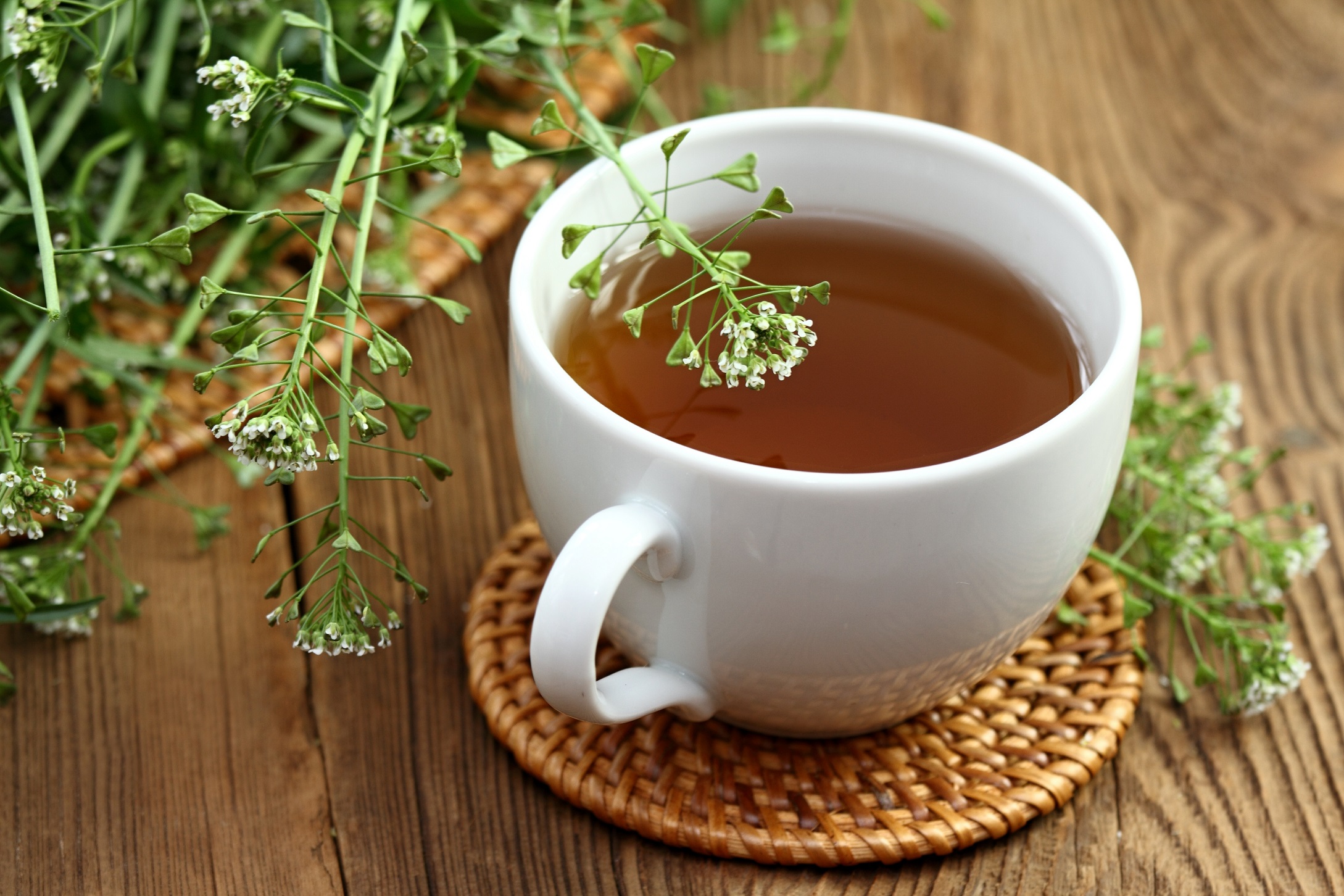
Mix together the dried herbs to store in an airtight container. Using 5 g (~1 teaspoon) per one cup, add the herbs to a teapot, cover in boiling water and let steep for 10–15 minutes. Drink between one and three cups per day. This can be increased to every few hours during a heavy menstrual bleed.

-
Safety
All parts of shepherd’s purse are safe to consume (3,15).
-
Interactions
There are no known drug interactions.
Theoretically, shepherd’s purse or isolated constituents have diuretic, cardiac activity and effects on thyroid function (17). Concomitant use may interfere with medications for blood pressure or thyroid dysfunction, and should be taken under the guidance of a medical herbalist (18).
-
Contraindications
Shepherd’s purse contains oxalic acid and should be avoided by those with a history of kidney stones (3).
Shepherd’s purse should be avoided during pregnancy due to the emmenagogue and abortifacient actions, and uterine stimulation (19).
Only consume when breastfeeding under the guidance of a medical practitioner, due to the glucosinolate constituents which can transfer into the breastmilk and cause adverse effects in newborns (19). You can find qualified medical herbal professionals on our Resources page.
-
Sustainability status of shepherd’s purse
Shepherd purse is globally well distributed with a stable population and is currently not at any threat of extinction (RBGK).
It does not appear on any endangered species acts or lists for concern (27,28,29,30,31).
Read our article on Herbal quality & safety: What to know before you buy and Sustainable sourcing of herbs to learn more about what to look for and questions to ask suppliers about sustainability.
-
Quality control
Shepherd’s purse is commonly wild harvested as it grows prolifically in the wild and spreads widely due to its seed dispersal (22).
-
References
- Maier K. Energetic Herbalism: A Guide to Sacred Plant Traditions Integrating Elements of Vitalism, Ayurveda, and Chinese Medicine. Chelsea Green Publishing; 2021.
- Chown V and Walker K. The Handmade Apothecary: Healing Herbal Remedies. Kyle Books; 2017.
- Hoffmann D. Medicinal Herbalism, The Science and Practice of Herbal Medicine. Healing Arts Press; 2003.
- McIntyre A, and Boudin M. Dispensing with Tradition: A Practitioner’s Guide to Using Indian and Western Herbs the Ayurvedic Way. Anne McIntyre & Michelle Boudin; 2012.
- Mars, B. The Desktop Guide to Herbal Medicine. Basic Health Publications Inc; 2007.
- Easley T, Horne S. The Modern Herbal Dispensatory: A Medicine-Making Guide. North Atlantic Books; 2016.
- Wood M. The Earthwise Herbal Volume 1: A Complete Guide to New World Medicinal Plants. North Atlantic Books; 2008.
- Jones, L. A Working Herbal Dispensary: respecting herbs as individuals. Aeon; 2023.
- Culpeper, N. Culpepers’ Complete Herbal: a book of natural remedies for ancient ills [1653]. Wordworth Reference; 1995.
- Felter HW, and Lloyd JU. Kings American Dispensary 18th Edit; 1898. Reprinted on Henritttas Herbpages. Accessed August 17, 2024. https://www.henriettes-herb.com/eclectic/kings/capsella.html
- Ellingwood, F. The American Materia Medica, Therapeutics and Pharmacognosy; 1919. Reprinted on Henritttas Herbpages. Accessed August 17, 2024. https://www.henriettes-herb.com/eclectic/ellingwood/capsella.html
- Grieve M, Leyel CF, Marshall M. A Modern Herbal. the Medicinal, Culinary, Cosmetic and Economic Properties, Cultivation and Folk-Lore of Herbs, Grasses, Fungi, Shrubs & Trees with All Their Modern Scientific Uses. Dover Publications; 1982.
- Naafe M, Kariman N, Keshavarz Z, Khademi N, Mojab F, Mohammadbeigi A. Effect of Hydroalcoholic Extracts of Capsella Bursa-Pastoris on Heavy Menstrual Bleeding: A Randomized Clinical Trial. J Altern Complement Med. 2018;24(7):694-700. https://doi.org/10.1089/acm.2017.0267
- Reilly, M. Herbal Medicine and Reproductive Health. Aeon; 2021.
- Thomsen M. The Phytotherapy Desk Reference: 6th Edition. 6th ed. Aeon Books; 2022.
- Ghalandari S, Kariman N, Sheikhan Z, Mojab F, Mirzaei M, Shahrahmani H. Effect of Hydroalcoholic Extract of Capsella bursa pastoris on Early Postpartum Haemorrhage: A Clinical Trial Study. Journal of Alternative and Complementary Medicine. 2017;23(10):794-799. https://doi.org/10.1089/acm.2017.0095
- Barnes, J., Anderson, L.A. and Phillipson, J.D. Herbal medicines: a guide for healthcare professionals: Third Edition. Pharmaceutical press; 2007.
- Natural Medicines Professional Database. Therapeutic Research Centre. Shepherd’s Purse Professional Monograph. Published Nov 16, 2023. Accessed August 19, 2024. https://naturalmedicines.therapeuticresearch.com/
- Brinker, FJ. Herbal Contraindications & Drug Interactions: Plus Herbal Adjuncts with Medicines. Eclectic Medical Publications, 2010.
- Bone K. The Ultimate Herbal Compendium: a desktop guide for herbal therapists. Phytotherapy Press; 2007.
- Blumenthal M, Busse WR. Shepherd’s Purse. In: The Complete German Commission E Monographs: Therapeutic Guide to Herbal Medicines. American Botanical Council; 1999. Accessed August 19, 2024. https://www.herbalgram.org/resources/expanded-commission-e-monographs/shepherds-purse/
- Fisher C. Materia Medica of Western Herbs. Aeon Books; 2018.
- Royal Horticultural Society. Capsella bursa-pastoris: shepherd’s purse. Accessed August 17, 2024. https://www.rhs.org.uk/plants/105534/capsella-bursa-pastoris/details
- Blamey M, Fitter R, Fitter AH. Wild Flowers of Britain and Ireland: 2Nd Edition. A & C Black; 2013.
- Royal Botanical Gardens Kew (RBGK). Capsella bursa-pastoris (L.) Medik. Plants of the Word Online (POWO). Accessed August 8, 2024. https://powo.science.kew.org/taxon/urn:lsid:ipni.org:names:30092589-2
- Pearman, DA, Stroh, PA, Humphrey, TA, Burkmar, RJ, Pescott, OL, Roy, DB, & Walker, KJ. Capsella bursa-pastoris (L.) Medik. BSBI Online Plant Atlas Published 2020. Accessed August 17, 2024. https://plantatlas2020.org/atlas/2cd4p9h.yes
- IUCN red list of threatened species: Shepherd’s purse: Capsella burse-pastoris. IUCN. June 10, 2012. Accessed August 17, 2024. https://www.iucnredlist.org/species/202946/2758177
- Convention on International Trade in Endangered Species of Wild Fauna and Flora (CITES). Accessed August 17, 2024. https://checklist.cites.org/#/en
- NatureServe explorer 2.0. Natureserve.org. Accessed August 17, 2024. https://explorer.natureserve.org/Taxon/ELEMENT_GLOBAL.2.155221/Capsella_bursa-pastoris
- UpS list of herbs & analogs. United Plant Savers. Published May 14, 2021. Accessed August 17, 2024. https://unitedplantsavers.org/ups-list-of-herbs-analogs/
- Cheffings C, Farrell L, Dines T et al. The Vascular Plant Red Data List for Great Britain. Species Status No. 7. JNCC. Published 2005. Accessed August 17, 2024. https://hub.jncc.gov.uk/assets/cc1e96f8-b105-4dd0-bd87-4a4f60449907

Meet our herbal experts
Our monographs are written by our monograph authors and edited, reviewed and updated by Herbal Reality.
Meet our Herbal Reality team or explore our Herbal Reality authors.