














Examining herbal medicine as supportive care for children’s health, with attention to paediatric physiology, appropriate preparations, safety, and the evidence for key remedies.

Over recent years herbal medicine and complementary therapies have continued to grow in popularity among families. Parents are drawn to these approaches for their whole-person, patient-centred philosophy, focus on wellness and prevention, and when looking for safe or natural alternatives with fewer potential side effects. Many parents also report choosing complementary therapies following their own positive personal experiences (1,2).
According to the World Health Organization, complementary and alternative medicine plays an important role in supporting population health needs and addressing many of the healthcare challenges of the 21st century, including increasing antibiotic resistance and the growing prevalence of chronic inflammatory conditions.
Childhood is a period of rapid growth and development, where diet, lifestyle, and environmental factors influence change and may contribute to common health concerns such as upper respiratory infections, sleep disturbances, digestive issues, stress, and anxiety. In many cases, these conditions are minor or self-limiting, with parents often choosing to manage symptoms using over-the-counter medicines or complementary therapies (3).
Coughs, colds, and digestive upset remain among the most common reasons parents seek healthcare advice. Alongside conventional treatment, many families are increasingly exploring herbal medicine as a supportive approach for these conditions. When used appropriately, herbs may offer gentle therapeutic support based on traditional use, emerging evidence, and, where necessary, professional supervision.
Why children need special consideration
Children are not simply small adults. Their liver function, digestive capacity, and immune systems are still developing, meaning they process and respond to medicines, including herbs, differently. This requires careful consideration when selecting herbs, preparations, and dosages.
Many herbs are well suited to children due to their generally gentle nature and broad supportive actions. Some can be used safely at home by parents and caregivers, while others require guidance from a qualified herbal practitioner.
In herbal medicine, children’s dosages are adjusted according to age, weight, and body surface area to determine an appropriate proportion of the adult dose.
What form of herbs can children take?
Herbal medicines may be given to children in a range of forms, including:
- Teas/infusions: Prepared by steeping fresh or dried herbs in freshly boiled water for 5–15 minutes. Using a covered vessel helps retain volatile compounds. Infusions are typically used for delicate plant parts such as flowers and leaves.
- Tinctures: Produced by macerating or percolating herbs in alcohol and water. Alcohol extracts phytochemicals and preserves the preparation. Tinctures can be blended into individualised prescriptions and taken in small amounts of water or juice. At appropriate dosages, they can be used safely in children.
- Glycerites: An alcohol-free extraction using vegetable glycerine. Their sweet taste improves palatability, although glycerine is less effective at extracting some phytochemicals, so herbalists may combine glycerites with tinctures.
- Syrups: Commonly used to soothe sore throats and coughs, often containing herbs such as thyme (Thymus vulgaris), liquorice (Glycyrrhiza glabra), and marshmallow (Althaea officinalis).
- Powders and concentrated extracts: Given in capsules or mixed into foods.
- Topical preparations: Salves, creams, baths, and vaporisers allow herbs to be applied to the skin or inhaled.
Taste and compliance are important considerations, as many herbs are naturally bitter. While bitterness can be therapeutically beneficial, it may affect acceptance and compliance in children. Strategies to improve palatability include:
- Adding sweeteners such as liquorice, maple syrup, or honey, or diluting in juice
- Preparing jelly cubes containing measured doses
- Using capsules in older children where appropriate
- Choosing glycerites as a sweeter alternative
Safety, quality and professional guidance
Ensuring correct identification, quality, and preparation of herbal medicines is essential, particularly for children.
Incorrect identification remains a recognised issue within the herbal sector, especially among some over-the-counter products. For this reason, herbs and preparations should always be obtained carefully if sourcing from the wild or from reputable sources, such as qualified practitioners and trusted suppliers.
Herbal support for common childhood coughs and colds

A major healthcare challenge for the 21st century is anti-microbial resistance. Reducing inappropriate antibiotic use through effective non-antibiotic treatment strategies is recognised as an important approach in addressing this.
Upper respiratory tract infections (URTIs) are one of the leading causes of inappropriate antibiotic prescribing, particularly in children (4). The majority of URTIs are viral in origin and commonly caused by rhinoviruses, coronaviruses, influenza A and B viruses, and respiratory syncytial virus, against which antibiotics are ineffective.
Although many URTIs are self-limiting, the need for symptom relief remains significant for both children and caregivers. Consequently, there is growing interest in non-antibiotic treatment strategies that may help alleviate symptoms, particularly in non-bacterial and uncomplicated cases (5).
Within complimentary healthcare approaches, including herbal medicine, the focus is often placed on supporting the individual’s resilience and physiological capacity to respond to infection. Rather than targeting pathogens alone, these approaches aim to strengthen the body’s self-regulating and adaptive mechanisms, supporting recovery and overall immune function (6).
When considering herbal medicine in respiratory health, key therapeutic actions include immune system modulation, antiviral and antimicrobial activity, anti-inflammatory effects, and the use of mucilaginous herbs to soothe irritated airways and ease symptoms.
Some commonly used herbs include:
- Elderberry (Sambucus nigra): Elderberry possesses antiviral, immune-supportive, and antioxidant properties, supporting its traditional use in colds, influenza, and other viral infections. Research suggests that elderberry may help reduce both the incidence of colds and the duration of cold and flu symptoms (7). Flavonoids present within elderberry extracts have also been shown to inhibit viral attachment to host cells (8), indicating a role in supporting resistance to viral infection.
- Echinacea (Echinacea spp.): The major constituents of Echinacea purpurea include alkylamides, polysaccharides, glycoproteins, flavonoids, and phenolic compounds (9). Modern pharmacological investigations have identified a range of bioactivities, including immunomodulatory, anti-inflammatory, antioxidant, antiviral, and antifungal effects (10). Echinacea species are commonly used to support healthy immune function, optimise resistance to infection, and help reduce the duration and severity of symptoms during acute illness.
- Thyme (Thymus vulgaris): Thyme is traditionally regarded as a respiratory antiseptic, antispasmodic, and expectorant. It is frequently used in cough remedies to help relax the airways while encouraging the clearance of mucus in productive coughs. Constituents such as thymol and carvacrol possess anti-inflammatory, antioxidant, and immunomodulatory properties, which may help reduce complications associated with viral infections, including COVID-19 (11).
- Marshmallow root (Althaea officinalis): Marshmallow root contains soothing polysaccharides that coat the mouth and pharynx, helping to ease irritation and local inflammation associated with dry coughs. It has also demonstrated anti-inflammatory, antimicrobial, and wound-healing properties (12), supporting its use in lower respiratory tract irritation and infection. Its mild flavour and soothing texture make it particularly suitable for use with children.
Herbal approaches to digestive discomfort in children
Digestive disturbances are common in childhood and may include abdominal discomfort, fullness, cramping, reduced appetite, nausea, occasional vomiting, and constipation (13). In many cases, these symptoms are mild and self-limiting, although they can still cause distress.
Herbs offer a range of supportive actions, including antispasmodics to reduce cramping, demulcents to soothe irritation, carminatives to relieve bloating, antiemetic herbs, and calming nervines where stress or anxiety are contributing factors.

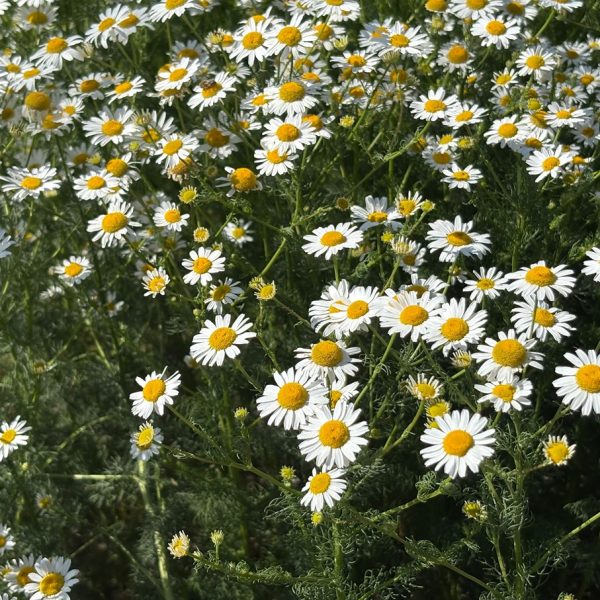
- Chamomile (Matricaria chamomilla): Chamomile is widely regarded as one of the most useful herbs for children. It contains flavonoids, coumarins, and bitter sesquiterpenes (14). Gentle, palatable, anti-inflammatory, and mildly bitter, chamomile helps calm both the nervous and digestive systems. Many herbalists consider it a first-line remedy for digestive upset or sluggish digestion, particularly where symptoms are accompanied by irritability, anxiety, or emotional tension. In Germany, chamomile extracts have also been used in the management of acute diarrhoea in children, where studies suggest they may help reduce symptoms and shorten illness duration (15).
- Lemon balm (Melissa officinalis): Lemon balm, a member of the mint family, has traditionally been used to alleviate digestive discomfort while also promoting relaxation and sleep (16). It contains essential oils, phenolic acids, flavonoids, and triterpenes. Lemon balm acts as a gentle carminative, helping to relieve digestive spasm, bloating, wind, and colic, while also calming anxiety and irritability. Similar to chamomile, it may be particularly helpful in children whose digestive symptoms are affected by stress or overstimulation, and it can also be used in the evening to support restful sleep.
- Ginger (Zingiber officinalis): Ginger is a warming, aromatic spice traditionally used to stimulate digestion. It is particularly indicated where digestion feels sluggish and is commonly used to ease nausea, bloating, excess wind, and colic. Research has shown that ginger may help promote gastric emptying and encourage the movement of food through the digestive tract (17).
- Fennel (Foeniculum vulgare): Fennel is another pleasant-tasting remedy commonly used to ease bloating, wind, colic, and nausea. It may also help calm mild, self-limiting diarrhoea. One study found that fennel seed oil emulsion was more effective than placebo in reducing the intensity of colic in infants (18).
Alongside herbal support, dietary and lifestyle measures remain important in digestive conditions. A fibre-rich diet, adequate hydration, and inclusion of probiotic foods or supplements where appropriate may help maintain digestive health.
Other children’s health conditions
There are many other childhood issues, such as anxiety, sleeplessness, and skin conditions, that can benefit from herbal medicine. Speak to your local herbalist to see how they may be able to help your family.
Herbal medicine can offer gentle and effective support for many common childhood ailments. As children have unique physiological needs, careful attention to quality, appropriate dosing, and professional guidance is essential. When informed by both traditional knowledge and emerging evidence, herbal medicine can play a valuable role alongside conventional care in supporting children’s health.
References
- Wang C, Preisser J, Chung Y, Li K. Complementary and alternative medicine use among children with mental health issues: results from the National Health Interview Survey. BMC Complement Altern Med. 2018;18(1):241. https://doi.org/10.1186/s12906-018-2307-5
- Lucas S, Kumar S, Leach M, Phillips A. Complementary and alternative medicine use in Australian children with acute respiratory tract infection—a cross-sectional survey of parents. Complement Ther Clin Pract. 2020;39:101171. https://doi.org/10.1016/j.ctcp.2020.101171
- Leach M, Veziari Y, Flanagan C, Schloss J. Prevalence of complementary medicine use in children and adolescents: a systematic review. J Pediatr Health Care. 2024;38(4):505-519. https://doi.org/10.1016/j.pedhc.2023.12.010
- Pouwels KB, Dolk FCK, Smith DRM, Robotham JV, Smieszek T. Actual versus “ideal” antibiotic prescribing for common conditions in English primary care. J Antimicrob Chemother. 2018;73(suppl 2):ii19-ii26. https://doi.org/10.1093/jac/dkx502
- Veldman LBM, Belt-van Zoen E, Baars EW. Mechanistic evidence of Andrographis paniculata, Pelargonium sidoides, Echinacea spp, and a combination of Hedera helix, Primula veris/Primula elatior and Thymus vulgaris in the treatment of acute, uncomplicated respiratory tract infections: a systematic literature review and expert interviews. Pharmaceuticals (Basel). 2023;16(9):1206. https://doi.org/10.3390/ph16091206
- Baars EW, Belt-van Zoen E, Breitkreuz T, et al. The contribution of complementary and alternative medicine to reduce antibiotic use: a narrative review of health concepts, prevention, and treatment strategies. Evid Based Complement Alternat Med. 2019;2019:5365608. https://doi.org/10.1155/2019/5365608
- Młynarczyk K, Walkowiak-Tomczak D, Łysiak GP. Bioactive properties of Sambucus nigra L. as a functional ingredient for food and pharmaceutical industry. J Funct Foods. 2018;40:377-390. https://doi.org/10.1016/j.jff.2017.11.025
- Roschek B Jr, Fink RC, McMichael MD, Li D, Alberte RS. Elderberry flavonoids bind to and prevent H1N1 infection in vitro. Phytochemistry. 2009;70(10):1255-1261. https://doi.org/10.1016/j.phytochem.2009.06.003
- Burlou-Nagy C, Bănică F, Jurca T, et al. Echinacea purpurea (L.) Moench: biological and pharmacological properties. A review. Plants (Basel). 2022;11(9):1244. https://doi.org/10.3390/plants11091244
- Barrett B. Medicinal properties of Echinacea: a critical review. Phytomedicine. 2003;10(1):66-86. https://doi.org/10.1078/094471103321648692
- Nadi A, Shiravi AA, Mohammadi Z, Aslani A, Zeinalian M. Thymus vulgaris, a natural pharmacy against COVID-19: a molecular review. J Herb Med. 2023;38:100635. https://doi.org/10.1016/j.hermed.2023.100635
- Shah SA, Akhtar N, Akram M, et al. Pharmacological activity of Althaea officinalis L. J Med Plants Res. 2011;5(24):5662-5666.
- Santich R, Bone K. Phytotherapy Essentials: Healthy Children, Optimising Children’s Health With Herbs. Phytotherapy Press; 2008:56-57.
- Akram W, Ahmed S, Rihan M, et al. An updated comprehensive review of the therapeutic properties of chamomile (Matricaria chamomilla L.). Int J Food Prop. 2024;27(1):133-164. https://doi.org/10.1080/10942912.2023.2293661
- Biller A. [Time and again it hits the little ones: herbal therapy for childhood diarrhoea]. Wien Med Wochenschr. 2007;157(13-14):308-311. https://doi.org/10.1007/s10354-007-0430-x
- Mathews IM, Eastwood J, Lamport DJ, Cozannet RL, Fanca-Berthon P, Williams CM. Clinical efficacy and tolerability of lemon balm (Melissa officinalis L.) in psychological well-being: a review. Nutrients. 2024;16(20):3545. https://doi.org/10.3390/nu16203545
- Wu KL, Rayner CK, Chuah SK, et al. Effects of ginger on gastric emptying and motility in healthy humans. Eur J Gastroenterol Hepatol. 2008;20(5):436-440. https://doi.org/10.1097/MEG.0b013e3282f4b224
- Alexandrovich I, Rakovitskaya O, Kolmo E, Sidorova T, Shushunov S. The effect of fennel (Foeniculum vulgare) seed oil emulsion in infantile colic: a randomized, placebo-controlled study. Altern Ther Health Med. 2003;9(4):58-61.