











This warming, stimulating herbal womb balm helps to reduce inflammation, pain and spasm associated with menstruation and pelvic congestion.
10 mins prep time | 15 mins cooking time | 120 g | Intermediate
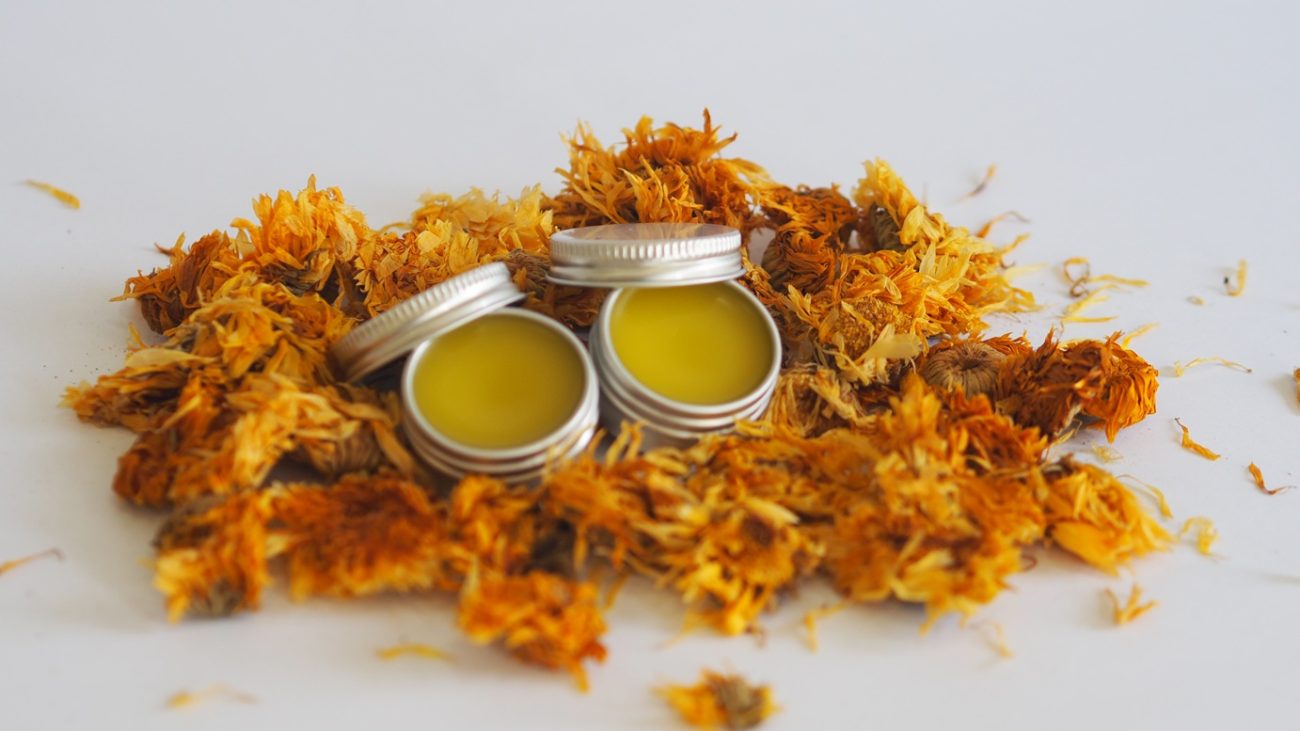
This warming womb balm is made using an oil infused with yarrow (Achillea millefolium), calendula (Calendula officinalis), mugwort (Artemisia vulgaris) and chamomile (Matricaria chamomila), with the addition of warming and stimulating essential oils to promote circulation, reduce inflammation and relieve pain and spasm in the lower abdominal and pelvic area.
This balm is especially suited to those whose pain is relieved by warmth. It can be applied to help offer relief from menstrual cramps, muscular tension, local discomfort and lower back pain or pelvic congestion that presents as bloating, pain or inflammation. This balm can be gently massaged into the affected area to further reduce pain and discomfort.
Yarrow offers anti-inflammatory and antispasmodic actions, which help to relax local muscular tension and encourage local circulation (1,2). The traditional uses of mugwort include as an emmanagogue and in this balm it also offers warming and pelvic circulatory support (1,2). Chamomile provides strong anti-inflammatory and antispasmodic properties, whilst calendula provides soothing, anti-inflammatory and vulnerary actions (1,2).
The addition of the essential oils, helps to warm, soothe and stimulate circulation which can help to reduce inflammation and congestion, often a contributing factor to pain and tension (2,3). Each oil can be infused separately then added to the balm, or, an oil infusion of all the herbs can be made in advance, allowing a two weeks for the mixture to infuse. For more information, visit our article on how to make herbal oils.
Ingredients
- 95 g herbal infused oil
- 18 g beeswax
- 4 g shea butter
- 0.6 g vitamin E
- 10 drops cardamom essential oil
- 8 drops ginger essential oil
- 3 drops black pepper essential oil
- 2 drops cinnamon essential oil
How to make a soothing womb balm
- Add the infused oil, beeswax and shea butter to a bain marie.
- Heat gently until everything is dissolved.
- Allow the mixture to cool slightly, then add the vitamin E and essential oils and mix thoroughly.
- Pour the mixture into a 120 ml glass jar and allow to set uncovered until completely cool.
Medicinal benefits of each herb
- Yarrow: Traditionally used for menstrual discomfort, yarrow encourages pelvic circulation coupled with antispasmodic and anti-inflammatory actions (1,2).
- Calendula: A powerful anti-inflammatory herb that offers soothing and tissue restorative properties, helping to calm irritated or sensitive tissue (1,2).
- Mugwort: This is a warming, circulatory supportive and antispasmodic herb, that helps to relieve pelvic stagnation, especially when this is exacerbated by cold, tight or spasmodic menstrual pain (1,2).
- Chamomile: An anti-inflammatory with a rich amount of flavonoids and volatile compounds including apigenin which help to relax smooth muscle and reduce inflammation, making it effective in relieving cramping, tension and painful menstruation (1,2,3).
- Cardamom: A warming aromatic with antispasmodic and circulatory properties. It helps to alleviate tight, cramping abdominal discomfort (4).
- Ginger: An analgesic, anti-inflammatory providing potent warming and circulatory actions as a result of the gingerols and shogaols which influence inflammatory pain pathways (3,4).
- Black pepper: A heating and stimulating essential oil which encourages local circulation helping to relieve muscular aches and tension (4).
- Cinnamon: This essential oil offers additional analgesic, warming and stimulating properties (4).
When should I use this balm?
This balm can be used to alleviate any kind of menstrual pain, pelvic congestion, lower back pain or inflammation in the pelvic region. This might typically be around the time of menstruation when people experience dysmenorrhoea, however this may present at other times in the cycle as well. This balm can be used to carry out a gentle abdominal massage, which will also contribute to reducing pain and discomfort.
What can I use instead of beeswax?
Beeswax can be substituted for candelilla wax for those who prefer a vegan balm. It should be included in the mix at a concentration of 10%, so for this recipe 12 g of candelilla wax will provide the desired consistency for the balm.
References
- McIntyre A. Complete Herbal Tutor: The Definitive Guide to the Principles and Practices of Herbal Medicine. 2nd ed. Aeon Books Limited; 2019.
- Fisher C. Materia Medica of Western Herbs. Aeon Books; 2018.
- Romm A. Botanical Medicine for Women’s Health. Elsevier Health Sciences; 2017.
- Tisserand M. Aromatherapy for Women: How to Use Essential Oils for Health, Beauty and Your Emotions. HarperCollins UK; 2017.