

A randomised, double-blind trial gave 46 fatigued adults either 960 mg of Korean red ginseng or a placebo daily for three weeks, measuring fatigue via a visual analogue scale.
In this article, we discuss the Anti-fatigue effects of Korean red ginseng extract in healthy Japanese adults: A randomized, double-blind, placebo-controlled study (1).
Plant name and species
Korean red ginseng (Panax ginseng)
Aim of study
The aim was to explore whether Korean red ginseng had an impact on fatigue in healthy volunteers who were experiencing fatigue.
Study method
The study was a double-blind, randomised trial carried out in a single centre in Japan. Volunteers received Korean red ginseng (KRG) or a placebo for three weeks, taking two tablets daily with water at any time of the day. Participants recorded daily their food intake and menstruation. Study measures included:
- A baseline medical history, demographic data and anthropometric data.
- Baseline and three weeks — fatigue visual analogue scale (VAS) as the primary outcome.
- Baseline and three weeks — plasma cortisol and lactate.
- Safety measures — incidence of adverse events, blood pressure, urinalysis, peripheral blood counts, blood biochemistry, liver biochemistry.
Herbal preparation
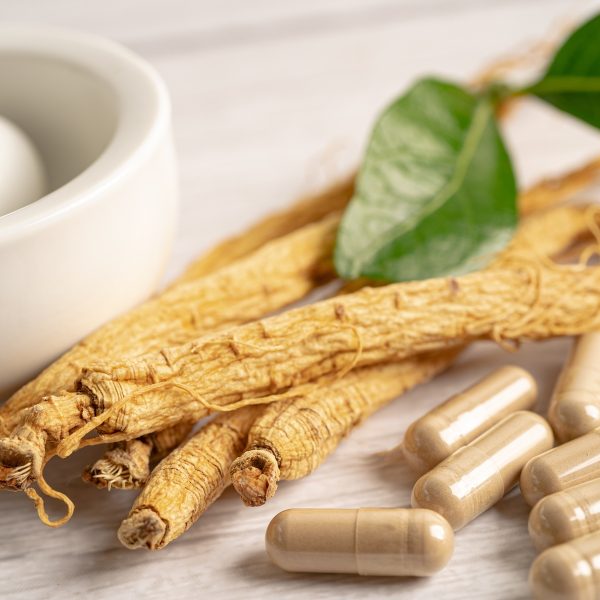
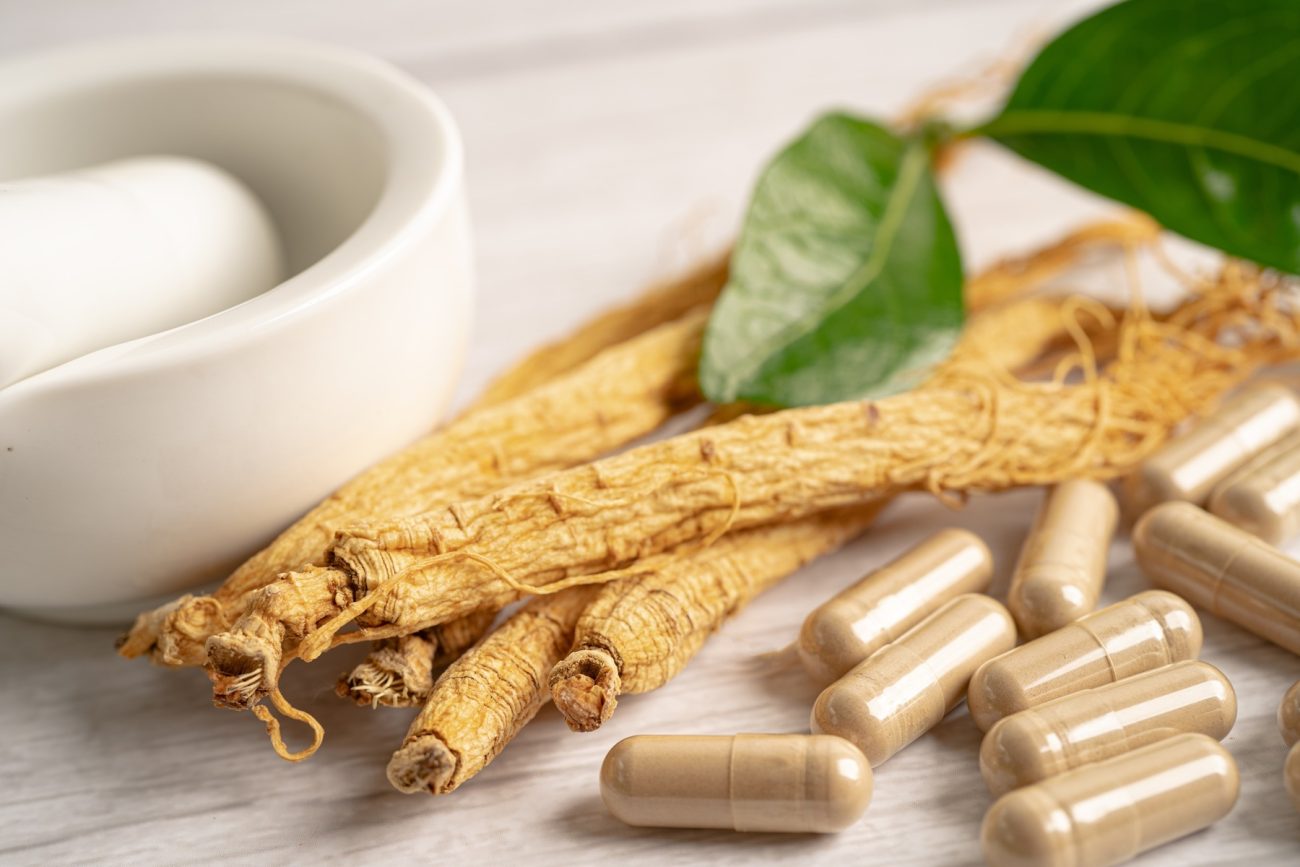
The ginseng tablet (500 mg) comprised 480 mg ginseng powder and 20 mg of avicel and magnesium stearate. The placebo comprised red ginseng flavour and was indistinguishable from the ginseng tablet. The authors do not state the source of the ginseng tablets. Participants received two tablets per day (960 mg ginseng powder).
Sample size
Forty-six healthy male and female volunteers were recruited to a centre in Japan, and individuals were included if they reported feeling fatigued daily. Exclusion criteria were applied, excluding volunteers with chronic conditions, those regularly using supplements or those with a known reaction to ginseng. There were n=23 in each group with none lost to follow-up.
Results of study
There were no significant differences in the baseline characteristics of participants in the ginseng and placebo groups. The average age was 50 years (ranging from 40–60 years), and there was around one third male participants and two thirds female. Participant body mass indexes were within healthy ranges.
After three weeks taking the intervention, there was a significant reduction in fatigue score in the ginseng group compared to placebo, with a difference between the groups of -11.2 mm (p<0.05). There were no differences in plasma cortisol or lactic acid between the groups after three weeks.
The numbers of adverse events were two in the placebo group and one in the ginseng group. There were no additional safety concerns arising from the blood haematology or biochemistry, or the liver biochemistry tests.
Discussion
The authors’ main hypothesis was that ginsenosides Rb1, Rg1, and Rg3, which are antioxidants in red ginseng found to reduce the production of reactive oxygen species, work to preserve the functioning of mitochondria. The study did not measure levels of ginsenosides in the ginseng tablets, although a study that used similar tablets found they consisted of > 5.5 mg/g of Rg1, Rb1, and Rg3 in combination (2).
The present study found that in healthy volunteers who were experiencing fatigue, the ingestion of 960 mg of ginseng tablets daily significantly reduced levels of fatigue experienced after three weeks.
The baseline fatigue scores of the participants were 63–64 mm, measured by the fatigue VAS score. In this test, participants place a cross on a line to indicate how they feel, for example “not at all tired” to “extremely tired”. Other scale items include feeling energetic, tired, vigorous, and mental parameters including whether concentrating or speaking is an effort. The authors also measured cortisol and lactic acid and potential biomarkers of acute stress, although these biomarkers did not change. The scale reflects the subjective experience of the participants.
Ginseng has been the subject of several clinical trials to explore its potential effects on fatigue. In a study in patients with rheumatic conditions, the baseline VAS scores of these individuals were 66 mm overall, so only slightly higher than the present study. In this RCT, participants received 2 g/day of ginseng compared to placebo for 12 weeks.
Both groups improved considerably on the VAS and FACIT-Fatigue scales (ginseng: -16.0 mm and +4.6 points; placebo: -12.2 mm and +4.0 points), but there was no significant difference between them (2). This was a larger (n=120) and longer trial than the present study, and its finding — that ginseng performed no better than a strong placebo response — is a useful counterweight when weighing how much confidence to place in the present three-week result.
In an RCT of fatigue in cancer patients, 250 mg/day of Panax ginseng extract significantly improved feelings of fatigue after four weeks, and also improved activity and mood (3). It may be that ginseng is effective over a shorter time-frame, as shown in the present study and the cancer study, but not the exploration of rheumatic conditions. More research is needed to understand this aspect.
Future studies could ensure that levels of ginsengosides are provided, and that the source of supplements is indicated. Fatigue is a complex phenomenon and perhaps other measures of mental fatigue, sleep patterns, or the existence of pain could help understand the potential benefits that ginseng offers, and possible mechanisms of action.
Conclusion

In the study, 960 mg/day of Panax ginseng powder improved fatigue levels in healthy volunteers with diagnosed daily fatigue (as measured by a VAS fatigue score). Positive effects were seen at three weeks, although there were no changes in cortisol or lactate as possible biomarkers of acute stress. The dosage given was safe and well tolerated, and higher levels of 2 g/day over 12 weeks were also safe and not associated with serious adverse events (2).
It’s worth noting some caveats before drawing firm conclusions. The trial’s headline result (a difference of -11.2 mm, 95% CI -21.6 to -0.8, p=0.035) is only narrowly significant, and sits at the lower end of what is often considered a clinically meaningful change on a fatigue VAS. The sample size was calculated assuming a fairly large effect, which that can inflate the apparent benefit in a small trial.
The study also ran for only three weeks, in a narrow 40–60 age band at a single Japanese clinic, so how long any benefit lasts, and how well it would generalise to other groups, remains untested; nor does the paper report a formal check that blinding actually held. On the positive side, the trial was prospectively registered, had no dropouts, and was funded by a government agri-food programme with no industry involvement and no conflicts of interest declared — genuine marks of quality worth crediting alongside the caveats.
Ginseng has been used as a tonic since ancient times and is recognised as an adaptogen. It contains ginsenosides, polysaccharides, polyphenols, and polyacetylenes, of which ginsenosides are of particular interest as they regulate mitochondrial function, the site of energy production in our cells. Further preclinical trials are required to fully understand the involvement of mitochondria in relieving fatigue and restoring energy, and the role that Ginseng may play.
References
- Lee YG, Hong W, Cho YM, Kwon JE, Yang DC, Kim H, Kang SC. Anti-fatigue effects of Korean Red Ginseng extract in healthy Japanese adults: a randomized, double-blind, placebo-controlled study. J Ginseng Res. 2025;49(3):237-247. https://doi.org/10.1016/j.jgr.2024.12.003
- Cho SK, Song YJ, Han JY, Kim HW, Nam E, Sung YK. Effectiveness of Korean Red Ginseng on fatigue in patients with rheumatic diseases: a randomized, double-blind, placebo-controlled study. Korean J Intern Med. 2024;39(4):680-690. https://doi.org/10.3904/kjim.2023.350
- Rahmani A, Sanaat Z, Hosein NH, Shamsi A, Ghaderi M. The effect of ginseng extract on fatigue in cancer survivors: a randomized double-blind clinical trial. Support Care Cancer. 2026;34(4):327. https://doi.org/10.1007/s00520-026-10398-3