


















This sweet, warming and blood-nourishing spiced congee is a TCM-inspired recipe for breakfast or pudding, made with black rice, black sesame, jujube and aromatic herbs and spices.
10 mins prep time | 90 mins cooking time | 2–3 servings | Easy | Vegan
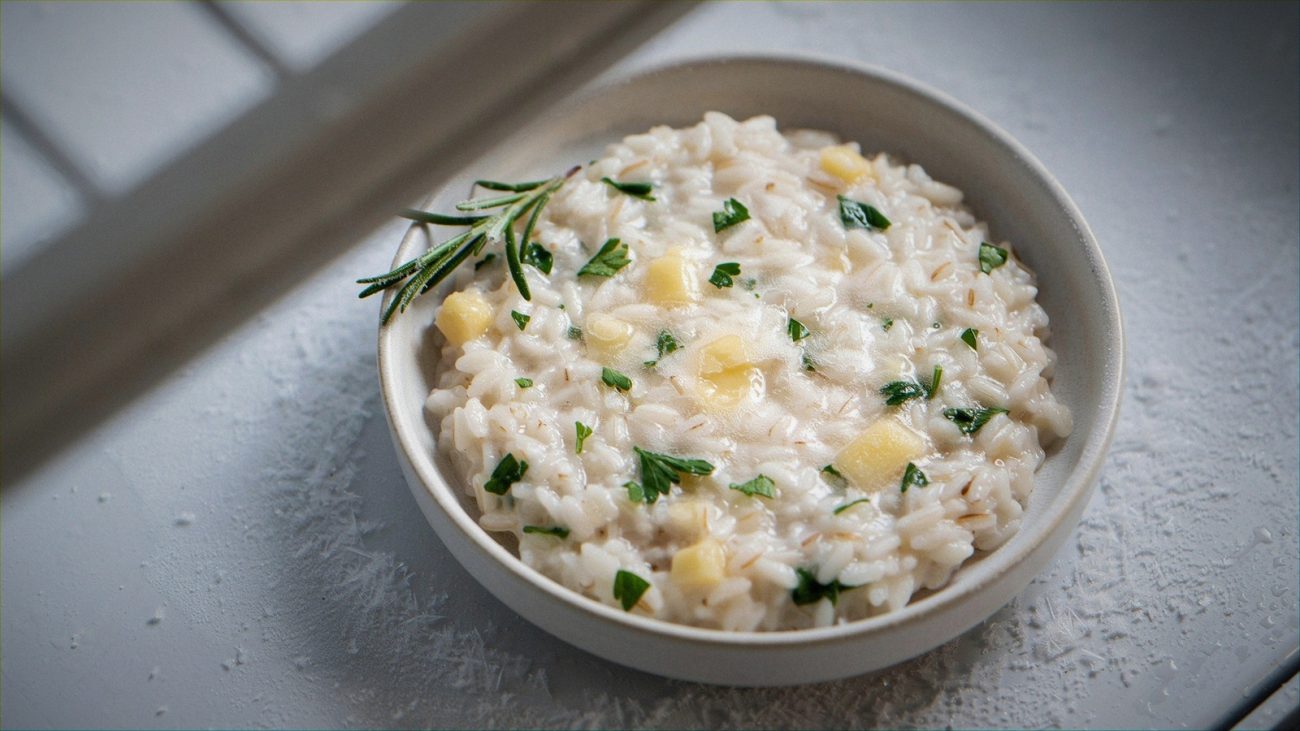
This restorative and warming spiced congee recipe inspired by traditional Chinese nutrition principles helps to nourish the body as it is cooked, easily-digestible and warming. Autumn is traditionally associated with the Lung and Large intestine meridians in TCM, and represents a turn away from the expansive yang energy of summer toward a slower yin energy, calling for transition into conservation and restoration (1,2).
TCM principles recommend nourishing yin to preserve bodily fluids and support the Lungs by consuming warm, gently cooked foods including soups, stews and congees which are easy on the digestive system (2). Black rice is a nourishing wholegrain, and, along with other black coloured foods, associated with restoring vitality and nourishing jing (vital essence) (2).
Nutritionally, black rice is also rich in anthocyanins as well as being a good source of fibre (3). Black sesame (Sesamum indicum) is also associated with nourishing jing as well as enriching the Blood, whilst jujube (Ziziphus jujuba) dates help to strengthen Spleen and Stomach qi, nourish the Blood and calm the shen (spirit) (1,2).
Ingredients
- 100 g black rice, preferably short-grain
- 30 g black sesame seeds, ground to a paste. Ready ground black sesame paste can also be used.
- 6–8 dried jujube dates, pitted and halved
- 2–3 thin slices of fresh ginger
- 1 tsp of cinnamon powder
- 1–1.2 litres water, plus extra as needed
- 15–20 g chopped walnuts, to garnish
- Honey to taste (optional)
How to make spiced congee
- Rinse and then soak the black rice for between 2–4 hours to soften the grains.
- Drain and place in the saucepan with the water, jujube dates and ginger.
- Bring to the boil, reduce to a gentle simmer and cook for between 60–90 minutes, stirring regularly.
- Keep an eye on the mixture and add more water as necessary until the rice softens and the mixture becomes creamy in consistency.
- Once the rice is tender, add the cinnamon and stir in the ground sesame seeds or paste.
- Simmer for another five minutes.
- Serve warm, stir in honey if desired and top with walnuts.
Medicinal benefits of congee herbs
- Cinnamon: A warming, digestive and circulatory stimulant that in TCM helps to dispel cold, support Kidney yang and encourages the circulation of qi and Blood (1,4). This spice also has anti-inflammatory and antioxidant actions whilst also showing positive effects on blood glucose regulation (5).
- Jujube: Considered a sweet, warming herb that is also a strong Blood nourisher by helping to nourish deficiency as well as calm the nervous system (1,4).
- Ginger: Known as a pungent and warming remedy, ginger helps to stimulate circulation, support digestion as well as acting as an anti-inflammatory and antioxidant (1,5).
- Black sesame: In TCM, black sesame is considered to nourish Liver and Kidney yin and nourish the Blood as well as replenish jing and moisten the intestines (1,4). Black sesame also offers an abundance of fatty acids, protein, minerals and antioxidants (2).
Cooking tips
How to store the congee leftovers
If there are leftovers, the congee can be stored in an airtight container in the fridge, once it has cooled down. As it contains rice, it is best to be consumed within 24 hours of preparation.
Can I use white rice instead of black rice?
Yes, this recipe can be made with white, brown or red rice as a substitute, however the cooking time will be reduced with white rice. Black rice, however, contains higher levels of anthocyanins and nutrients.
Do I need to soak the black rice before cooking?
Soaking the rice for 4–8 hours can help to reduce the cooking time, but isn’t essential.
References
- Bensky D, Clavey S, Stöger E. Chinese Herbal Medicine : Materia Medica. Eastland Press, Cop; 2004.
- Pitchford P. Healing with Whole Foods : Asian Traditions and Modern Nutrition. 3rd edn. Berkeley, Calif. North Atlantic Books; 2009.
- Ito VC, Lacerda LG. Black rice (Oryza sativa L.): A review of its historical aspects, chemical composition, nutritional and functional properties, and applications and processing technologies. Food Chemistry. 2019;301:125304. https://doi.org/10.1016/j.foodchem.2019.125304
- Chen JK, Chen TT, Crampton L. Chinese Medical Herbology and Pharmacology. Art Of Medicine Press, Inc; 2004.
- McIntyre A. The Complete Herbal Tutor. Aeon Books; 2019.