












From truffle licences in Italy to chaga exports from Russia, Eric Boa explores how foraging, global trade and habitat loss are shaping the future of wild mushroom conservation.
The UK has a formidable and rich history of naturalists, a diverse bunch of dedicated observers, documenters and conservers of all things wild. The Linnean Society, founded by a botanist in 1788, is the world’s oldest active natural history organisation. Other similar societies soon followed: the Zoological Society of London began in 1826, then the Entomological Society in 1833 and the Plumage League in 1889, now better known as the Royal Society for Birds. The popularity of natural history continues to expand. The RSPB has well over a million members. The Wildlife Trusts, a coalition of 47 independent trusts active around the UK, represents just under a million members.
Mushrooms have attracted the attention of UK nature lovers for many years though with much fewer devotees. Early enthusiasts formed the The British Mycological Society (BMS) in 1896. The balance of interests gradually shifted away from recording the larger and visible species or macrofungi to scientific investigations of fungal biology and behaviour, particularly species of microfungi. Field mycologists continued to organise fungal forays and to record species. As numbers of participants have increased in recent years, the BMS has welcomed a fresh injection of keen naturalists alongside academics. This is a timely shift given growing concerns about threats to fungal biodiversity.
The rise of foraging
There are also more people in the UK today who forage for edible mushrooms, their taste buds piqued by celebrity chefs, field guides, websites and social media. An influx of mainly Europeans with a strong cultural tradition of mushroom collecting — Poland is a prime example — has also expanded the numbers who head for the woods.
The more frequent observation of people carrying baskets of mushrooms, until recently a relatively rare occurrence, has prompted worries about sustainability and wider impacts on habitats. Add to this existing concerns about threats to fungus biodiversity generally and it becomes clear why conservation is a hot topic.
Conservation challenges
It is a welcome move and novel step to be actively addressing fungus conservation. Yet, there are formidable challenges in assessing threats and taking actions to mitigate them. Gathering evidence to support conservation efforts is not straightforward. To be clear, the debate about fungus conservation is predominantly about macrofungi. Although edible mushrooms are a tiny part of this group — around 2300 species, of which less than 5% are regularly consumed (1) — they attract disproportionate attention because of the visibility of harvesting.
A big challenge in conservation is that mushrooms come and — largely — go. Fruiting bodies rarely last for long. This belies a constant existence in the soil, where species play vital roles in recycling dead plant material and enabling many living plants, particularly trees, to access essential nutrients. The fungal biomass present in the soil, or mycelia, is more widely appreciated today (2), but it is still a struggle to conserve something that’s not visible.
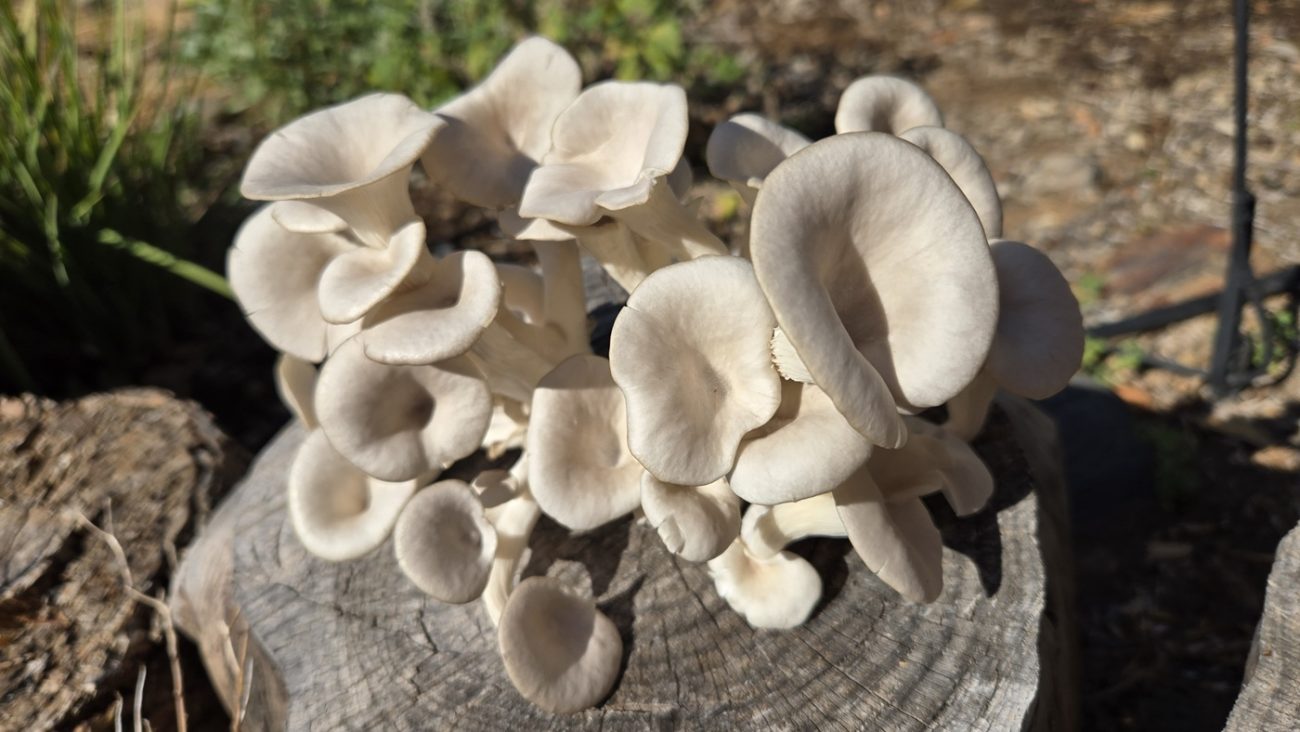
Unlike plants, whose seeds can be stored for posterity in the Arctic (Svalberg) or other dedicated facilities such as the Millennial Seed Bank, macrofungi are much less easily manipulated. The best known edible mushrooms, Agaricus bisporus and, increasingly oyster mushrooms (Pleurotus spp.), can be grown under artificial conditions. Porcini (Boletus edulis and allies) and chanterelles cannot.
These and other esteemed edible mushrooms rely on plants for their existence, forming fungus-root associations known as mycorrhizae; the plants, many of them trees, have the reverse dependency. The mutual relationship highlights another aspect of the debate on conservation of macrofungi, namely the key ecological role that species play in maintaining the integrity and survival of key ecosystems.
Balancing foraging and protection
There are exciting new developments in mushroom conservation which bode well for the future. The Global Fungal Red List Initiative marks a significant step in identifying endangered macrofungi species (3) and though short of data is gathering momentum. A review commissioned by the Food and Agricultural Organisation (4) summarised progress in balancing the sustainable use and conservation of edible mushrooms on a global scale. This is a familiar battleground in biodiversity conservation, where the rights of people to collect living material versus the imperatives to halt declines of species need to be sensitively and pragmatically debated.
A study commissioned by the Forestry Commission Scotland (5) is a good example of how to take into consideration members of the public who want to forage for mushrooms (and other products, including berries) when protecting forests and wild habitats. Resolution of competing needs can be tricky, particularly when hasty conclusions are made. An apparent influx of mushroom foragers in the New Forest for commercial purposes, some from further afield, prompted a backlash and the introduction of a blanket ban — “Look, don’t pick” . Ten years on, efforts to revert to an unofficial policy of allowing small amounts to be collected “for personal use” failed.
Truffles
There are genuine reasons to be concerned about decline in fungal biodiversity, notably loss and degradation of habitats and to a lesser extent the intensity of harvesting edible mushrooms. There is steady pressure to convert forests to agricultural land and attempting to halt or slow this down requires the cooperation of many different groups of people, agencies and businesses. Regulating mushroom collection is more feasible and there are notable examples of this working.
Truffle hunting in Italy is based on a system of licenses (tessorino), issued to those who demonstrate good knowledge of harvesting practices (no raking) and local laws governing access to land. White (Tuber magnatum) and black truffles (T. melanosporum) are highly prized, with around 10,000 active licenses held in Emilia Romagna. The much smaller Molise region has over 5000 license holders (6).
Medicinal fungi: Cordyceps and chaga
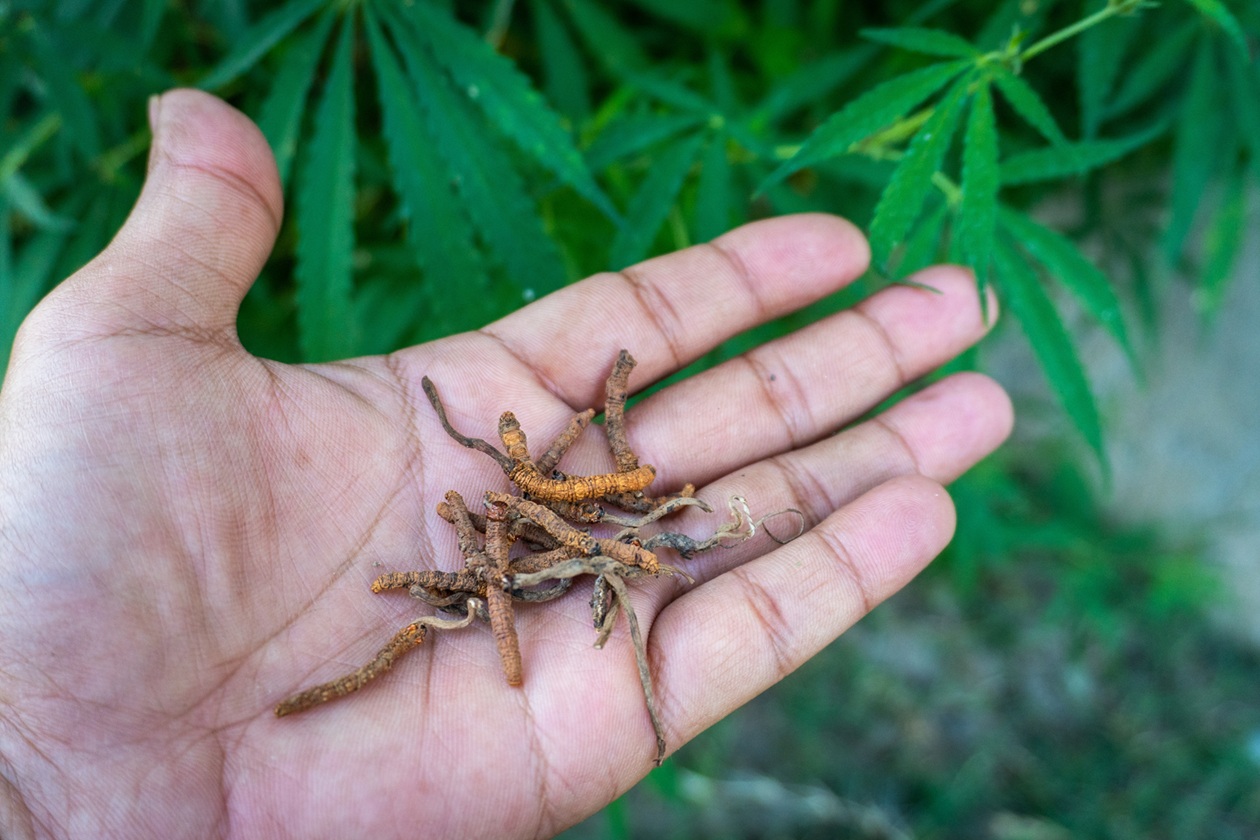
The more valuable the mushroom the tighter the restrictions on harvesting. Licenses to collect medicinal cordyceps (Ophiocordyceps sinensis) in Bhutan are only issued to those with residency rights in collecting areas. The season is short and harvesting is a time-consuming and finicky business. The author met one yak herder who’d managed to collect 200 g of high quality yarsagumba during one month.
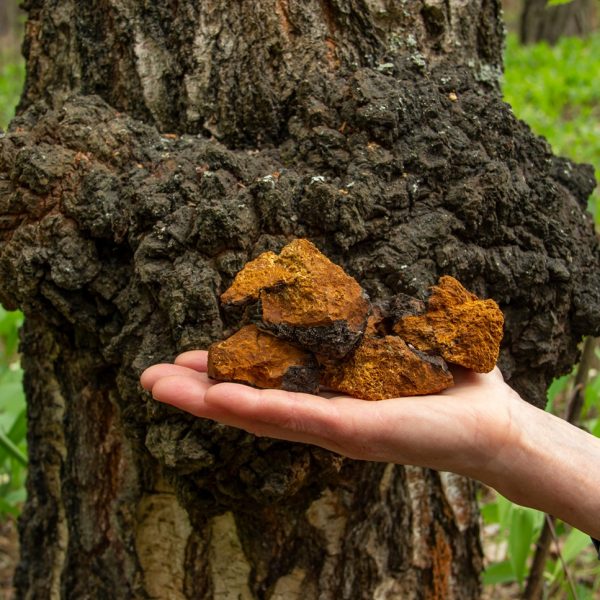
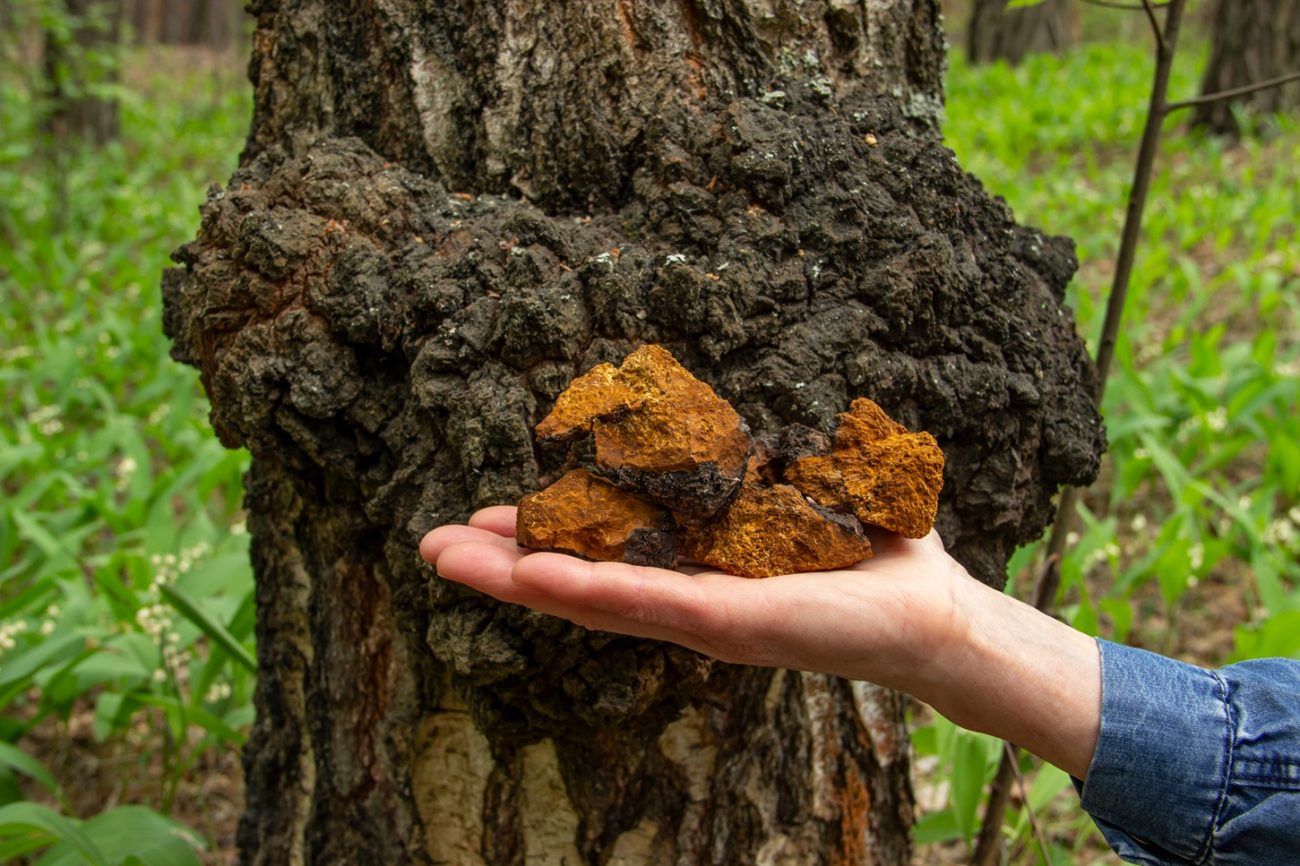
With an auction price of around USD 24000 this was a major source of income for his family. Chaga (Inonotus obliquus) is the other major medicinal mushroom collected from the wild and sold commercially. Chaga is in fact a dark encrustation on the trunks of trees, a non-spore forming black mass which is more decaying wood fibres than fungal mass. In the first six months of 2024, more than 350 t were exported from two oblasts in Russia to Vietnam and Hong Kong (7,8).
The huge amounts of chaga collected from the wild immediately raise questions about sustainability. No information was available about how and who collects chaga in Russia. In Finland, natural production is managed through grower schemes. KÄÄPA, a leading forestry enterprise, produces dowels carrying the fungus which are then inserted into the trees. The chaga fungus is a pathogen and causes internal rots. Natural infections are relatively rare and inoculating trees will reduce their growth. The money earned from selling chaga may well exceed the value of timber from a healthy tree.
Can cultivation ease the pressure?
Cultivating mushrooms is an attractive alternative to wild collections. Production is guaranteed and pressure on natural habitats is reduced. Commercial production is only possible for saprobic species, those that can utilise dead organic matter. Many of the attractive and distinct tasting species, such as porcini (Boletus edulis and allies), chanterelles and niscâlos (Lactarius deliciosus — sold mainly in Spain and France) cannot be cultivated.
Their growing requirements are impossible to replicate outside the wild. Some truffle species, including black truffles, can be managed on a commercial scale in the wild, and the majority of truffles sold come from truffiéres, predominantly in Spain. There has also been some success with growing morels (Morchella spp.) though large scale commercial production has yet to take off.
Global trade
The global trade in mushrooms is on a scale and complexity that few outside a small industry appreciated. The value has been estimated at around USD 3–5 billion (9). Annual exports of chanterelles Southern Africa to Europe can be up to 20 tonnes; a majority of ostensibly Italian porcini sold come from China (4).
China is also a source of truffle species — considered culinarily inferior owing to their taste and texture profiles, which is reflected in their market value — and their import to mainly Italy is tightly regulated. The trade in matsutake (Tricholoma murrillanum) from the Pacific Northwest of North America, Mexico and China to Japan is considerable. Hedgehogs (Hydnum repandum) and chanterelles from Bulgaria and Rumania, and more. All bring in valuable income to rural communities, where employment opportunities are limited.
Regulation
The importance of edible and medicinal mushrooms at sub-national level also needs to be considered when addressing conservation. The Miombo woodland stretches from Mozambique to Angola, Zimbabwe to Tanzania is a rich source of edible mushrooms. Regulation and issuing of licenses works in some places but success depends on effective policing. Attempts to regulate collection of niscálos in Castille Leon in Spain (10) were abandoned because there was no checking on who had paid for a license.
The best way forward in conserving fungal biodiversity, and in particular edible and medicinal mushrooms, is to have accurate information about who is collecting and what it means to them. The wider issue of how to address conservation of macrofungi — the majority of which are either not worth eating or toxic (a tiny proportion) — also depends on better data, but perhaps more importantly on promoting holistic policies which place macrofungi together with plants and animals.
References
- Li H, Tian Y, Menolli N, et al. Reviewing the world’s edible mushroom species: a new evidence-based classification system. Compr Rev Food Sci Food Saf. 2021;20(2):1982-2014. https://doi.org/10.1111/1541-4337.12708
- Sheldrake M. Entangled Life: How Fungi Make Our Worlds, Change Our Minds and Shape Our Futures. The Bodley Head; 2020.
- Mueller GM, Cunha KM, May TW, et al. What do the first 597 global fungal Red List assessments tell us about the threat status of fungi? Diversity. 2022;14(9):736. https://doi.org/10.3390/d14090736
- Boa E, Bentley JW. Sustainable Use and Conservation of Edible Fungi and Invertebrates Used as Dietary Components of Food/Feed. Background Study Paper No. 77. Commission on Genetic Resources for Food and Agriculture, FAO; 2025. https://doi.org/10.4060/cd5752en
- Emery M, Martin S, Dyke A. Wild Harvests From Scottish Woodlands: Social, Cultural and Economic Values of Contemporary Non-Timber Forest Products. Forestry Commission; 2006.
- Luongo E. Tartufi, in Molise i cercatori ufficiali sono più di 5mila. In vigore nuove norme [Truffles: Molise has more than 5,000 official truffle hunters. New rules come into force]. Il Giornale del Molise. Published February 1, 2025. Accessed November 3, 2026. https://www.ilgiornaledelmolise.it/2025/02/01/tartufi-in-molise-i-cercatori-ufficiali-sono-piu-di-5mila-in-vigore-nuove-norme/
- Orekhova E. Rossiiskaya chaga – ob”ekt povyshennogo sprosa v stranakh Azii [Russian chaga: a product in high demand in Asian countries]. Agroekspert. Published June 26, 2024. Accessed November 3, 2026. https://agroexpert.press/eksport-import/rossijskaya-chaga-obekt-povyshennogo-sprosa-v-stranah-azii/
- Rosselkhoznadzor Administration for the Amur Region. Rosselkhoznadzor prokontroliroval eksport 118 tonn chagi iz Priamur’ya v Kitai [Rosselkhoznadzor oversaw the export of 118 tonnes of chaga from the Amur region to China]. Published [Month Day, Year]. Accessed November 3, 2026. https://28.fsvps.gov.ru/news/rosselhoznadzor-prokontroliroval-eksport-118-tonn-chagi-iz-priamurya-v-kitaj/
- Niego AGT, Lambert C, Mortimer P, et al. The contribution of fungi to the global economy. Fungal Divers. 2023;121(1):95-137. https://doi.org/10.1007/s13225-023-00520-9
- de Román M, Boa E. The marketing of Lactarius deliciosus in northern Spain. Econ Bot. 2006;60(3):284-290. https://doi.org/10.1663/0013-0001(2006)60[284:TMOLDI]2.0.CO;2