







Sowa Rigpa is a Tibetan medical tradition born of indigenous practice and Indian, Chinese and Greco-Persian medicine, reading constitution and pulse to guide diet, lifestyle and herbs.
Sowa Rigpa, Tibetan for “science of healing”, is commonly known in English as traditional Tibetan medicine. It is a medical tradition that developed in Tibet roughly 1,300 years ago, synthesising indigenous Tibetan knowledge with medical traditions from neighbouring regions and further afield.
In the early eighth century, the Tibetan king Trisong Detsen sponsored a conference of physicians from Tibet, China, Nepal, India, Persia and possibly as far away as Greece. The purpose was to exchange and assimilate medical knowledge from different traditions. Desi Sangye Gyatso’s history of Tibetan Medicine, Mirror of Beryl, quotes an earlier verse stating: “Without knowledge of the three great systems, one is not counted among the great physicians” (1). These three great systems referred principally to Indian, Chinese and Greek/Persian medicine, alongside implied indigenous Tibetan knowledge.
Around three-hundred years later, Yuthok Yonten Gonpo the Younger travelled to neighbouring countries learning all he could about medicine, and codified the accumulated knowledge into the text known in brief as the Gyü Shi, or Four Tantras, which remains the foundational text of Sowa Rigpa.
At least one scholar notes that most physiological, pathological and pharmaceutical principles derive from Indic medicine, while Chinese medicine contributed to the development of pulse diagnosis, moxibustion, cosmological concepts, as well as vital, solid and hollow organ ideas, and Galenic medicine contributed urine diagnosis (2). So, although Sowa Rigpa developed within Tibet, it was never culturally isolated, and Sowa Rigpa arose through cultural exchange.
Sowa Rigpa and Buddhism
The Four Tantras are:
- Root Tantra (Tsa Gyü)
- Explanatory Tantra (She Gyü)
- Oral Instruction Tantra (Men-ngak Gyü)
- Subsequent Tantra (Chimé Gyü)
The first of the four tantras, the Root Tantra, presents the teachings through a mythopoetic account in which the Medicine Buddha, Sangye Menla (Sanskrit: Bhaiṣajyaguru), manifests two sages, rishis, from his body. Their questions and answers form the basis of the medical teachings.
Sowa Rigpa is deeply connected to Buddhism; however, it is a medicine intended for anyone, regardless of religious belief. This inclusivity is reflected in the Root Tantra itself, where the assembly listening to the teachings of the Medicine buddha includes Buddhists and non-Buddhists alike.
“Beautiful to Behold” Location Location Location
“I have thus spoken these words at one time in the abode of the sages, the City of Medicine called Tanadhug (lit. beautiful to behold)…” (3)
After an initial praise to the Medicine Buddha, the Root Tantra opens with a description of the place where the teaching happens: the city of beautiful to behold. It could be described as the Medicine Buddha’s botanical garden. Replete with all kinds of medicines, and located in specific parts that help explain intuitively the relationship to health and healing. In the South where it is warm, there are medicines that treat cold conditions, in the North where it is cool there are medicines that treat hot conditions, and so on. The landscape is not merely decorative: its geography provides a mnemonic introduction to the relationship between medicinal substances, their qualities and the conditions they treat.
The way knowledge is transmitted in Tibetan culture relies heavily on rote memorisation. Visual imagery provides powerful mnemonic aid, like memory palaces. Books didn’t tend to be published with many images, so in 1687 Desi Sangye Gyatso, the regent of the great fifth Dalai Lama, commissioned the painting of many medical thangkas (traditional paintings with silk brocade borders), based on the descriptions within the Gyü Shi and his own commentary on it, which took a small team of painters six years to paint. Whilst the originals were destroyed during the cultural revolution, other editions have been made and are still used as a learning support (4).
Trees
The Gyü Shi contains vast lists of categories, topics and items. Trees are repeatedly used allegorically as visual mnemonics for organising and categorising medical knowledge. These are all painted in the aforementioned medical thangkas. In the Root Tantra, there is a tree that represents health: its trunk divides into three branches representing the humours (wind, bile, phlegm), the seven bodily constituents (fat, bone, blood, bone marrow, regenerative fluid, nutritional essence) and the waste products (sweat, urine, faeces), while leaves represent the individual components, and “The two flowers of health and longevity blossom and the three fruits of Dharma, wealth and happiness ripen” (3).
Humours and disease
Sowa Rigpa shares with Ayurveda a three-humour model of physiology. While there is some nuanced difference between the two traditions, broadly speaking they are quite similar.
As the Ayurvedic terms are much more well known, they are included here as a point of reference.
Tibetan terminology and phonetics vary considerably in English-language sources. Below are first the phonetics of the Tibetan, Wylie transliteration, Tibetan and English.
| Tibetan | English | Sanskrit | Elements | Temperature |
|---|---|---|---|---|
| Nyepa; nyepa ཉེས་པ། | “Energy” | dosha | ||
| Loong; rlung རླུང་། | Wind | Vata | Air | Cold |
| Tripa; mkhrispa མཁྲིས་པ། | Bile | Pitta | Fire | Hot |
| Beken; badkan བད་ཀན། | Phlegm | Kapha | Earth and Water | Cold |
Within the Buddhist framework of Sowa Rigpa, the Gyü Shi explains that the three nyepas/doshas are ultimately associated with the three mental poisons and cause them to arise: Desire provokes wind (loong); anger provokes bile (tripa); ignorance provokes phlegm (beken).
Then there are secondary conditions: Seasons, provocations (also called evil spirits, dön), diet, and lifestyle.
In the same chapter of the Gyü Shi (Chapter 3 of the Root Tantra), how illness comes to manifest in the body in relation to the nyepas is explained; for example, with age: “Elderly people are loong type, adults are tripa type and children are bekan type. The body is more susceptible to the disorder related to its type at specific ages”(3). In other words, constitution and susceptibility are understood in relation to the stages of life, as well as factors such as season, diet and behaviour.
Diagnosis
In the Root Tantra it is stated “All aspects of disease can be fully understood with the help of diagnostic techniques involving examination through visual [observation], palpation and interrogation [questioning] (3).”
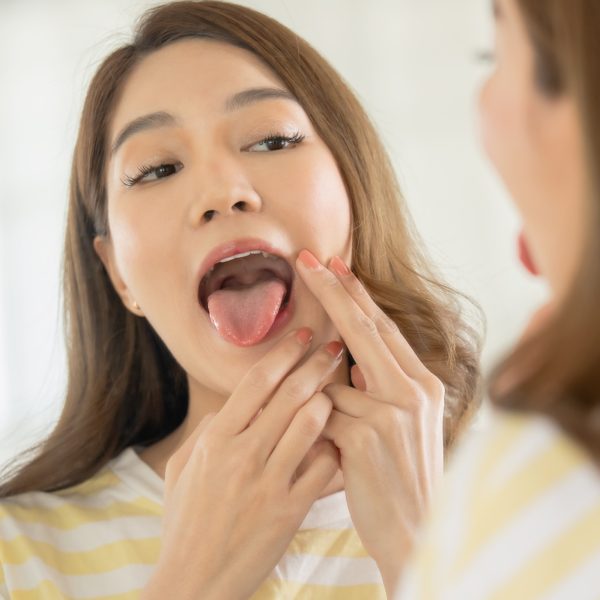
Visual examination refers to tongue analysis and urinalysis.
Palpation refers to pulse analysis, “which communicates information to the doctor like a messenger (3).”
Questioning “means to take the case history, understanding the signs and symptoms, and evaluate the dietary factors (5).”
In the modern practice of Sowa Rigpa there is a great emphasis on pulse diagnosis, and some amchis are renowned for being extremely well versed in it. For instance, people would travel far and wide to see Dr Yeshe Dhonden, physician to the Dalai Lama, for his legendary pulse diagnosis. I have heard other doctors say that many patients won’t say anything until pulse diagnosis has been done and the doctor has stated their conclusions.
Though the Tibetan’s learnt about pulse from the Chinese, as Hsu (6) explains, it is overly simplistic to think they are the same. The Chinese also learnt pulse from the Tibetans, so they have their own system of it that may include knowledge from other medical systems plus their own innovations.
Treatment
According to the Gyü Shi, there are four categories of treatment: Diet, lifestyle, medicine, external therapies. There are generally speaking mild and strong treatments for respective ailments. It specifically states that this is the order in which mild ailments should be approached, “like climbing rungs of a ladder” (3). A strong ailment might require external therapy first, like surgery.
There is a saying to the effect of if diet and lifestyle are correct (according to the person’s constitution and environment), medicines aren’t necessary. If diet and lifestyle are bad, medicines won’t work. And Dr Nida Chenagtsang wrote “Sometimes a simple dietary change is more effective than months of pills, sometimes imbalance has set in and become so severe that dietary and lifestyle interventions won’t make a difference and only strong medications or surgery can save a patient’s life (5).”
Dr. Nida Chenagtsang, a Sowa Rigpa physician, often states that all disease is metabolic. This is rooted in the central role that digestion, or digestive fire (medro) plays in Sowa Rigpa. Diet and lifestyle have a huge impact on our metabolism, our metabolic fire, in both positive and negative ways. If an illness has a dietary cause, then it will have a dietary cure. Similarly with lifestyle. This is why diet and lifestyle are first on the list of treatments.
For a very simple example, if a patient is displaying a cold natured disease, and are eating and drinking cold natured foods, living in a cold place etc then the first and best treatment will be to make dietary and lifestyle changes to warm them up. Likewise, if they have a hot natured disease, are eating hot or inflammatory foods, have a hot inflammatory lifestyle etc. we need to cool them down.
External treatments
As with diet, lifestyle and formulas, the Root Tantra says to apply external treatments according to the nyepa (dosha):
- Loong (vata): Ku Nye (massage) and Hormé (hot oil compress)
- Tripa (pitta): Sweating, blood letting, and cold water therapy
- Beken (kapha): Hot compresses and moxibustion
Formulas
In Sowa Rigpa it is very common to give complex formulas. It is unusual to be prescribed a single herb. This is because of the profound understanding of the complexity of herbs, and the complexity of bodily functions. Formulas help cover more bases.
But, it can also be that a herb will help one thing, and upset another (a herb could be too warming for a more Tripa constitution) and so to avoid side effects, well balanced formulas are usually given.
Summary
This is an extremely concise overview of Sowa Rigpa; in its distilled essence, Tibetan medicine seeks to discover the nature of the patient’s illness, and then to balance it. In balance, one will find, as Yuthok himself wrote “the two flowers of health and longevity blossom and the three fruits of dharma, wealth and happiness ripen” (3).
References
- Yoeli-Tlalim R. Re-visiting ‘Galen in Tibet’. Med Hist. 2012;56(3):355-365. https://doi.org/10.1017/mdh.2012.21
- Gonpo YY. The Root Tantra and the Explanatory Tantra From the Secret Quintessential Instructions on the Eight Branches of the Ambrosia Essence Tantra. Men-Tsee-Khang Documentation & Publication; 2011.
- Gyatso J. Looking for gender in the medical paintings of Desi Sangye Gyatso, regent of the Tibetan Buddhist state. Asian Med. 2012;6(2):217-292. https://doi.org/10.1163/15734218-12341235
- Chenagtsang N. Foundations of Sowa Rigpa. Sky Press; 2024.
- Hsu E. A hybrid body technique: does the pulse diagnostic cun guan chi method have Chinese-Tibetan origins? Gesnerus. 2008;65(1-2):5-29. https://doi.org/10.1163/22977953-0650102001