
















Coffee’s global importance is threatened by leaf rust, wilt disease and climate change, prompting growers, researchers and scientists to rethink what sustainability truly requires.
What do we know about coffee growing?
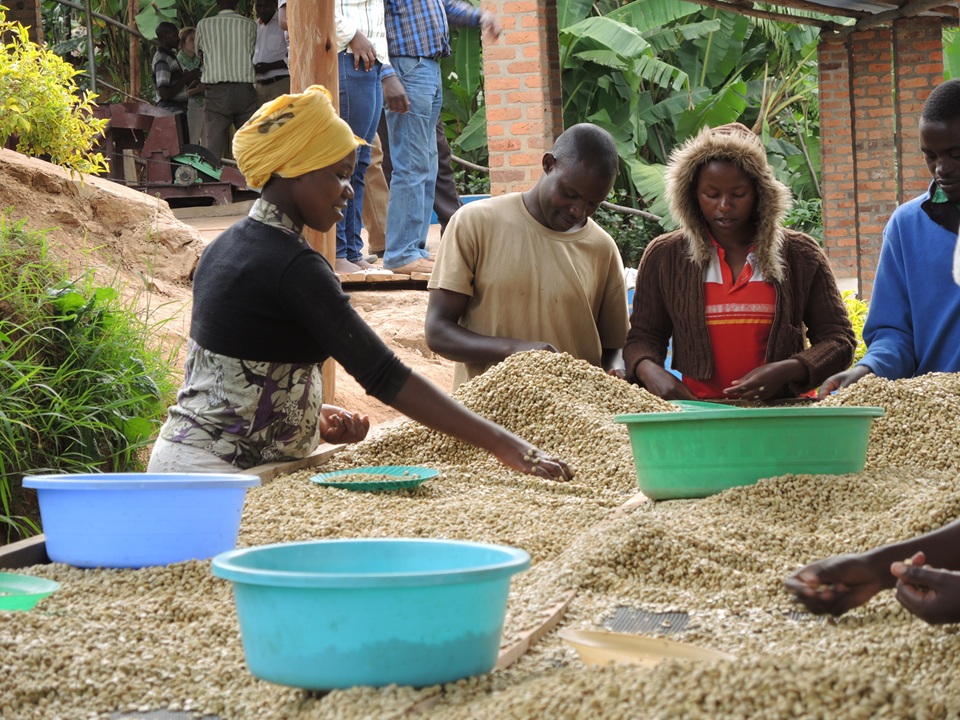
Ethiopia is the origin of coffee. Coffee cultivation has spread around the world, with Colombia and Brazil in South America leading producers. It is one of — if not the — most valuable commodity crops exported by low to medium income countries. Climate change is reducing yields, raising prices for farmers — and for consumers. A spectacular failure of the coffee crop in Sri Lanka in the 19th century forced growers to replace coffee with tea, a more reliable crop. Thus making Britain a nation of tea drinkers.
Much of this is true, but it’s only part of the more complex and evolving story of coffee production. Ethiopia is indeed the home of wild coffee, notably the arabica type (Coffea arabica). Robusta coffee (Coffea canephora) is from West Africa. Often dismissed because of its inferior drinking qualities, consumption is almost on a par with the more highly regarded arabica. Brazil is indeed the largest producer, followed by Vietnam, a major producer of Robusta. Colombia limps in third, closely followed by Indonesia. Kenya, another country we closely associate with coffee only ranks 20th according to the 2025–2026 data (1).
Coffee is not the world’s most valuable agricultural commodity but it is of crucial importance to national economies and rural livelihoods. Coffee is the driver of ever-expanding networks of local cafes and pop-up vendors everywhere. Everyone agrees that coffee has never been so expensive. Climate change has had a big effect on coffee, but mostly through growers having to shift production to cooler, more suitable sites. Disruption and uncertainty affect grower confidence and willingness to invest.
Is coffee growing sustainable? Growers are resilient and show great ingenuity in managing pests and diseases, which this article will focus on. Overcoming constraints requires constant innovation, making sustainability more of a ‘work in progress’ than a clearly defined end point.
Coffee leaf rust
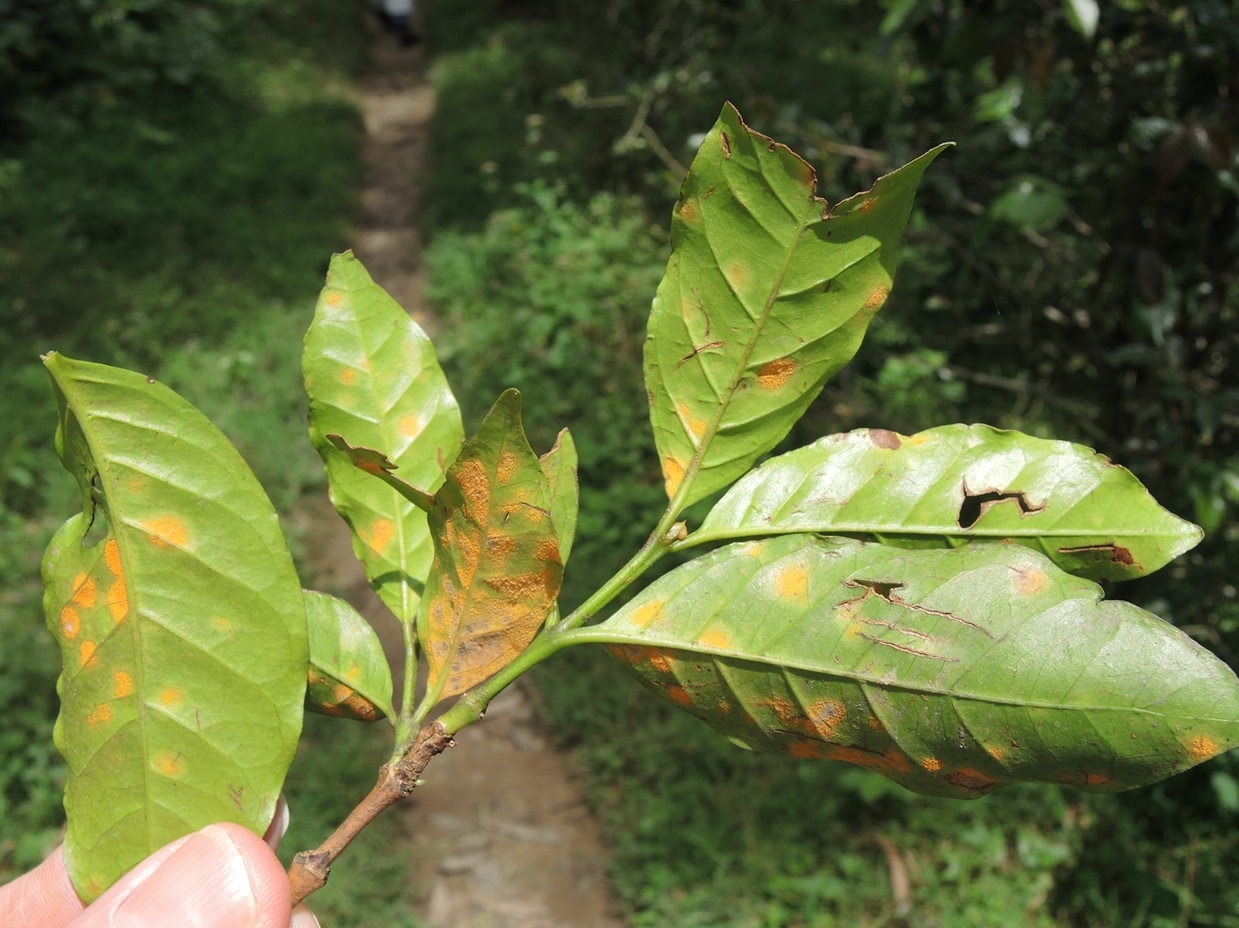
Coffee leaf rust (CLR), caused by the fungus Hemileia vastatrix, is a harmless disease in wild populations of Coffea arabica in Ethiopia (2). When it arrived in Sri Lanka in the 1860s, the collapse in coffee production was catastrophic. This is not why Britain became a tea drinking nation, as Stuart McCook explains in his highly readable history of CLR (3). CLR has played a huge part in how coffee is grown around the world.
Growers started to plant robusta coffee, which is less affected by CLR, and has other advantages. Robusta grows in hotter climates and at lower altitudes than Arabica. When farmers grow Arabica at higher, cooler altitudes it is more susceptible to CLR (4). The higher price paid for Arabica is a big incentive for farmers, yet the rust is a much bigger risk.
CLR is a key component of sustainability because of reduced income and higher costs. The disease is manageable, but during the Big Rust farmers in Colombia were caught unaware. McCook talks about the collapse of the “fragile coexistence between farmers and the rust” from 2007 and 2011, which reduced production by a third.
The Big Rust had wide impacts, from Mexico to Peru, which went far beyond financial losses. Coffee needs regular pruning and replanting of old, vulnerable plants. Why invest in essential routine maintenance when there is a risk of future losses and confidence has been dented?
Out of Central Africa
There is no shortage of other serious coffee pests and diseases. One in particular, coffee wilt disease (CWD), is a more recent discovery, and thought by some to be as important as rust. CWD, caused by the fungus Fusarium xylarioides, was first observed in the Central African Republic in 1927.
Serious outbreaks followed in the 1940s and 1950s before improved sanitation helped to limit spread. New resistant varieties were introduced, a reminder that research and technical support to farmers are both essential components of sustainability.
Residual pockets of disease persisted in the Democratic Republic of the Congo, fuelling a new and punishing epidemic in the 1990s. As colonies were hastily abandoned, political upheaval and conflict from the 1960s onwards saw the decline of research stations, collections of coffee varieties and agricultural advisory services. Coffee farming in once bountiful North Kivu collapsed.
The loss of a key crop threatened the survival of communities in and around Beni, a major centre for coffee growing. It was too late to save coffee plantations by the time a belated international funded response to CWD was put in place — 25 years after the epidemic began (5). It is worth adding a remarkable upside to the North Kivu coffee collapse. Cacao (Theobroma cacao) production has soared following an outstanding partnership between the private company Esco Kivu and over 50, 000 diligent and dedicated farmers (6).
To shade or not to shade
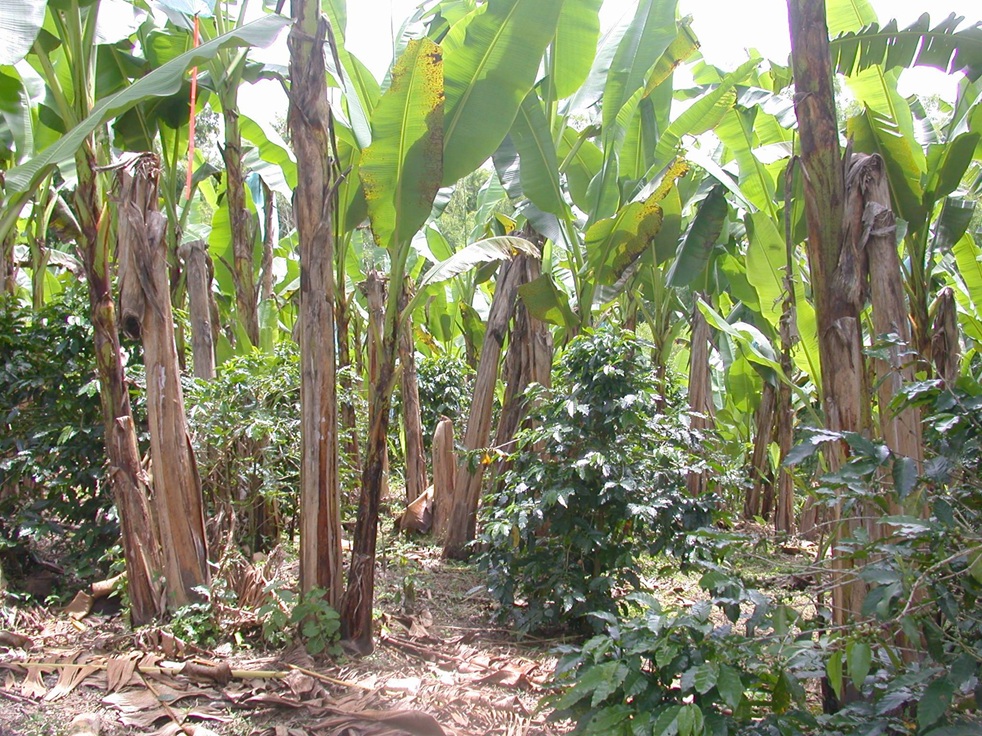
Coffee occurs naturally in forests, shaded by taller trees. One of the big debates is about the value and importance of growing coffee in full sun versus mixed plantations, where trees are grown amongst the coffee bushes. Sustainability is often invoked to support shaded coffee — leaf litter reduces the dependency on fertilizers; higher biodiversity and premium price for bird-friendly certified coffee; additional income from shade tree products. But, there are drawbacks: lower coffee yields; manual harvesting of beans; and increased risk of disease under humid, reduced air movement conditions.
Early efforts to promote coffee agroforestry were enthusiastic but a tad over-prescriptive. It has taken many years of adjustment to balance the needs and priorities of conservationists with those of growers (7). Farmers play a larger role in defining a realistic and achievable road to sustainability. The Smithsonian Migratory Bird Centre was an unlikely and early driver of what became the sustainable coffee movement. Today, there is a broader coalition of organisations seeking a common goal, one perhaps best enshrined in E F Schumacher’s (author of Small is Beautiful) recommendation: ‘find out what people do and help them do it better’.
There’s more to coffee drinking than Arabica or Robusta
Huge effort has gone into making arabica and robusta profitable crops, from plant breeding programmes to development of new methods for pest management. But there are other species worth considering and which are gaining ground. As a recent paper put it: “Wild coffee species are critical for coffee crop development and, thus, for sustainability of coffee production”(8).
Widening the range of coffee species has many advantages for sustainability: adaptability to climate change (9) and wider disease resistance are but two to highlight. The successful introduction of new species requires sustained research and major commitments from institutes and universities.
Sustaining research
Aaron Davis has worked at Kew Gardens for many years and has successfully juggled different career strands, combining taxonomy with a deep interest in coffee growing. Why the juggling act? Because scientists are encouraged to focus on a narrow range of topics. Kew’s original emphasis on economic botany (important crops) faded as taxonomy began to dominate. There have always been coffee researchers and today countries such as Colombia and Brazil host major institutes.
But it’s good to see that Aaron and colleagues have managed to maintain their broad interests in coffee and survive in a highly competitive funding world. The prestige of Kew is important when attracting funders and building project partnerships: the International Union of Conservation of Nature (IUCN) and the Toyota Motor Corporation, through to bilateral funders, including the UK, Denmark and Norway governments.
Can more be done?
Sweeping and deep cuts threaten future research on coffee and other commodities. New species investigated by Davis and colleagues, such as C. dewevrei and C. liberica, do not plant themselves. Restoring aid budgets is a priority but unlikely to happen soon. In the meantime, buy and drink certified coffee. It’s a small gesture but one that counts.
References
Coffee is of endless fascination to many writers. The references include technical papers and general reports and aim to provide a starting point for further exploration of sustainability.
- United States Department of Agriculture, Foreign Agricultural Service. Production, Supply and Distribution. Accessed June 12, 2026. https://www.fas.usda.gov/data/production/0711100
- Koutouleas A, Collinge D, Boa E. Coffee leaf rust: back with a vengeance. Plant Pandemic Study 5. British Society for Plant Pathology; 2022. https://blog.plantwise.org/2021/12/03/threats-to-coffee-production-what-are-they-and-the-solutions/
- McCook S. Coffee Is Not Forever. Ohio University Press; 2012.
- Toniutti L, Breitler J-C, Etienne H, et al. Influence of environmental conditions and genetic background of Arabica coffee (C. arabica) on leaf rust (Hemileia vastatrix) pathogenesis. Front Plant Sci. 2017;8:2025. https://doi.org/10.3389/fpls.2017.02025
- Peck LD, Boa E. Coffee wilt disease: the forgotten threat to coffee. Plant Pathol. 2023;73:506-521. https://doi.org/10.1111/ppa.13833
- Boa E. Eat more chocolate and help reduce poverty. Blog post. 2026. https://www.only-connect.co.uk/post/eat-more-chocolate-and-reduce-poverty
- Wright DR, Bekessy SA, Lentini PE, et al. Sustainable coffee: a review of the diverse initiatives and governance dimensions of global coffee supply chains. Ambio. 2024;53(7):984-1001. https://doi.org/10.1007/s13280-024-02003-w
- Davis AP, Chadburn H, Moat J, O’Sullivan R, Hargreaves S, Nic Lughadha E. High extinction risk for wild coffee species and implications for coffee sector sustainability. Sci Adv. 2019;5:eaav3473.
- Davis AP, Gole TW, Baena S, Moat J. The impact of climate change on indigenous Arabica coffee (Coffea arabica): predicting future trends and identifying priorities. PLoS One. 2012;7(11):e47981. https://doi.org/10.1371/journal.pone.0047981