











Monica Wilde recounts her travels to Namibia’s Kalahari to witness the devil’s claw harvest first hand and explores what this global herbal trade really means for the Ju|’hoansi people.
Harpagophytum procumbens, commonly known as devil’s claw, is a plant that grows in the Kalahari desert and surrounding semi-arid regions of southern Africa, particularly in Namibia, Botswana and parts of South Africa. The common name is also sometimes used to describe Harpagophytum zeyheri which grows in more humid areas, extending into Zimbabwe, Zambia and Mozambique.
Harpagophytum spp. are in the Pedaliaceae family, as is sesame. The name comes from the long claws that protrude from the distinctive hooked fruit. However, the parts devil’s claw harvested for medicine are the secondary storage tubers beneath the ground.
Traditional and modern uses of devil’s claw
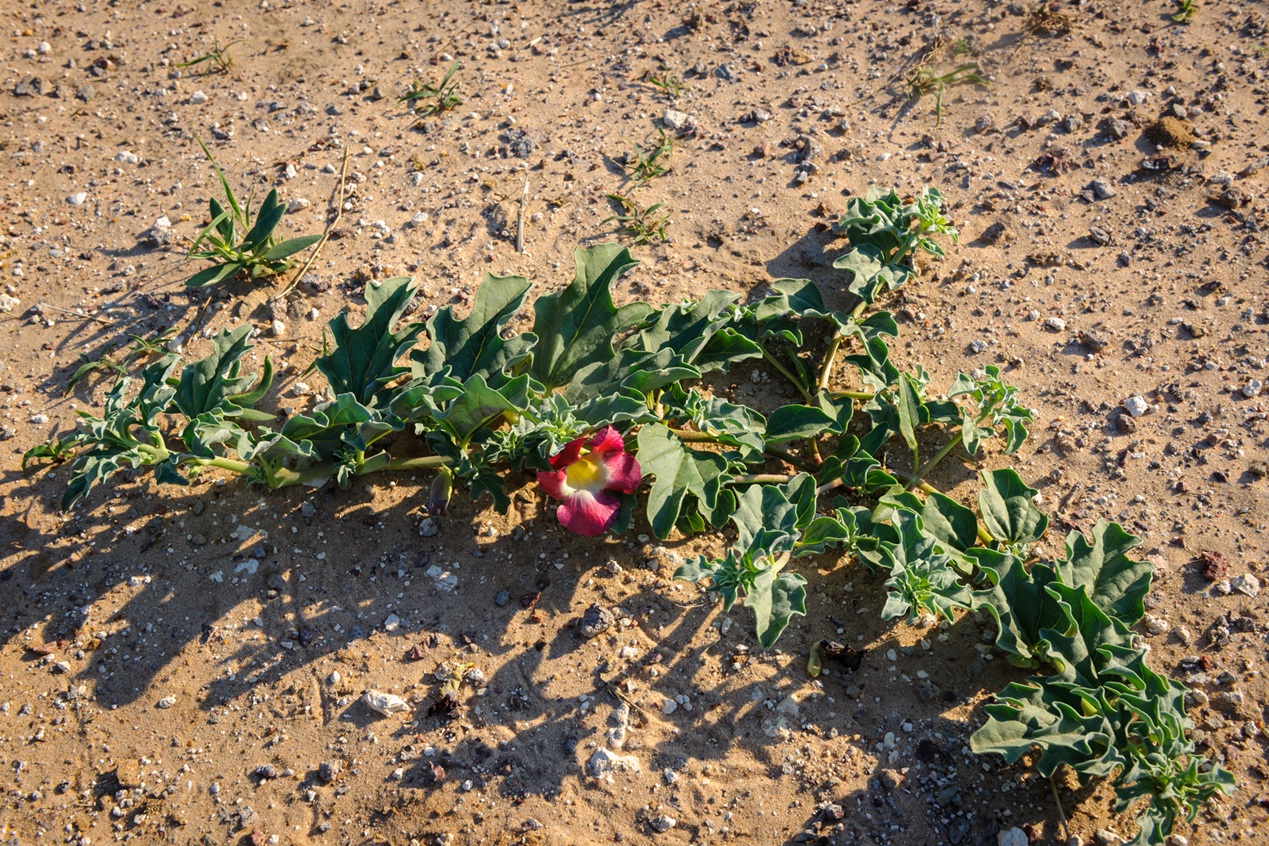
I have visited Namibia annually over the last three years, working with the not-for-profit Heritage Village Foundation and have had the opportunity to witness the devil’s claw harvest at first hand.
Devil’s claw has been known to the Ju|’hoansi bushmen for thousands of years. They take it as a general tonic as well as for specific conditions such as fatigue, emaciation and weakness, chest pain, an affliction they describe as “tuberculosis” and problems urinating (1). This is very different to its use in Europe as an anti-inflammatory and analgesic.
The action of its bitter principles, particularly harpagoside and related iridoid glycosides (2), underpin its modern use in musculoskeletal conditions, such as painful osteoarthritis and lower back pain, but it is also used for tendinitis, loss of appetite, and dyspeptic complaints (3).
Global trade of devil’s claw
The international trade in devil’s claw started in the 1960s when German farmers in Namibia started to supply European phytotherapy markets. Monographs for devil’s claw appeared in the British Herbal Pharmacopoeia in 1981; the German Pharmacopoeia in 1993; the European Pharmacopoeia in 1995; and was assessed by The European Medicines Agency (EMA) in 2005 becoming established as a licensed herbal medicine in 2015.
Today, it remains one of the most commercially important wild-harvested medicinal plants exported from the Kalahari. What makes this trade notable is that it is almost entirely based on wild collection rather than cultivation.
Ju|’hoansi life in the Nyae Nyae Conservancy
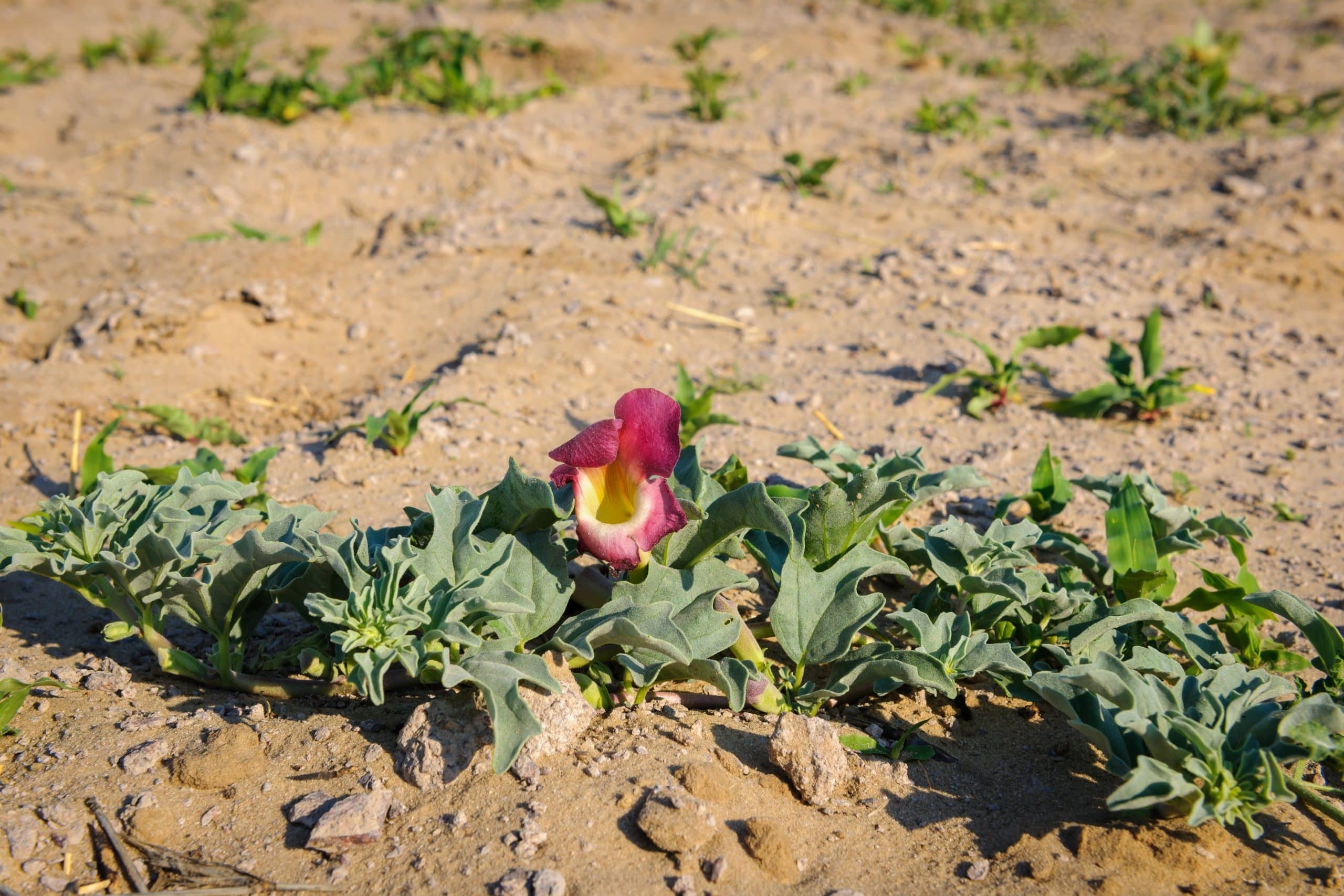
Once free to roam throughout the Kalahari, the Ju|’hoansi now live in an area called the Nyae Nyae Conservancy. Outside of the main township of Tsumkwe, the land is divided into family territories called n!oresi. The Ju|’hoansi who belong to a particular n!ore hold the traditional harvesting rights for the devil’s claw growing on their lands and can be awarded permits to harvest devil’s claw, which is a protected species in Namibia (4).
Unlike Namibian farmers, where overharvesting concerns were considered by CITES, the Ju|’hoansi do not clear their land for agriculture or grazing (5). They still follow a semi hunter-gatherer lifestyle, placing a high value on the plants and paying careful attention to sustainable harvesting.
I was the guest of headman |Ui Kxunta and his wife N!oce Daqm from the village of Djamta!’ae. The Ju|’hoansi lead an economically destitute life. They still forage and hunt, but there are restrictions on what species they can hunt with their bows and arrows. There are also fewer animals in the Nyae Nyae than in the neighbouring National Park as this is where the permanent waterholes preferred by the animals are.
The pans in the Nyae Nyae only carry water for a few months of the year. Even the Ju|’hoansi children that complete rudimentary education — by boarding in Tsumkwe — rarely find salaried jobs in this remote, vast region. Money is hard to come by, relying on craft sales to the tourists that visit this isolated part of Namibia, and ongoing donations from the networks forged through meeting longer-stay tourists, for example those on bushcraft or tracking expeditions. The devil’s claw harvest is commonly thought of as vital economic importance to the Kalahari Ju|’hoansi as a source of scarce cash income (6).
Devil’s claw harvest
The first task in preparing for the devil’s claw harvest was to find transport as the harvest this year was otherwise a full day’s walk — without carrying anything. Hiring the flatbed truck to relay our harvesting party to the devil’s claw grounds, and back again in five days’ time, cost NAD $5000 (£224) for the round trip. It arrived on the appointed day and was quickly loaded up with men, women, children, digging sticks, saucepans, blankets, provisions and water bottles.

After 40 minutes, leaving the main road, we followed a game trail down the side of the National Park, and were eventually deposited by a small woodland of Terminalia trees offering a little respite from the sun.
Before the fires were lit, N!oce found ashes from a previous camp and marked each person’s forehead and upper lip with them, asking their ancestors to bless and protect us. Then the camp was quickly organised and sleeping areas swept into the sand — to put off visits from scorpions and snakes as we curled under our blankets for the night.
For each of the next four days, all the adults left the camp early in the morning. A few teenage children were left in charge of the young ones, as only the babies went with their mothers.
Harvesting is hard work; six hours under the relentless sun, working with long sticks hardened by fire. |Ui showed me how they dig around each plant, avoiding the thorns and loosening the soil to expose the lateral tubers, which can be 50 to 60 centimetres away from the main one. These are cut away by hand. The Ju|’hoansi are very careful to leave the thick root and primary tuber intact, to allow the plant to survive and regenerate. As |Ui explains, “If you take too much and kill the plant then you cannot harvest any more when we return here.
We leave the plants to rest for three years and then they grow big again.” When done properly, this is a genuinely sustainable system. If done poorly, it could deplete local populations but, as |Ui points out “The farmers are not like us Ju|’hoansi, because we do not clear the land for crops or let cattle and goats graze everything on it. We Ju|’hoansi have always respected the land because it gives us everything we need to survive.” I had also witnessed this care with the many other tubers they use, from the kambro water-root to the orchid bulbs they simply translate as ‘onions’.
Processing and selling the harvest
While this attitude of ecological reverence runs deep in the culture of the Ju|’hoansi, it is also supported by the Namibian government, as long ago as 1975 when they passed Schedule 9 of the Nature Conservation Ordinance. Devil’s claw has become a model for community-based natural resource management. Cooperatives and bodies like the Nyae Nyae Conservancy board give licenses and training in sustainable harvesting, drying, grading and traceability.
In places, certification schemes such as the FairWild Foundation have been implemented to provide evidence of ecological sustainability alongside fair payment to harvesters. However, certification is usually only possible for companies or organisations to achieve. Few Ju|’hoansi can read and write. They rely on agents and exporters for all the transactions, export documentation and administrative affairs of commerce.
Each day of the harvest the Djamta!’ae villagers walk further from the camp to the plants not yet reached. Then trudge back in the early evening, for up to an hour, carrying the day’s load in sacks. That is not the end of a physically exhausting day by far. Half the adults then walk for a further hour, with empty jerricans and bottles, to the rangers’ post at the National Park gate to fetch water, and carry it back the same distance, each with up to 20 backbreaking kilos of water.
Others start cooking for the clamouring hungry children, while others clean and slice the tubers. These are then placed onto nets, stretched from the woody stems of thorny shrubs, to dry. Once fully dried they are packed into sacks that will be carefully stored until the Conservancy’s agent’s annual visit to buy them.
What do devil’s claw harvesters earn?
It is hard to estimate how much each villager earns. The Nyae Nyae Development Foundation (n.d.) reports that in 2020/2021 just over 1000 harvesters earned “a direct income of about 4 million Namibian dollars” (£178,770) which would be around £17,877 per person. However, the F.A.O. (2025) records that in the previous year, each harvester in a similar semi-arid region collected 34 kg (7). At the current price that’s $1632 Namibian dollars.
This is confirmed by !Amace N!aici from Di//xao#oha (personal communication), who tells me that each person can expect to earn around $1600 (£70), a year. He says he used to harvest it but it’s a lot of work and ultimately those who are earning the money from the harvest, are the people who own vehicles and grocery stores. Once you deduct the cost of transport for the multiple trips, he estimates that around $400 is profit — barely £18.00.
The purchase cost of vehicles is as high as the UK, although petrol is around £1 per litre and, as Namibia imports over half its food, store-bought food is not much cheaper either. N!oce Daqm tells me it costs £50 per week to feed a large extended family in Djamta!’ae, on top of what they can hunt and forage. !Amace’s village of 17 adults and 10 children spend $1400 (£62) per week on food.
The harvesting of devil’s claw is certainly ecologically sustainable in the Kalahari, but the lives of its indigenous people are economically perilous.
References
- Leffers A. Gemsbok bean and Kalahari truffle: Traditional plant use by Ju|’hoansi in North-Eastern Namibia. Macmillan Education; 2003:121.
- Brendler T. From bush medicine to modern phytopharmaceutical: A bibliographic review of Devil’s Claw (Harpagophytum spp.). Pharmaceuticals. 2021;14(8):726. https://doi.org/10.3390/ph14080726
- European Medicines Agency. Harpagophyti radix. EMA; 2021.
https://www.ema.europa.eu/en/medicines/herbal/harpagophyti-radix - Biesele M, Hitchcock RK. The Ju|’hoan San of Nyae Nyae and Namibian Independence: Development, Democracy, and Indigenous Voices in Southern Africa. Berghahn Books; 2011.
- CITES. Inclusion of Harpagophytum procumbens in Appendix II in accordance with Article II 2(a) and inclusion of Harpagophytum zeyheri in Appendix II in accordance with Article II 2(b) for reasons of look-alike problems. 2000;1–9. https://cites.org/sites/default/files/eng/cop/11/prop/60.pdf
- Nyae Nyae Development Foundation. Devil’s Claw harvesting essential for wildlife conservation. Accessed March 25, 2026. https://www.nndfn.org/projects/devil-s-claw/16-devil-s-claw-harvesting-essential-for-wildlife-conservation
- FAO. Roots of Change: How a Namibian community is turning Devil’s Claw into a source of resilience. 2025 Dec 5. https://www.fao.org/namibia/news/detail/roots-of-change–how-a-namibian-community-is-turning-devil-s-claw-into-a-source-of-resilience
The author would like to thank the indigenous people of Djamta!’ae for contributing to this article and giving their permission for these words and photographs to be shared. The fee from writing this article is donated to the Heritage Village Foundation. They support the Ju|’hoansi’s goals to gain economic independence through sustainable development, while retaining their traditional skills, ancestral knowledge and unique culture. Donations are welcome via heritage-village.com.