

















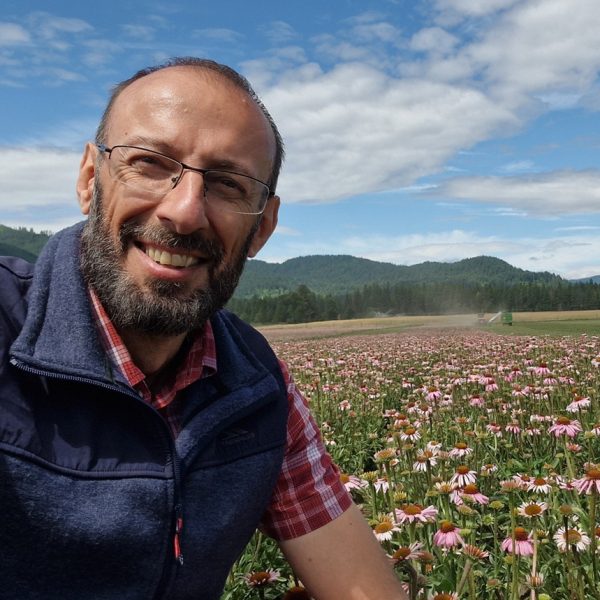
Field insights into sustainable herb sourcing, exploring climate pressures, ethical trade, and supply-chain innovation in the global herbal industry.
Globally, production of medicinal and aromatic plants (MAPs), continues to grow, and with it the importance of sustainable herb sourcing. According to a recent review, the global herbal market is forecast to expand from approximately $155.77 billion in 2025 to $224.51 billion by 2030, representing a compound annual growth rate of about 7.58% (1). This growth reflects rising demand for herbals, with North America representing the largest market and Asia–Pacific the fastest-growing market (1).
Despite this expansion, the sector faces significant headwinds. Sustainability of wild harvesting, climate change, regulatory complexity, and supply-chain cost volatility remain as challenges.
Sustainable herb sourcing in wild harvesting
One of the most persistent challenges is the overharvesting of herbs from wild populations. Many species, such as goldenseal (Hydrastis canadensis) and various orchids used in traditional medicine, have experienced dramatic population declines due to market pressure, while more common species, such as dandelion root (Taraxacum officinale) and raspberry leaf (Rubus idaeus), have faced recent availability constraints.
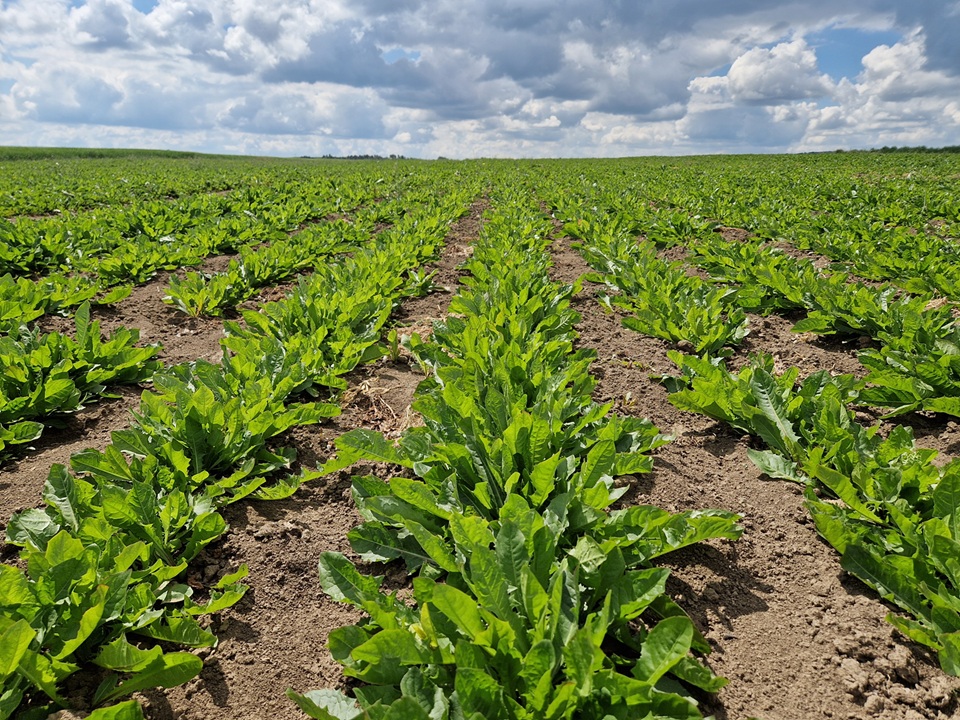
To mitigate risks related to supply insecurity, contaminants (pyrrolizidine alkaloids), and limited traceability, many operations in Albania, Poland, and Ukraine have begun supplementing wild-harvested material with sustainably cultivated stock, improving both environmental outcomes and stock availability.
Climate change and environmental degradation
The impact of climate change on herbal crops is ongoing. Fluctuating precipitation patterns, increasing drought frequency, heat stress, and extreme weather events have disrupted growing cycles and reduced yields. Habitat fragmentation has further undermined the ability of wild plant populations to adapt to these stresses. Research on cowslips (Primula elatior) has shown that fragmented habitats impair their evolutionary capacity to tolerate drought, thereby reducing resilience under warming climate conditions (2).
In response, herbal supply chains are increasingly diversifying sourcing regions and, where possible, selecting and breeding varieties better suited to local conditions. One example is the development of new basil (Ocimum basilicum) varieties, bred to maintain both yield and phytochemical richness under water-stress conditions (3).
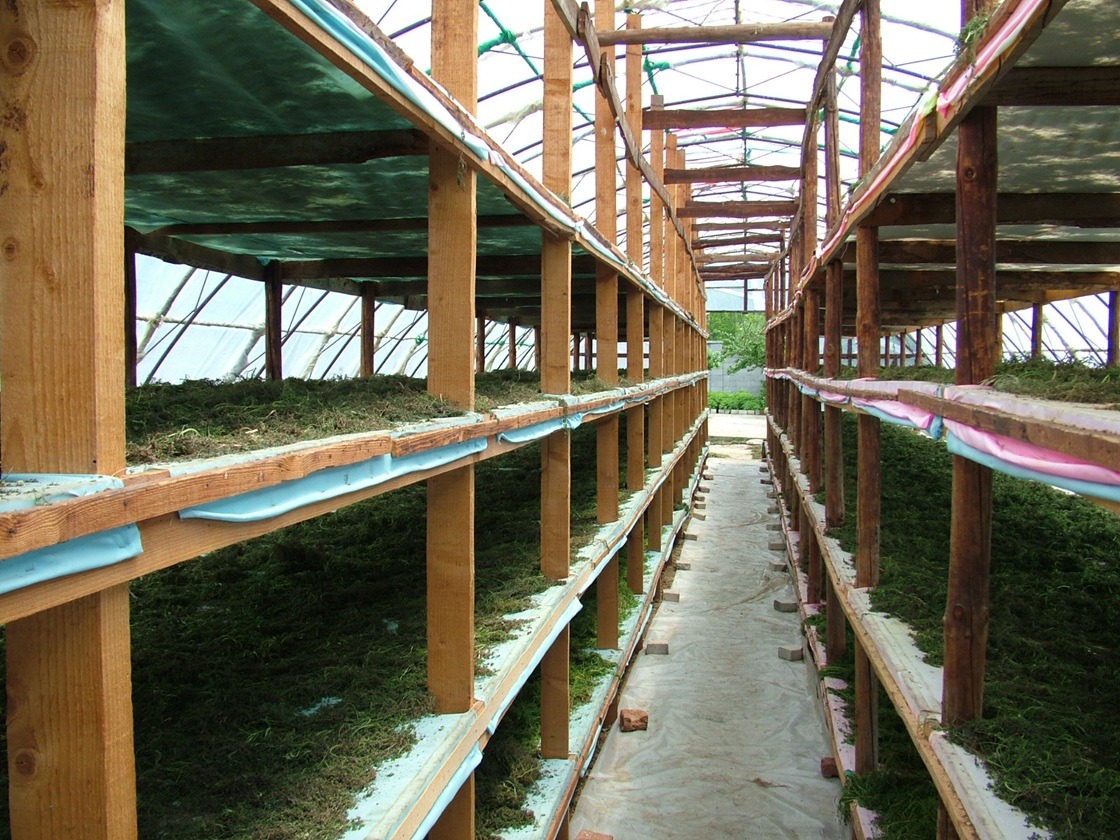
Additional initiatives include increased investment in solar drying infrastructure and replacing fossil fuels with biomass for hot-air dryers. Herb drying has been shown to be one of the most carbon heavy operations in the supply chain and these measures are helping reduce carbon footprints while improving resilience to energy and climate-related disruptions.
Rural-to-urban migration
The rural-to-urban migration in the herbal sector leads to the loss of traditional knowledge and reduced labour availability for both cultivation and wild harvesting. This trend places both supply continuity and sustainability at risk. Experienced harvesters who understand when, where, and how to collect plants sustainably are retiring or leaving for urban employment, while younger generations show declining engagement with these practices.
During engagements with rural communities in 2024 and 2025, several key drivers of migration were identified:
- Income and job security: Unpredictable weather, fluctuating crop prices, and insecure sales channels make herb cultivation and wild collection high-risk and low-reward activities. Seasonal harvesting also leads to inconsistent income, often requiring collectors to supplement earnings with other work.
- Image and self-respect: Wild herb collection is not always perceived as a successful or prestigious career path.
- Access barriers: Knowledge of herb cultivation and collection is often transmitted generationally; those without family exposure face steep learning curves.
- Work–life balance: Cultivation and wild harvesting rarely follow a standard 9-to-5 schedule. Younger generations tend to prioritise flexibility and personal time more than previous generations.
- Policy and certification complexity: Permits, licensing, and certification requirements can be administratively burdensome, often favouring large, established operations over small entrants and individual harvesters.
Supply-chain integrity and quality control
Adequate Quality Control is critical in the herbal industry. Contamination with pesticides, heavy metals, pyrrolizidine alkaloids, tropane alkaloids, adulterants, or fillers remains common. Studies indicate that approximately 27% of commercial herbal products contain adulterants or are entirely substituted with incorrect species (4). While not always intentional, such issues may stem from insufficient plant identification knowledge or inadequate Quality Control within the supply chain.
The same study reported particularly high rates of adulteration in Brazil (68%), followed by Taiwan (32%), India (31%), the United States (29%), Malaysia (24%), Japan (23%), South Korea (23%), Thailand (20%), and China (19%) (4). Findings such as these emphasize the importance of robust Quality Control systems and accurate botanical identification.
While traditional macroscopic evaluation, complemented by chromatographic methods form the foundation of botanical identification, molecular techniques, including DNA barcoding, are available and becoming invaluable tools for ensuring authenticity throughout the supply chain.
Collaborative industry initiatives
The Sustainable Herbs Initiative (SHI) emerged as an important platform for coordinated action across the herbal sector. This coalition of producers, brands, scientists, and herbalists is developing best practices for wild harvesting, traceability, carbon-emissions tracking, and inclusive governance models that recognise nature as a stakeholder in supply-chain decision-making.
One of the most significant recent developments has been the establishment of the Scope 3 Herbal Foot printing Group, led by SHI. Through this pre-competitive collaboration, companies are working collectively to measure and reduce greenhouse-gas emissions across herbal supply chains, reflecting a notable shift in strategic thinking within the industry.
Fair trade and community-led governance
Economic sustainability is central to responsible herb sourcing. Certification schemes such as Fair for Life, FairWild, Fair Trade, and Organic require fair compensation, safe working conditions, and meaningful community engagement. These frameworks help ensure that communities benefit socially and economically from the plant resources they steward, moving beyond extractive models toward shared prosperity.
However, small-scale producers and processors often struggle to afford certification costs, limiting access to premium markets and reinforcing structural inequalities. In this context, group certification schemes continue to play a critical role in securing market access for smallholder organic growers. In 2025 there were over 1.1 million farmers registered under the Participatory Guarantee System (PGS) in India.
In 2024, FairWild implemented its Standard 3.0, expanding eligibility to a broader range of operators, from small-scale harvesters to global traders. While the number of FairWild-certified brands has remained relatively stable, adoption of the standard among operators and traders has increased substantially. This has amplified the standard’s impact and expanded the availability of FairWild-certified botanical ingredients (5).
Implementation of tariffs on imports into the United States
The introduction of US import tariffs in 2025 had significant and multifaceted impacts on global MAP trade, affecting supply chains, pricing, industry profitability, and access to key botanical ingredients. To mitigate these effects, many US companies have sought alternative suppliers, raised shelf prices, or absorbed increased costs, often at the expense of reduced margins.
Trade and industry associations are actively lobbying for tariff exemptions for MAPs that are essential to the US herbal industry but cannot be commercially cultivated domestically. At present, only a limited number of botanical components are exempt from these tariffs.
Looking ahead
For brands and operators in the herbal industry:
- Invest in the selection and breeding of MAP varieties suited to changing climatic conditions without compromising yield or active constituents.
- Diversify botanical sourcing geographically and supplement wild-harvested material with cultivated stock under organic or other sustainability certifications that support restorative ecology.
- Adopt tools and approaches to ensure species authenticity, safety and efficacy of herbal products.
- Invest in community partnerships by working with local harvesters and cooperatives to secure fair wages and long-term resource stewardship.
For regulators and policymakers:
- Strengthen harvesting regulations by establishing science-based quotas, habitat protections, and effective enforcement mechanisms.
- Support access to certification by lowering barriers for small suppliers through funding and technical assistance.
For consumers:
- Choose certified products by seeking credible sustainability and Fair Trade certifications.
- Support transparent brands that disclose sourcing practices and demonstrate long-term commitments to ecological stewardship.
References
- Herbal Medicinal Products Market Size & Share Analysis – Growth Trends and Forecast (2025 – 2030) Source: https://www.mordorintelligence.com/industry-reports/herbal-medicinal-products-market?utm_source=chatgpt.com
- Van Daele, F., Honnay O., Janssens S., De Korthttps Hanne. Habitat fragmentation affects climate adaptation in a forest herb. https://arxiv.org/abs/2303.15712v3
- Rahimi, M., Mortazavi, M., Mianabadi, A. et al. Evaluation of basil (Ocimum basilicum) accessions under different drought conditions based on yield and physio-biochemical traits. BMC Plant Biol 23, 523 (2023). https://doi.org/10.1186/s12870-023-04554-8
- Ichim MC. The DNA-Based Authentication of Commercial Herbal Products Reveals Their Globally Widespread Adulteration. Front Pharmacol. 2019 Oct 24; 10:1227. https://doi.org/10.3389/fphar.2019.01227
- FairWild Impact report 2024: https://www.fairwild.org/our-impact