
















Changing climate — with drought, heat, and shifting rainfall — is altering the bioactive compounds in medicinal plants, raising concern for the quality, safety, and the future of herbal medicine.
The authors of this article are all part of the Research Group ‘Pharmacognosy and Phytotherapy’, UCL School of Pharmacy, WC1N 1AX. United Kingdom; Marce Inggritha Takubessi is also affiliated with the Pharmacy Department, Health Polytechnic of the Ministry of Health Kupang, Kupang, Indonesia; and Michael Heinrich is affiliated with Chinese Medicine Research Centre, College of Chinese Medicine, China Medical University, Taichung, Taiwan.
Medicinal plants sit at the heart of global health, biodiversity, and livelihoods, yet they are under growing pressure from a changing climate, overharvesting, and land conversion. From traditional healing systems to modern pharmaceuticals and natural wellness products, our relationship with medicinal plants is deep, valuable, and increasingly fragile.
Here, we present key insights from a scoping review conducted to better understand how climate change is affecting medicinal plants and what this means for sustainability, access, and long-term stewardship. Understanding these connections is an important step toward protecting medicinal plants for the future.
Medicinal plants: A foundation of health, culture, and livelihoods
Medicinal plants have shaped healthcare throughout history and continue to underpin modern medicine today. Examples of some of the most important drugs originate from plants, including:
- Pacific yew (Taxus brevifolia), the source of the anticancer drug taxol
- Sweet Annie (Artemisia annua), which yielded artemisinin for malaria treatment
- Opium poppy (Papaver somniferum), the origin of morphine
- Autumn crocus (Colchicum autumnale), used to treat gout and inflammatory conditions
Beyond these well-known examples, many other medicinal plant species remain underexplored, representing valuable potential for future therapeutic discoveries.
Medicinal plants also play a vital ecological and social role. They support biodiversity, pollinators, and soil health (1-3), and form the backbone of traditional healthcare systems and local economies—particularly in rural and Indigenous communities (4). Knowledge passed down through generations has guided the use of plants, such as snowdrop species (Galanthus spp.), inspiring neurological treatments, and Chinese angelica (Angelica sinensis), which remains central to traditional Chinese medicine (5,6). Protecting medicinal plants, therefore, means protecting health, culture, and livelihoods — now and for generations to come.
Growing threats: Climate change and habitat loss
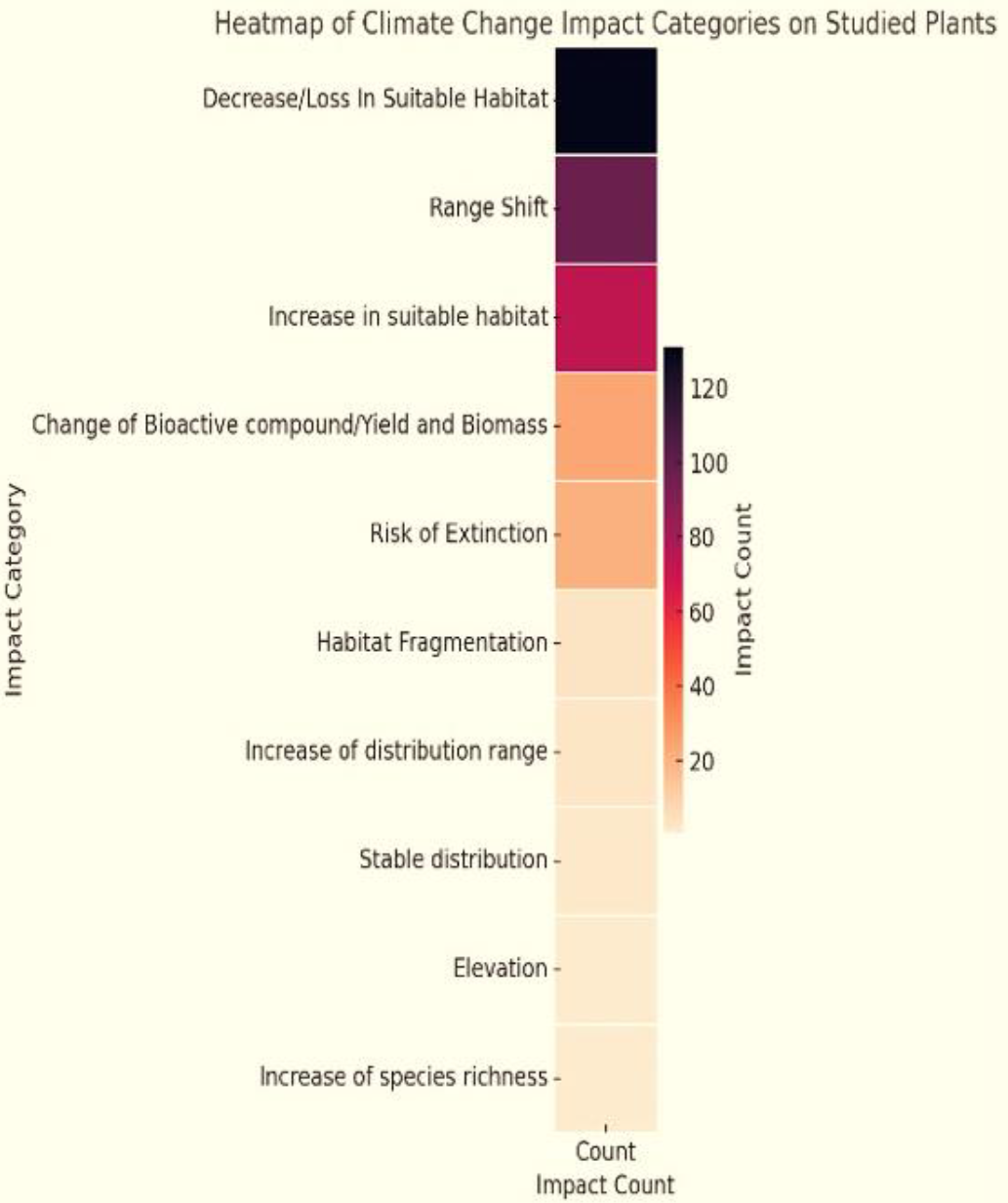
Despite their importance, medicinal plants are increasingly at risk. Specifically, our analysis reveals clear and consistent patterns in how medicinal plants are responding to climate change. Drawing on a scoping review of 367 medicinal plant species, we found that the most common predicted impact is the loss of suitable habitat, affecting 131 species, largely driven by changes in precipitation patterns and elevation.
Range shifts were observed in 97 species, with many plants moving toward higher altitudes and latitudes. In comparison, 73 species showed an increase in suitable habitat—suggesting that climate change may create new opportunities for a limited number of plants (Figure 1) (7).
These distributional changes have direct implications for the pharmaceutical and cosmetic industries, with knock-on effects throughout herbal value chains. Many of the most studied medicinal plants — whether cultivated or wild-harvested — are susceptible to climate-driven changes in temperature and rainfall. This includes species such as jatamansi (Nardostachys jatamansi), chonglou (Paris polyphylla), chuan bei mu (Fritillaria cirrhosa), and ma huang (Ephedra sinica). As a result, regions once considered reliable sources may become less productive or unsuitable, leading to reduced yields, supply disruptions, and increased uncertainty in sourcing raw plant materials. At the same time, the loss of vulnerable species limits opportunities to discover new therapeutic agents, narrowing the future potential of plant-based innovation.
Climate-driven shifts also pose significant challenges for geographical indications (GIs), including traditional concepts such as Daodi and European notions of provenance and terroir, which link product quality to specific ecological and cultural conditions. As climates change, the environmental foundations that give these regions their distinctive phytochemical profiles may no longer hold. Established GI zones may therefore need to adapt, relocate, or be redefined — raising important questions about quality standards, authenticity, and regulation (8).
How climate change is reshaping medicinal plant quality
Global warming may significantly alter the production of bioactive metabolites and marker compounds in medicinal and aromatic plants by increasing potential evapotranspiration due to elevated temperatures, which in turn accelerates soil drying (9). The resulting changes in phytochemical profiles are highly variable and depend on the plant species, the specific type of compounds, as well as the intensity and duration of drought stress (10).

Moderate drought often enhances the accumulation of various secondary metabolites, especially those with antioxidant properties. This is attributed to the induction of mild oxidative stress, which triggers the biosynthesis of protective compounds such as phenolics and flavonoids to scavenge reactive oxygen species (ROS) (11). When drought becomes prolonged and severe, plant metabolic processes are significantly disrupted (12). This contrasting pattern was evident in several species reviewed. For example, under water deficit conditions, both balangu (Lallemantia royleana) and Persian lilac (Melia azedarach) exhibited increased phenolic and flavonoid content (13,14).
However, in broadleaved lavender (Lavandula latifolia), drought conditions resulted in decreased levels of specific metabolites such as coumaric and salvianic acids (15).
As a major contributor to climate change, elevated CO2 and temperature exhibit mixed results; in certain cases, they can enhance the production of some compounds while suppressing others, due to complex carbon allocation and temperature sensitivities (81). High temperatures alone reduce the levels of several secondary metabolites, likely due to metabolic shifts that favour survival over defence (16).
Changes in precipitation also influence metabolite levels, with reduced rainfall often linked to a decline in compound diversity, particularly in drought-sensitive species (17). In addition, temperature stress elevates volatile organic compounds, suggesting an upregulation of stress signaling or defense responses (18).
These fluctuations in secondary bioactive metabolite and marker compound profiles could impact the potential risks and benefits of medicinal plants. Increased levels of certain compounds could enhance antioxidant, anti-inflammatory, or antimicrobial activity, while a decline in key bioactive may compromise the potential effectiveness of traditional and plant-derived preparations (19,20).
Similarly, the pharmaceutical and cosmetic industries face significant challenges. Drought, for instance, alters the synthesis of essential oils, phenolic compounds, and flavonoids, key compounds in skincare, personal, and healthcare products. Changes in the levels of bioactive metabolites or marker compounds, such as linalool, linalyl acetate, α-pinene, and borneol in lavender (21) or camphor and linalool in basil (Ocimum basilicum), as well as various compounds in rosemary (Salvia rosmarinus), due to drought, and/or heat stress, could explain these biochemical shifts (22,23).
These phytochemical shifts (including changes in the levels of bioactive metabolites or marker compounds) can affect the quality (including the safety and efficacy of plant-derived medical products) and sensory properties of cosmetic and healthcare products (21).
Overall, climate-driven changes in bioactive metabolites raise important questions about quality, safety, and consistency. While some plants may benefit from moderate stress, others may lose critical properties. At present, simple predictions are not possible, highlighting the need for longer-term and comparative research.
What this means for local communities and traditional healthcare systems
Climate change is increasingly undermining both biodiversity and the traditional healthcare systems that depend on medicinal plants. For instance, in the Central Himalayas, rising temperatures and shifting rainfall have advanced flowering and fruiting times by several weeks, disrupting culturally rooted harvesting practices and reducing the availability and effectiveness of key medicinal species. Traditional healers report growing reliance on substitute plants, which are often significantly less effective (24).
Similar patterns are emerging in northern Thailand, where medicinal plants used by Karen communities — particularly in women’s reproductive healthcare — are projected to lose much of their suitable habitat in the coming decades (25). Comparable challenges are faced by the Shan people and forest-dependent communities near the Chunati Wildlife Sanctuary, where limited access to formal healthcare increases reliance on traditional medicine (26).
As climate change alters the distribution, timing, and potency of medicinal plants, the resilience of these community-based healthcare systems is coming under increasing strain.
A path forward: Sustainability, policy, and collective action
Safeguarding medicinal plants in a changing climate requires coordinated action across policy, conservation, industry, and communities:
- Climate-resilient cultivation and agroforestry: Diversified cultivation systems and agroforestry can reduce pressure on wild populations while strengthening ecosystem resilience, but wider adoption will require investment and integration into land-use planning.
- Genetic conservation and species management: Seed banks, tissue culture, and germplasm conservation offer critical insurance against loss, but must be paired with fair benefit-sharing and livelihood support.
- Community-led and participatory conservation: Recognising Traditional Ecological Knowledge and supporting local stewardship has proven more effective than top-down approaches.
- Stronger policy frameworks and incentives: Clear regulation and economic incentives — such as Payments for Ecosystem Services — can reduce illegal harvesting while supporting sustainable trade.
- Research, training, and capacity building: Knowledge gaps remain across many medicinal-plant-producing regions. Long-term monitoring, targeted funding, and specialist training are essential to translate research into meaningful action.
Why does research and awareness of the impact of climate change on medicinal plants matter?
Medicinal plants are a shared global resource, but their future depends on the choices we make today. Climate change has transformed sustainability from an environmental concern into a health, cultural, and economic imperative. By supporting responsible sourcing, sustainable cultivation, and informed policy, we can help ensure that medicinal plants continue to support the well-being and health of people and planet.
References
- Morton EM, Rafferty NE. Plant–pollinator interactions under climate change: the use of spatial and temporal transplants. Appl Plant Sci. 2017;5(6):1600133. https://doi.org/10.3732/apps.1600133
- Dybzinski R, Fargione JE, Zak DR, Fornara D, Tilman D. Soil fertility increases with plant species diversity in a long-term biodiversity experiment. Oecologia. 2008;158(1):85-93. https://doi.org/10.1007/s00442-008-1123-x
- Tomlinson TR, Akerele O, eds. Medicinal Plants: Their Role in Health and Biodiversity. University of Pennsylvania Press; 2015.
- Heinrich M, Ankli A, Frei B, Weimann C, Sticher O. Medicinal plants in Mexico: healers’ consensus and cultural importance. Soc Sci Med. 1998;47(11):1859-1871. https://doi.org/10.1016/S0277-9536(98)00181-6
- Heinrich M, Teoh HL. Galanthamine from snowdrop—the development of a modern drug against Alzheimer’s disease from local Caucasian knowledge. J Ethnopharmacol. 2004;92(2-3):147-162. https://doi.org/10.1016/j.jep.2004.02.012
- Lin HQ, Gong AG, Wang HY, et al. Danggui Buxue Tang (Astragali Radix and Angelicae Sinensis Radix) for menopausal symptoms: a review. J Ethnopharmacol. 2017;199:205-210. https://doi.org/10.1016/j.jep.2017.01.044
- Takubessi MI, Jalil B, Heinrich M. The impact of climate change on medicinal plants and natural products: a scoping review. Front Pharmacol. 2025;16:1697581. https://doi.org/10.3389/fphar.2025.1697581
- Brinckmann JA. Geographical indications for medicinal plants: globalization, climate change, quality and market implications for geo-authentic botanicals. World J Tradit Chin Med. 2015;1(1):16-23. https://doi.org/10.15806/j.issn.2311-8571.2014.0020
- Trenberth KE, Dai A, van der Schrier G, et al. Global warming and changes in drought. Nat Clim Chang. 2014;4(1):17-22. https://doi.org/10.1038/nclimate2067
- Tan U, Gören HK. Comprehensive evaluation of drought stress on medicinal plants: a meta-analysis. PeerJ. 2024;12:e17801. https://doi.org/10.7717/peerj.17801
- Ai Q, Dai A, Han M, Yang L, Liu C. Moderate drought stress interferes with the physiological state and promotes the accumulation of isoflavone in reproductive Iris domestica rhizomes. Agronomy. 2024;14(8):1730. https://doi.org/10.3390/agronomy14081730
- Li T, Tiiva P, Rinnan Å, Julkunen-Tiitto R, Michelsen A, Rinnan R. Long-term effects of elevated CO2, nighttime warming and drought on plant secondary metabolites in a temperate heath ecosystem. Ann Bot. 2020;125(7):1065-1075. https://doi.org/10.1093/aob/mcaa037
- Omidi H, Shams H, Seif Sahandi M, Rajabian T. Balangu (Lallemantia sp.) growth and physiology under field drought conditions affecting plant medicinal content. Plant Physiol Biochem. 2018;130:641-646. https://doi.org/10.1016/j.plaphy.2018.07.033
- Dias MC, Pinto DCGA, Costa M, Araújo M, Santos C, Silva AMS. Phytochemical and antioxidant profile of the medicinal plant Melia azedarach subjected to water deficit conditions. Int J Mol Sci. 2022;23(21):13611. https://doi.org/10.3390/ijms232113611
- Cáceres-Cevallos GJ, Albacete-Moreno AA, Ferreres F, Gil-Izquierdo Á, Jordán MJ. Evaluation of the physiological parameters in Lavandula latifolia Medik. under water deficit for preselection of elite drought-resistant plants. Ind Crops Prod. 2023;199:116742. https://doi.org/10.1016/j.indcrop.2023.116742
- Li ZG. Mechanisms of plant adaptation and tolerance to heat stress. In: Hasanuzzaman M, ed. Plant Ecophysiology and Adaptation under Climate Change: Mechanisms and Perspectives II: Mechanisms of Adaptation and Stress Amelioration. Springer; 2020:39-59. https://doi.org/10.1007/978-981-15-2172-0_3
- Prinsloo G, Nogemane N. The effects of season and water availability on chemical composition, secondary metabolites and biological activity in plants. Phytochem Rev. 2018;17(4):889-902. https://doi.org/10.1007/s11101-018-9567-z
- Midzi J, Jeffery DW, Baumann U, Rogiers S, Tyerman SD, Pagay V. Stress-induced volatile emissions and signalling in inter-plant communication. Plants (Basel). 2022;11(19):2566. https://doi.org/10.3390/plants11192566
- Kumar S, Yadav A, Yadav M, Yadav JP. Effect of climate change on phytochemical diversity, total phenolic content and in vitro antioxidant activity of Aloe vera (L.) Burm. f. BMC Res Notes. 2017;10(1):60. https://doi.org/10.1186/s13104-017-2385-3
- Kaur T, Bhat R, Vyas D. Effect of contrasting climates on antioxidant and bioactive constituents in five medicinal herbs in Western Himalayas. J Mt Sci. 2016;13(3):484-492. https://doi.org/10.1007/s11629-014-3380-y
- Jalil B, Heinrich M. Pharmaceutical quality of herbal medicinal products and dietary supplements—a case study with oral solid formulations containing Lavandula species. Eur J Pharm Sci. 2025;208:107042. https://doi.org/10.1016/j.ejps.2025.107042
- Kulak M. Recurrent drought stress effects on essential oil profile of Lamiaceae plants: an approach regarding stress memory. Ind Crops Prod. 2020;154:112695. https://doi.org/10.1016/j.indcrop.2020.112695
- Sarmoum R, Haid S, Biche M, Djazouli Z, Zebib B, Merah O. Effect of salinity and water stress on the essential oil components of rosemary (Rosmarinus officinalis L.). Agronomy. 2019;9(5):214. https://doi.org/10.3390/agronomy9050214
- Maikhuri RK, Phondani PC, Dhyani D, Rawat LS, Jha NK, Kandari LS. Assessment of climate change impacts and its implications on medicinal plants-based traditional healthcare system in Central Himalaya, India. Iran J Sci Technol Trans A Sci. 2018;42(4):1827-1835. https://doi.org/10.1007/s40995-017-0354-2
- Tangjitman K, Wongsawad C, Kamwong K, Sukkho T, Trisonthi C. Ethnomedicinal plants used for digestive system disorders by the Karen of northern Thailand. Songklanakarin J Sci Technol. 2015;37(3):369-379.
- Rahman MH, Roy B, Chowdhury GM, Hasan A, Saimun MSR. Medicinal plant sources and traditional healthcare practices of forest-dependent communities in and around Chunati Wildlife Sanctuary in southeastern Bangladesh. Environ Sustain. 2022;5(2):207-241. https://doi.org/10.1007/s42398-022-00230-z