




From foundation courses to accredited professional training, herbal education is diverse, decentralised and growing. Guy Waddell charts the breadth of herbal education across the UK.
Herbalist Christopher Hedley, who passed away in 2017 but continues to have a lasting impact on herbal medicine in the UK and beyond, used to point out that Chinese, Japanese and Ayurvedic approaches to herbal medicine include knowledge being organised and classified in neat, tidy, and boundaried ways that it isn’t in so-called Western herbal medicine. Instead, Christopher said that:
We’re just far more baggy here, constitutionally. We’re more like the plants themselves in the way we think and remember. Our stories are more sprawling and vine-like, so our way of passing on knowledge is more like the plants too. Seeds and runners (1).
So, might these “sprawling” or “vine-like” plant qualities also be reflected in herbal education in the UK?
Fertile ground
It will hopefully be useful to remind ourselves that in the UK a legal definition of a herbalist does not exist, unlike medical doctors or osteopaths, for example. While a number of professional associations (PAs) and umbrella organisations sought statutory registration, this was essentially taken off the table with the publication of the Walker Report in 2015 (2), which argued that as there was a lack of evidence of risk to the public from herbal medicines or herbalists, there was no need for statutory registration.
Had it been successful, it would have protected both the title and what herbalists do clinically and ultimately resulted in the shaping of uniform educational standards for the training of herbalists. With the removal of the possibility of statutory registration, it is plausible to argue that the ground has been made fertile for a diverse range of possible courses that might otherwise not have existed.
Seeds: Introductory, short and foundation courses
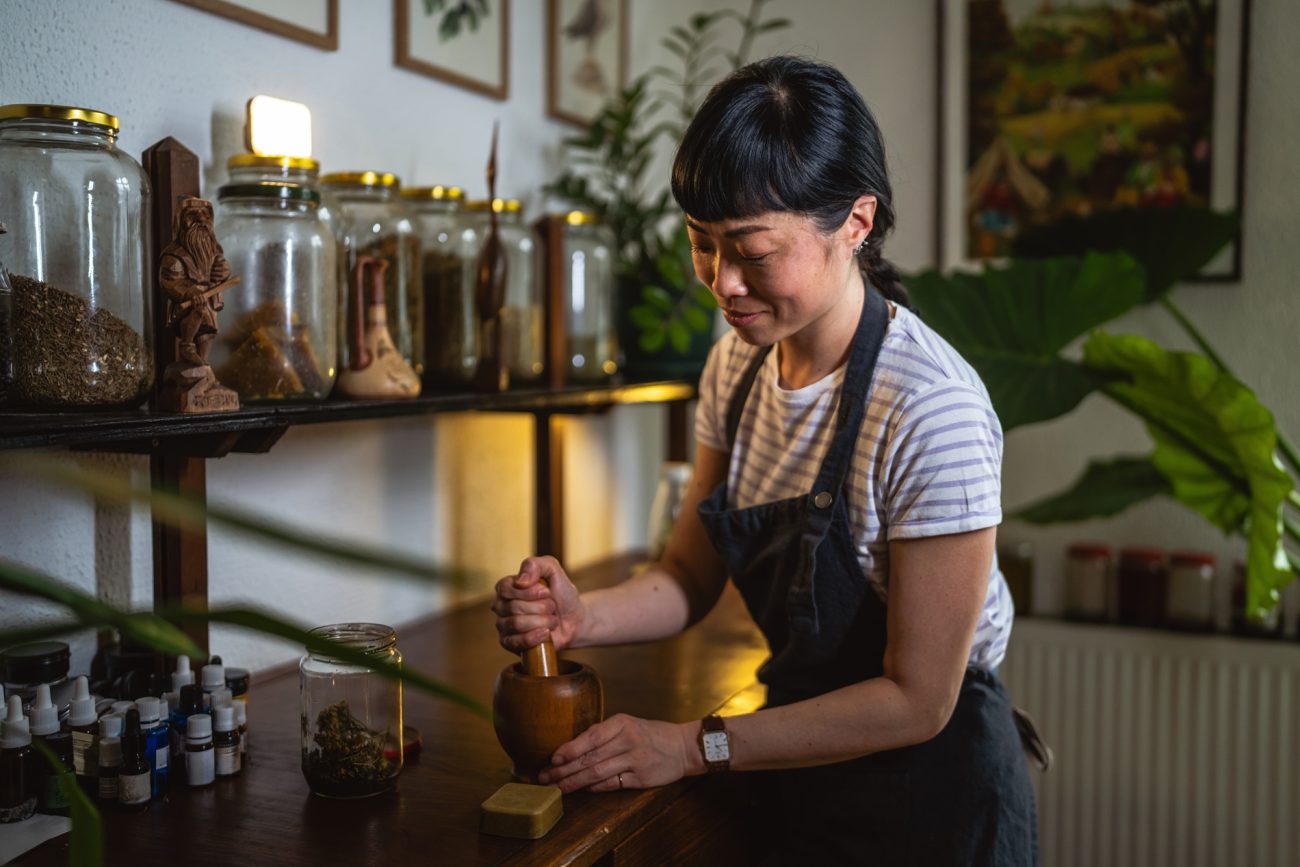
Before we look at practitioner courses in herbal medicine, it’s well worth noting the richness and diversity of a number of online and in-person introductory, short, and foundation level courses that are offered by herbalists who have been through practitioner-level herbal training.
These include courses (4–19) provided by
- Heartwood Education
- Lincoln College
- Betonica
- The Scottish School of Herbal Medicine
- The School of Intuitive Herbalism
- Aeon Education
- The Plant Medicine School
- Rhizome Clinic
- Wild Apothecary
- Heritage School of Herbal Medicine
- Grass Roots Remedies
- The Crafty Herbalist
- Herbalista
- Solidarity Apothecary
- SeedSistas
- New Vitality Tuition
Some of these organisations include an emphasis on providing affordable or free community herbalism, especially to those facing oppression, such as refugees and asylum seekers, sometimes through related organisations — such as Herbalists Without Borders Bristol and Mobile Herbal Clinic, and/or filling gaps in the provision of education and healthcare that addresses areas previously neglected — e.g., the health of incarcerated people and their loved ones and reproductive health.
A common thread amongst these courses is in using locally available plants as medicines. Additionally, there are a range of different business models used to provide these services, including charitable status, community interest company and social enterprise. These courses often sow seeds that lead participants to decide to continue their studies by signing up for practitioner courses.
Roots: A brief history of practitioner courses
The School of Herbal Medicine (later to become the College of Phytotherapy) was established in 1977 by Hein Zeylstra (20), who had studied with the National Institute of Medical Herbalists (NIMH), but who brought with him a desire to modernise herbal education, if it was to survive and thrive. During the late 1970s and the 1980s the School of Herbal Medicine was really the only serious place to study herbal medicine at practitioner level in the UK.
The school phased out physiomedicalism from the curriculum, which had been at the heart of prior NIMH training as taught by A. W. Priest, instead introducing a more scientific approach — including plant chemistry as a way of thinking about how herbs work, with prescriptions containing fewer herbs than previously had been the case with the polypharmacy of the physiomedicalists.
Up until the early 80s, NIMH had called itself a professional association of physiomedical practitioners, but this was removed not long after the arrival of the early waves of graduates from the School of Herbal Medicine into NIMH membership. Hein Zeylstra later founded the College of Practitioners of Phytotherapy (CPP) as an alternative to NIMH, seeking to base practice on firmer scientific ground (21).
Interestingly, when universities started offering herbal medicine BSc (Hons) degrees, all the course leaders had been through the School of Herbal Medicine, arguably resulting in course similarities, compounded by the needs to meet the requirements of degree validation and accrediting bodies. However, despite these pressures to produce consistency, each course took opportunities to develop unique content — e.g., the Scottish School of Herbal Medicine developed Goethean science, and endobiogenics and humoral medicine found their way into a number of courses (7).
For a while there were six University-provided degree courses in herbal medicine in the UK, with Middlesex being the first to open its doors in 1994 (22), the others being the University of Westminster, Napiers, UCLAN, the University of Lincoln, the University of East London (which developed from the College of Phytotherapy’s course), and one independent validated degree course (the Scottish School of Herbal Medicine).
However, the universities and institutions that ran these courses started to close their doors around 2010 and certainly by 2018 all these courses except the University of Lincoln (whose course, validated by the Open University, moved to Lincoln College in 2012) had stopped taking applicants. These courses closed for a number of reasons, including falling student numbers likely related to the number of courses on offer, higher course fees within higher education (around £27,000 for three years of study), the cost of providing clinical training, and criticisms from a number of fronts that influenced vice chancellors’ decision making.
With the loss of these courses, other opportunities have arisen, which you would expect given the power of plants to attract people to learn to use them therapeutically (3).
Fruit: Accreditation and current practitioner courses
There are a range of practitioner-level courses currently available for those who have developed a taste to study to become practitioners. To ensure and demonstrate their quality, course providers seek accreditation by professional associations and umbrella organisations, such as NIMH and the European Herbal and Traditional Medicine Practitioners Association (EHTPA)(23,24), which then allows graduates to join professional associations (PAs), with the largest and oldest being NIMH, followed by the College of Practitioners of Phytotherapy (CPP), although other smaller PAs such as the Association of Master Herbalists (AMH) and the Unified Register of Herbal Practitioners (URHP) also recognise these qualifications and accept graduates from these courses (21,25,26).
The College of Naturopathic Medicine’s (CNM) course is accredited by the Association of Naturopathic Practitioners (ANP) and the General Naturopathic Council (GNC), reflecting its naturopathic approach (27–29). Currently, NIMH accredits Heartwood Education, Betonica and Lincoln College, and EHTPA accredits Betonica and Lincoln College. Many herbalists wonder why two major accrediting bodies are needed, but that’s a (hi)story for another day and another storyteller. Of course, having two such bodies may contribute to an increased diversity of course content.
There is also a new PA, the Foundation for Insight Herbalism, that accepts graduates from the School of Intuitive Herbalism’s Insight Herbalism practitioner course, and an Irish PA, the Irish Register of Herbalists (IRH), accredits two courses that can be taken in the UK, namely the Plant Medicine School and Excelsior Apprenticeships in Herbal Medicine, and the International Register of Consultant Herbalists (IRCH) accredits its practitioner course (30–33).
The practitioner courses at Heartwood Education, Betonica, Lincoln College, the School of Herbal Medicine (distinct from Hein Zeylstra’s closed school of the same name), the IRCH, and CNM have been relatively recently joined by the two Irish providers — i.e., the Plant Medicine School (discussed here as this Ireland-based school has ‘campuses’ in Exmoor, the Chilterns and East Lothian) and Excelsior Apprenticeships in Herbal Medicine (discussed here as it offers its course in Belfast) as well as the School of Intuitive Herbalism.
With the exception of CNM and IRCH, these courses have grown, in various ways, out of the university provided or validated courses or the original School of Herbal Medicine, where all the initial course developers and leaders for these institutions had previously either taught or studied. While this may offer some continuity, again each course has forged its own path. CNM grew out of a naturopathic tradition and is generally seen as being distinct from the institutions that focus solely on herbal medicine in their course provision.
Some of the differences between these courses can be seen in the table below, which covers course length, study hours, delivery, entry requirements, fees and accreditation.
Practitioner courses summary table (as of Spring 2026 — please confirm details with individual providers)
| Provider and course | Course length | Study hours | Delivery | Entry requirements | Total course fees | Accredited by/able to join professional association(s) |
|---|---|---|---|---|---|---|
| Heartwood Education Professional Course | 4 or 6 years | 4-year course: 21 to 30 hours a week for 40 weeks a year. Plus 500 hours of clinical training. 6-year course: 14 to 21 hours a week for 40 weeks a year. Plus 500 hours of clinical training. | Academic work online, including lessons, live webinars, forums. Online student training clinic, and 60 + face- to-face clinical trainers in the UK and beyond. | Specified A levels and GCSEs or equivalents, or Heartwood Foundation Course or equivalent and specified GCSEs. English proficiency required. See Heartwood Education website for further details. | 4-year course: £14,847 6-year course: £16,847 No additional charge if yearly fees paid in instalments | Accredited by NIMH. Able to join NIMH. |
| Lincoln College BSc (Hons) Clinical Herbalism | 3 or 5 years | 3-year course: 8 three day weekends per year, plus 20 to 30 hours study a week, plus500 clinical training hours 5-year course: 4 or 5 three day weekends a year. In addition to attendance, 10 to 15 hours additional study per week. 500 clinical training hours | Lincoln. In-person three day weekends, in-person and online clinical training | 72 UCAS points, plus specified GCSEs/grades | 3-year course: £29,370 5-year course: £29,370 | Accredited by NIMH, EHTPAAble to join NIMH, CPP, URHP |
| Betonica Professional Medical Herbalist Programme | 4 years (3-year option if eligible) | Full-time. Minimum of 30 hours a week, plus 500 hours clinical training (organised around seminar weekends), and seminar lectures. | Devon. In-person seminar weekends, online study and in- person clinical training | No specific entry requirement for year 1 applicants, other than English proficiency. Direct access to year 2 requires A&P level 3 or equivalent | £16,550 Higher if yearly fees paid by instalments | Accredited by NIMH, EHTPA Able to join NIMH, CPPAMH, URHP |
| School of Herbal Medicine Professional Practitioner Training | 6 years | Minimum 20 hours full-time study a week. Part-time option available. Plus 500 clinical training hours | Somerset. All content delivered face to face. 24 day-long seminars per year, predominantly weekends, with a 5-day Spring School. | 5 GCSEs, A-level studies or Science access course. However, applicants are assessed on a case-by-case basis. English language proficiency. | £19,260 No additional charge if yearly fees paid in instalments | Working towards EHTPA accreditation, after which graduates will be able to join CPP, URHP and other EHTPA member organisations. Able to join immediately: AMH |
| Plant Medicine School Practitioner Training Programme | 5 years part-time | Course total: 890 class hours (minimum of 445 hours in-person). 2140 home study hours. Minimum of 20 study hours a week. 500 hours of student clinic attendance required. | Irish course (Wexford, Cork) delivered in-person at UK campuses in Exmoor, East Lothian, and Chilterns. | Basic English reading, writing, and speaking skills | £10,400 Higher, if yearly fees paid by instalments. | Accredited by IRH and AMH. Able to join these organisations. |
| School of Intuitive Herbalism Insight Herbalism and Apprenticeship Professional Training | 3 to 7 years | Minimum of 1500 hours. | Stroud.All teaching is face to face. | Introduction class/mentoring, application and interview. At least several years’ experience with herbs is standard for most applicants | Training path varies from 3–7 years so total fees can range from £6,300 to £10,000 depending on classes taken. No additional charge if paying by instalments. | Accredited by Foundation for Insight Herbalism – Community of Practice. Able to join the Foundation for Insight Herbalism. |
| College of Naturopathic Medicine (CNM) Diploma in Herbal Medicine | 3 years full time or 4 to 5 years part time | Total of around 165 in-person teaching days across the whole course, or online equivalent. Plus 500 clinic hours. | In-person in London or Manchester, or online options. | No prior training or science background is required. The course is suitable for career-changers. | £23,975Significantly higher if yearlyfees paid by instalment | Accredited by ANP and GNC. Able to join these organisations. |
| International Register of Consultant Herbalists (IRCH) Professional Practitioner Herbalist Course | 6 years | 3600 hours total Clinic hours 500 minimum | Blended learning Lessons -via email.Monthly zoom tutorials.3 day summer school in Devon.Annual conference in Warwickshire.Face to face clinical training at various UK clinics and Irish clinic. | Competency in English language; basic IT skills & access to internet. No required qualifications, although some previous academic study may be useful. | £11,525 No additional charge if yearly fees paid by instalment. Excluding annual conference fee (currently £325/year) | Accredited by IRCH. Able to join: IRCH Currently working towards peer-to-peer Validation |
| Excelsior Apprenticeships in Herbal Medicine Diploma in Herbal Medicine | 4 years | 1000 hours of live lectures. Home study and field trips 1500 hours. 500 to 600 clinic hours. | Belfast (also available in Dublin). 1 weekend of face-to-face lectures per month. 1 in-person weekend clinical training session per month | 21+ years old, fluent in English, interview | £14,400. No additional charge if yearly fees paid by instalment. | Accredited by Irish Register of Herbalists (IRH) Able to join IRH |
Diverse fruits: Practitioner courses to suit varied tastes
This section will briefly outline some of the differentiating characteristics of the various courses on offer.
At Heartwood Education, where I am lucky enough to work, we have combined our love of plants, traditional knowledge and science with previous experience of course provision, both independent and within higher education, to create an accessible course delivered using blended learning. All academic work (recorded lessons, live webinars, forums, assessments) is online, while clinical training is in-person with 60+ clinical trainers in the UK and beyond, with the addition of an online student training clinic. We also provide an integrated system of student support, have annual in-person meetups and foster a strong and supportive learning community (4).
Lincoln College offers the only validated BSc (Hons) course in clinical herbalism in the UK, where applicants may be eligible for student finance. It is delivered in person during eight three-day weekends a year for full time students and four or five weekends for part-time students, with a mix of online and in-person clinic settings available (5).
Betonica School of Herbal Medicine’s professional course focuses on in-person, hands-on weekends and “field to dispensary” learning, spanning everything from foraging and identifying herbs to processing them into products (6).
The School of Herbal Medicine’s in-person professional training programme includes face-to-face teaching at weekend monthly seminars in small classes, covering core medical and herbal subjects, with additional modules in gemmotherapy, seaweeds and medicinal mushrooms, as well as weekly student clinics (20).
The Plant Medicine School combines the art and science of herbal medicine in a plant-centred, participatory and experiential learning model of formative and continuous assessment under the guidance of a mentor, enabling the student to evolve their knowledge and skills to become the best herbalist they can be (10).
The School of Intuitive Herbalism’s professional course offers training that does not take a medical or diagnostic approach, instead being deeply experiential, relational and centred on each person’s expression as a herbalist — learning directly from living plants through developing somatic intelligence, extended immersion with the plants and simple, potent ritual, supporting a wide range of practices to unfold. The school also notes that the course is particularly suited to those who already hold professional skills or parallel trainings (8).
Turning to CNM, students are able to study in-person or online, choose from three starting points in the year, and the college has a naturopathic approach that includes a wide variety of healing modalities in addition to herbs, such as tissue salts and detoxification, TCM and iridology, while all the other courses discussed here are focused on plant medicines. This has led to CNM being considered an outlier in terms of herbal education and is reflected in CNM’s course being accredited by naturopathic PAs rather than PAs of herbal practitioners (27).
The IRCH has been training herbalists since 1960. Their course emphasises energetics, chemistry, botany and naturopathy, aiming to ensure that their graduates address root causes rather than take a purely symptomatic approach (33).
And finally, Excelsior’s Apprenticeships in Herbal Medicine runs in Belfast, which is due to have a name change to the Northern School of Herbal Medicine, as well as being taught in Dublin, offers in-person teaching, an emphasis on Western herbal traditions, and apprenticeship-style training (32).
Herbal education in the UK: Vibrant and green

One characteristic of plants is that they are particularly sensitive to their ecologies. Similarly, it is likely true that the current diversity of courses as described above, reflects the needs of an increasingly diverse range of potential students that make up the ecology of provision.
Secondly, while humans are generally regarded as having an inside and an outside, plants can be described as ‘open beings’, without such interiority — their structure is fundamentally porous and continuous with their environment in ways humans are not. Similarly, the landscape of current herbal medicine education does not seem to look out from, or grow from, a central location, approach or type of organisation but is rather growing in many directions and places at the same time, rather like the plants themselves.
Also, plants are without vital organs. Think what can grow from a cutting. Likewise, there is no single course or model of provision without which herbal education could not survive. Indeed, new providers would no doubt arise. In the higher education provision of courses, while there were multiple courses, all the courses started to shut around the same time, arguably triggered by the same combination of pressures, likely reflecting a reduced diversity compared to what is currently on offer.
And finally, plants flourish and lead generous lives, and similarly many of the providers that offer courses also offer low-cost clinics, including student clinics, as was always the case. What seems relatively new is the increasing visibility of the provision of community herbalism and care for those on the margins of societies by some of these providers. There is also a sense of playfulness and creativity at the heart of some of these offerings, undeniable if you’ve ever been lucky enough to meet the SeedSistas, or have seen the gold leaf paintings made by Veda West or encountered the music and stories conjured by bendle, the latter two of whom I am lucky to work with at Heartwood Education.
Find an overview on herbal education courses on our Study herbalism page.
References
- Hedley C. Very Generous Things, Plants — We Don’t Deserve Them, Really: Stories, Anecdotes and Nuggets of Wisdom from Herbalist Christopher Hedley. Aeon Books; 2025.
- Walker D. Report on Regulation of Herbal Medicines and Practitioners. Department of Health; 2015. Accessed March 27, 2026. https://assets.publishing.service.gov.uk/media/5a7f10cfe5274a2e8ab49e4f/Report_on_Regulation_of_Herbal_Medicines_and_Practitioners.pdf
- Waddell G. The Enchantment of Western Herbal Medicine: Herbalists, Plants and Nonhuman Agency. Aeon Books; 2020.
- Heartwood Education. Herbal medicine courses. https://heartwoodeducation.net. Accessed May 2026.
- Lincoln College. BSc (Hons) Clinical Herbalism. https://www.lincolncollege.ac.uk/course/level-6-bsc-hons-clinical-herbalism-full-time. Accessed May 2026.
- Betonica School of Herbal Medicine. https://www.betonica.co.uk. Accessed May 2026.
- Scottish School of Herbal Medicine. https://www.herbalmedicine.org.uk. Accessed May 2026.
- School of Intuitive Herbalism. https://www.schoolofintuitiveherbalism.weedsintheheart.org.uk. Accessed May 2026.
- Aeon Education. https://www.aeoneducation.co.uk. Accessed May 2026.
- The Plant Medicine School. https://theplantmedicineschool.com. Accessed May 2026.
- Rhizome Community Herbal Clinic. https://www.rhizomeclinic.org.uk. Accessed May 2026.
- Wild Apothecary. https://www.wildapothecary.com. Accessed May 2026.
- Heritage School of Herbal Medicine. https://www.heritageschoolofherbalmedicine.com. Accessed May 2026.
- Grass Roots Remedies. https://grassrootsremedies.co.uk. Accessed May 2026.
- The Crafty Herbalist Academy. https://craftyherbalistacademy.com. Accessed May 2026.
- Herbalista. https://www.herbalista.co.uk. Accessed May 2026.
- Solidarity Apothecary. https://solidarityapothecary.org. Accessed May 2026.
- SeedSistas. https://seedsistas.co.uk. Accessed May 2026.
- New Vitality Tuition. https://www.newvitalitytuition.com/collections. Accessed May 2026.
- School of Herbal Medicine. https://www.schoolofherbalmedicine.co.uk. Accessed May 2026.
- College of Practitioners of Phytotherapy. https://thecpp.uk. Accessed May 2026.
- Survival battle for herbal medicine. Times Higher Education. Published 1994. Accessed May 2026. https://www.timeshighereducation.com/news/survival-battle-for-herbal-medicine/154345.article
- National Institute of Medical Herbalists. https://nimh.org.uk. Accessed May 2026.
- European Herbal and Traditional Medicine Practitioners Association. https://ehtpa.org. Accessed May 2026.
- Association of Master Herbalists. https://theamh.uk. Accessed May 2026.
- Unified Register of Herbal Practitioners. https://www.urhp.com. Accessed May 2026.
- College of Naturopathic Medicine. https://www.naturopathy-uk.com. Accessed May 2026.
- Association of Naturopathic Practitioners. https://theanp.co.uk. Accessed May 2026.
- General Naturopathic Council. https://gncouncil.co.uk. Accessed May 2026.
- Foundation for Insight Herbalism. https://www.insightherbalism.org.uk. Accessed May 2026.
- Irish Register of Herbalists. https://irh.ie. Accessed May 2026.
- Excelsior School of Herbal Medicine. https://www.excelsiorapprenticeships.co.uk. Accessed May 2026.
- International Register of Consultant Herbalists. https://irch.org. Accessed May 2026.