








From the 19th-century Eclectics to modern clinical herbalists, American herbalism has developed through reform, decline, and revival within shifting medical and cultural landscapes.
American herbalism did not emerge from a single lineage. It is the product of tension — between orthodox medicine and popular healing, between European traditions and Indigenous knowledge, between empirical observation and laboratory science. From the 19th-century Eclectic physicians to today’s professional clinical herbalists, the story is one of persistence, adaptation, and periodic reinvention.
The Eclectic movement: Reform from within
In the mid-19th century, American medicine was chaotic. Bleeding, purging, and mercury dosing were still common in orthodox (“regular”) practice.
Reformers sought alternatives. Among the most influential were the Eclectics — physician-herbalists who combined botanical therapeutics with emerging clinical rigour.
The Eclectics were formally organised in 1847 and established institutions such as the Eclectic Medical Institute in Cincinnati. They published journals, materia medica texts, and dispensatories.
Perhaps their most enduring reference work was King’s American Dispensatory, edited by John Uri Lloyd and Curtis Gates Lloyd, and originally compiled by John King. It catalogued hundreds of botanical medicines with detailed pharmacological and clinical observations.
Eclectic physicians such as John Milton Scudder emphasised specific indications — matching small, precise doses of botanical extracts to clearly observed symptom patterns. This was not folk medicine in a romantic sense; it was a systematised botanical medicine practiced by trained physicians who rejected harsh interventions.
By the late 19th century, Eclectic medical colleges trained thousands of practitioners across the United States. For several decades, botanical medicine stood as a legitimate and organised branch of American medical practice.
Thomsonian roots and popular herbalism
Before and alongside the Eclectics stood another influential current: Thomsonianism. Founded by Samuel Thomson, this populist movement rejected professionalised medicine entirely. Thomson believed that disease resulted from cold and obstruction; his therapies emphasised warming herbs, steam baths, and the famous use of lobelia.
Thomsonianism democratised herbal medicine. Families purchased Thomson’s manuals and practiced domestic herbal care. While Eclectic physicians sought professional legitimacy, Thomsonians often opposed licensing and medical hierarchy. The tension between professional herbal practice and grassroots self-care would echo through later centuries.
A branch of Thomsonianism even travelled to Britain through the efforts of Dr Thomas Coffin in the 19th century, influencing English herbal traditions. Thus, American botanical reform movements did not remain confined to North America — they circulated trans-Atlantically.
The Eclectic decline
The early 20th century marked a turning point. The American Medical Association consolidated influence over medical education. The 1910 Flexner Report criticised many medical schools, including Eclectic and homeopathic institutions, for lacking scientific rigor as defined by emerging biomedical standards.
Funding shifted toward laboratory-based, pharmaceutical medicine. Eclectic colleges closed. By the 1930s, the organised Eclectic profession had largely disappeared. Yet the plants did not vanish. Knowledge persisted in rural communities, immigrant households, African American root traditions, and Native American medicine ways. The professional Eclectic system declined, but vernacular herbalism endured.
Early 20th century survival and fragmentation
Between 1920 and 1960, American herbalism existed mostly on the margins. Commercial herbal product companies — some rooted in Eclectic pharmacy traditions — continued manufacturing botanical preparations. European phytotherapy developed more formally, especially in Germany, but in the United States botanical medicine was overshadowed by antibiotics, hormones, and synthetic drugs.
Herbal knowledge survived through mail-order courses, small presses, and teachers outside mainstream institutions. The herbalist became less a physician and more a lay practitioner, midwife, or health reformer.
The 1960–70s herbal renaissance
The countercultural movements of the 1960s sparked renewed interest in natural health, self-sufficiency, and plant medicine. Books such as Back to Eden by Jethro Kloss gained new readership.
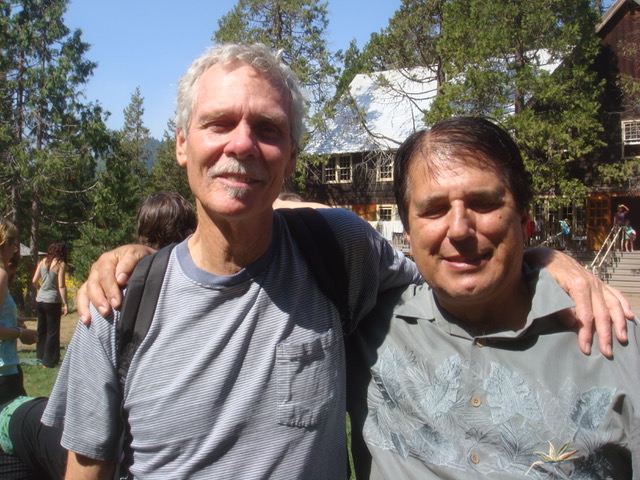
Perhaps the most visible travelling herbal teacher of the era was John R. Christopher, founder of the School of Natural Healing. His lectures across the United States and Canada inspired thousands. Although not an Eclectic physician, Christopher preserved elements of 19th-century botanical thinking — tonics, cleansing formulas, constitutional support — filtered through a 20th-century natural health lens.
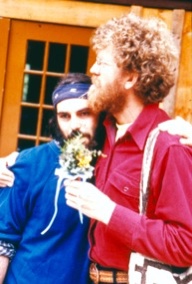
In the 1970s, I studied with Dr. Christopher and was one of the first to establish a clinical herbal practice, leading to the start of my professional career in practice, teaching, and writing the Way of Herbs and Planetary Herbology. With my wife, Lesley Tierra, we created the East Course on Planetary Herbology, offering, for the first time in history, the integration of Western, Chinese, and Ayurvedic herbalism through weeklong courses held yearly in both America and the UK. The course enrolled thousands of students and graduated many who have since become leaders (like Dr Edward Thompson, Sebastian Pole, and John Smith in the UK),.
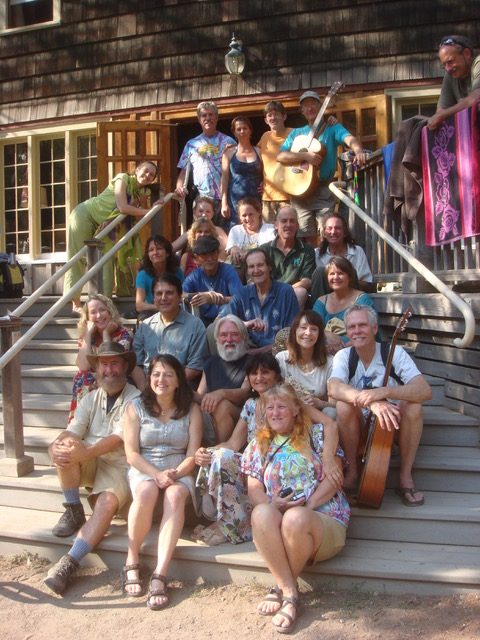
I can’t leave this without mentioning Rosemary Gladstar, a renowned teacher and founder of the California School of Herbal Studies and the International Herb Symposium. Rosemary summoned us herbalists from around the country to Rainbow’s End Farm to share and teach herbal healing. Subsequently, she arranged for us to teach several times at Breitenbush Hot Springs in Oregon. It was from these gatherings that a deep bond of kinship was formed among some of the most talented self-taught herbalists scattered throughout America. Because of Rosemary’s ability to bring us together, she has been dubbed the “godmother of herbalism” during the herbal renaissance of the 1960s and 1970s.
Professionalisation and the formation of guilds
By the 1980s, some herbalists recognised the need for professional standards. In 1989, I introduced the idea of an herbal guild and, along with approximately thirty others, founded the American Herbalists Guild (AHG) to promote clinical herbalism and peer review. The AHG sought to create standards for professional members, entitling them to be registered as a registrar and to append RH (registered herbalist) to their name. We also wanted to include non-professional individuals who wanted to attend seminars and workshops, share, and learn more about herbs.
The AHG, with its professional and non-professional members, has access to herbal seminars and workshops given by the AHG and has helped bridge traditional practice with modern phytochemistry — elevating biochemistry to interact more closely with laboratory research and global traditions, including Ayurveda and traditional Chinese medicine (TCM).
This phase marked a re-professionalisation of American herbalism — distinct from the physician-based previous Eclectic era but similarly committed to organised standards.
The American Herbalists Guild welcomes members from around the world, offering AHG community membership.
Regulation and the supplement era
A major legal milestone came with the passage of the Dietary Supplement Health and Education Act of 1994 (DSHEA). This law defined herbal products as dietary supplements rather than drugs, shaping how they could be marketed and regulated.
DSHEA allowed widespread access to herbal products but limited explicit medical claims. Herbal companies flourished. Standardised extracts became common. Simultaneously, tensions grew between commercial supplement marketing and traditional herbal practice.
The American herbal landscape now includes:
- Clinical herbalists in private practice
- Supplement manufacturers
- Integrative MDs and naturopathic doctors
- Community herbalists and grassroots educators
Integration with global traditions
Late-20th-century American herbalism increasingly drew on global systems. Chinese herbal medicine entered through acupuncture schools. Ayurveda gained visibility. European phytotherapy influenced extract standardisation and clinical research.
Yet American herbalism retained distinctive features:
- Emphasis on North American materia medica (echinacea (Echinacea spp.), goldenseal (Hydrastis canadensis), black cohosh (Cimicifuga racemosa).
- Blending traditions rather than strict adherence to one lineage
- A strong culture of community herb schools
This pluralism is both a strength and a source of debate. Some argue for stricter traditional lineage fidelity; others embrace synthesis.
Research and evidence
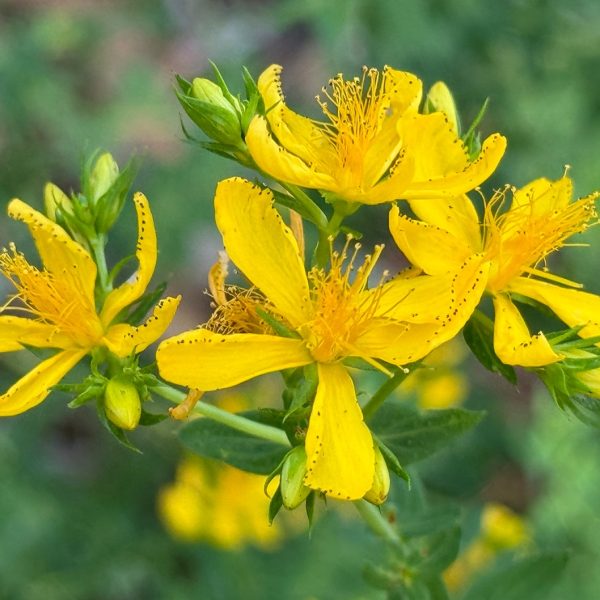
Modern herbalism operates in a research-aware environment. Clinical trials on echinacea (Echinacea spp.), St John’s wort (Hypericum perforatum), ginkgo (Ginkgo biloba), and saw palmetto (Serenoa repens) have shaped public perception. Universities conduct phytochemical studies. However, reductionist research often isolates single constituents, while traditional herbalism values whole-plant synergy.
The Eclectics themselves were empiricists, documenting thousands of case observations. In that sense, modern evidence-based herbalism is not entirely new — it is a continuation under different methodological frameworks.
The current landscape
Today’s American herbalism exists in multiple strata:
- Clinical herbalism — Practitioners with formal training, case documentation, and professional membership in organisations such as the American Herbalists Guild.
- Community herbalism –—Grassroots education, mutual aid clinics, and sliding-scale care.
- Commercial phytotherapy — National and global supplement markets.
- Integrative medicine – Collaboration between MDs, NDs, acupuncturists, and herbalists.
Digital platforms have expanded access to education. At the same time, misinformation spreads easily. The challenge is maintaining depth and rigour in an era of rapid content production.
Continuities across eras
Despite dramatic shifts, certain themes persist from the Eclectics to today:
- Respect for plant energetics and constitutional differentiation
- Skepticism toward excessive pharmaceutical intervention
- Commitment to individualised care
- Ongoing struggle for professional recognition
The Eclectics sought legitimacy within medicine. Modern herbalists seek recognition within healthcare systems without losing autonomy.
Challenges facing contemporary herbalism
- Regulatory pressure — Ongoing FDA oversight and shifting supplement regulations.
- Overharvesting and sustainability — Increasingly, plants such as goldenseal face ecological strain.
- Commercial dilution — Marketing trends can outpace clinical wisdom.
- Educational standardisation –—Wide variability in training programs.
Professional guilds attempt to balance openness with standards — a tension that mirrors the 19th-century divide between Thomsonian populism and Eclectic professionalism.
Conclusion: A living tradition
American herbalism is not a relic of the 1800s. It is a living, adaptive tradition shaped by reformers, physicians, grassroots healers, and modern clinicians. The Eclectics demonstrated that botanical medicine could be organised, published, and clinically sophisticated. The 20th-century revival ensured that plant medicine survived biomedical dominance. Contemporary practitioners now operate in a hybrid environment — scientifically informed yet rooted in traditional frameworks.
From steam baths and lobelia to standardised extracts and peer-reviewed credentialing, the arc of American herbalism reveals resilience. It has repeatedly moved from margin to legitimacy and back again.
The future of American herbalism will likely depend on its ability to integrate ecological stewardship, rigorous education, and clinical discernment without surrendering to either commercial trivialisation or institutional erasure. If history is any guide, it will continue evolving — never static, always negotiating its place within American healthcare.
What remains constant is the plant itself — quiet, chemically complex, and responsive to skilled hands. The seeds of modern American herbalism continue to evolve, spread their goodness, and evolve from this period. As for the future, there will always be challenges in life; there must always be plants and herbs to nourish and heal.
Plants are a part of us as we are of them. Just as we continue to learn the mysteries of the universe, we learn about the secrets and mysteries of herbs and plants. Periodically, people are lured away from believing that we have no relationship with nature and plants; but then for those with whom I found a kindred spirit, we all experience a true vocation, a calling of the plants and herbs to return to our roots.