












60 mins prep time | 2–3 days | 500 ml | Intermediate
Percolation is an advanced herbal extraction method that uses gravity and a controlled flow of solvent to draw out a herb’s active constituents more efficiently than standard maceration.
Ingredients
- 250 g powdered herb (medium fine around 40 mesh is ideal). A coffee or spice grinder is a good option to get the desired result.
- 650 ml of ethanol solvent (menstruum)
Equipment
- Percolation cone
- Wide-mouth jar
- Wooden spoon/pestle
- Unbleached coffee filter (avoid any with glue as this will pass into the final extract)
- Small weight (can be a clean pebble or marble)
- Amber bottle for storage
- Label
- Large bowl
- Measuring jug
How to make a herbal percolation extract
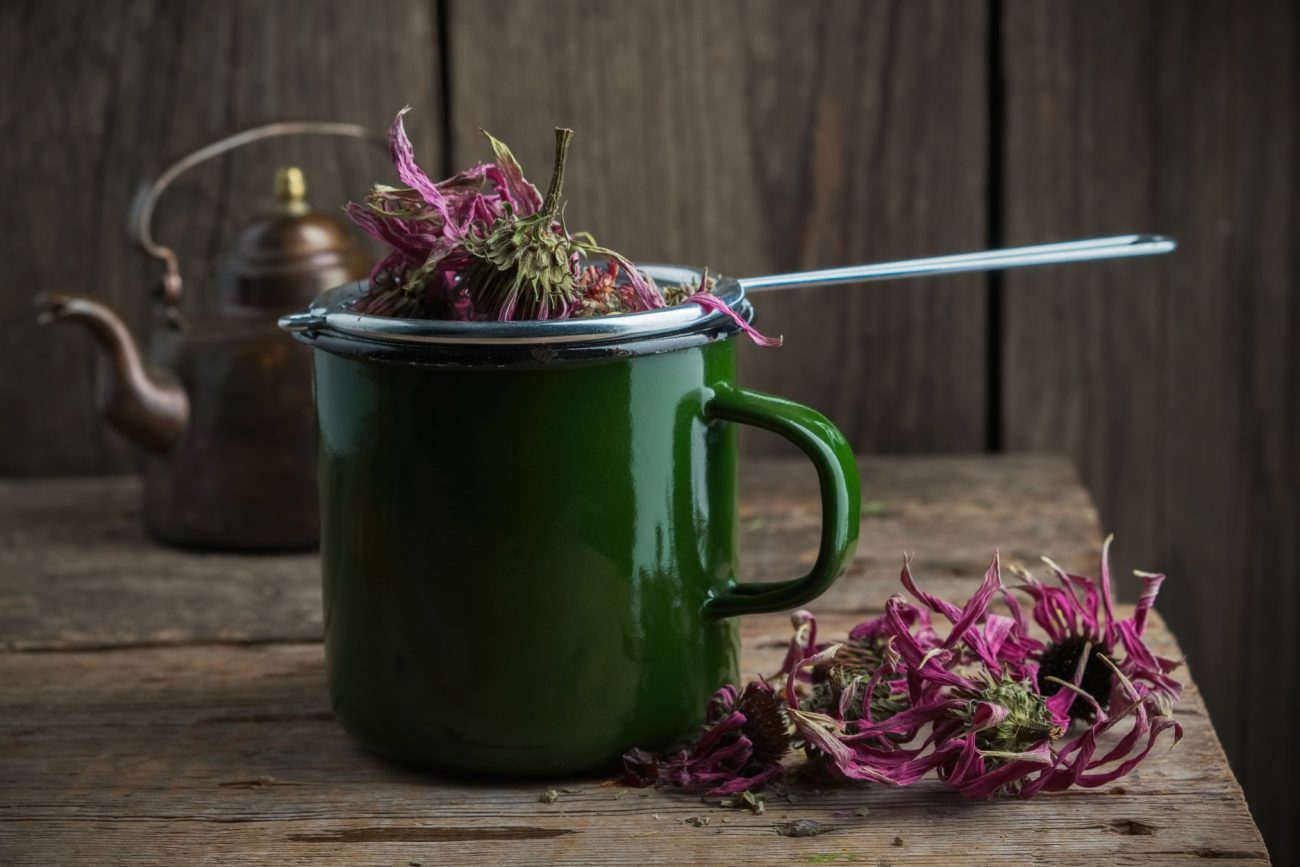
- Premoisten the herb material by adding it to a large bowl or jar and slowly add 350 ml of the menstruum making sure to stir continuously. The ideal consistency should be like damp sand — it shouldn’t leak any liquid or be too dry.
- Cover the bowl and leave to rest for 24 hours.
- Assemble the percolator.
- Divide the herb into three portions, and add the first to the percolator, then tamp down firmly and evenly. Repeat with the other two portions of herb material. The packed herb should feel compact, slightly springy and even, not rock hard.
- Place the coffee filter on top of the herb material.
- Add the weight.
- Slowly pour the remaining menstruum over the filter, making sure to pour evenly and slowly around the entire filter.
- Allow a couple of drops to emerge from the bottom then tighten or close the outlet. This allows for the release of any trapped air.
- Allow to rest for a further 24 hours.
- Open the percolation valve/cap slowly to allow for roughly one drip every five seconds.
- Monitor the flow closely. If it stops, it may have been packed too tightly and the surface can be gently loosened with a small utensil. If it’s running too fast it may have been packed too loosely which will result in a weaker extraction.
- Continue monitoring regularly until approximately 500 ml has been collected. This may take between 6–12 hours.
- Once the amount has been collected, allow the tincture to rest for a further 24 hours to allow the sediment to settle.
- Pour off the finished extract and bottle in an amber glass jar and label.
How to store a percolation
The tincture should keep for a couple of years, as long as the correct ratio of ethanol to water was used. For more information on tincture making see our article — How to make a herbal tincture.
What can I use if I don’t have a percolator?
A simple homemade percolator can be created using a large glass bottle such as a wine bottle with the bottom removed. The bottle can be turned upside down so the extract drips out the mouth and the filter paper is placed in the neck of the bottle. The herb can be packed at the top.
References
- Easley T, Horne SH. The Modern Herbal Dispensatory: A Medicine-Making Guide. North Atlantic Books; 2016.
- Hedley C, Shaw N. The Herbal Book of Making and Taking. Aeon Books; 2020.