



20 mins prep time | 10 mins cooking time | 12 servings | Intermediate | Vegetarian
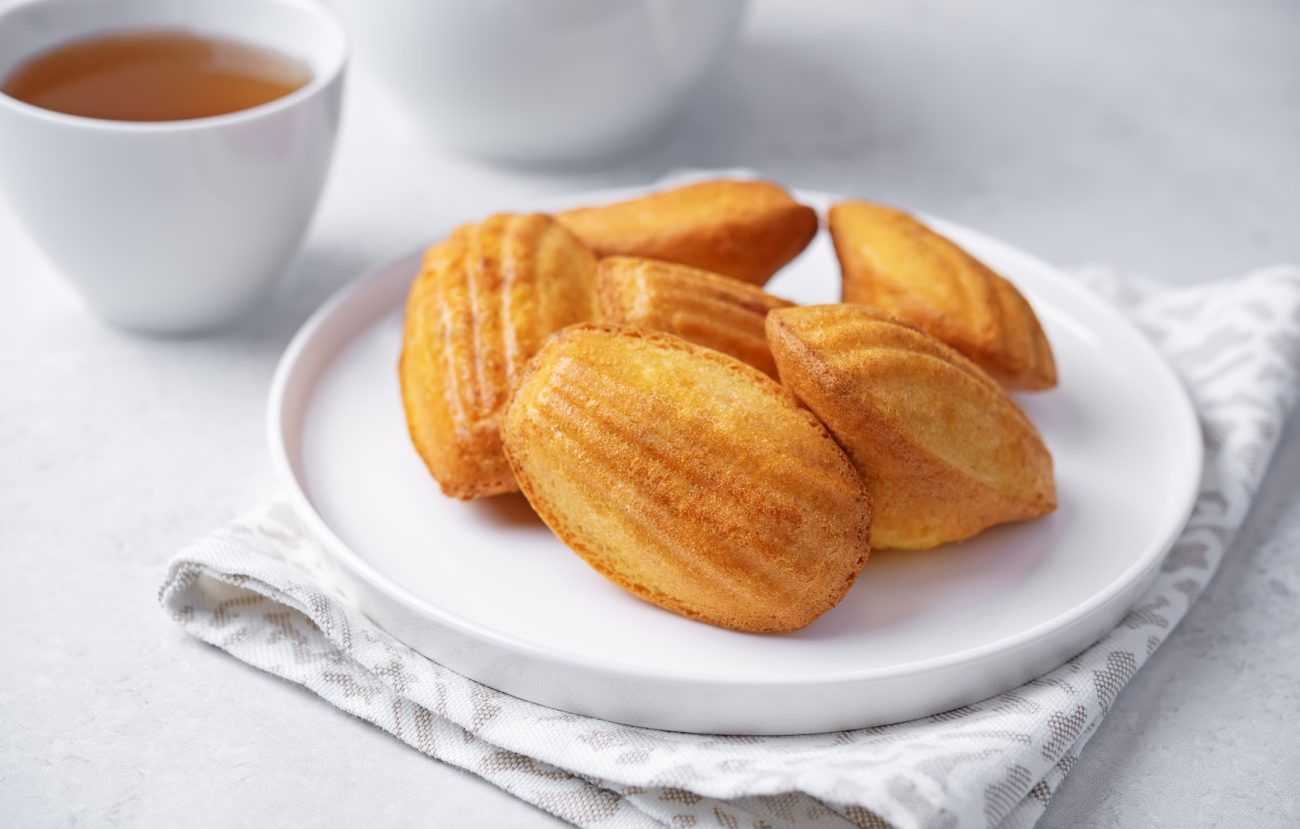
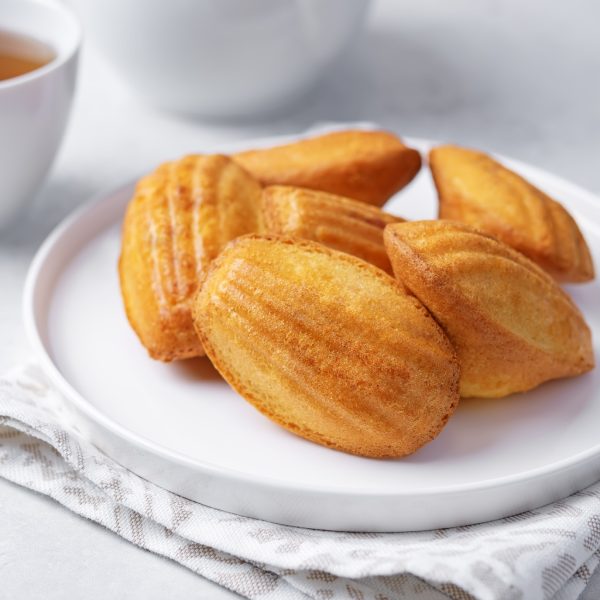
This French-inspired madeleine recipe celebrates summer blossoms with the floral flavours of limeflower and elderflower, gently sweetened with honey to create a sweet treat.
Madeleines are a classic French treat, and defined as a sponge cake often formed into a distinctive shell-like shapes through the process of baking. Madeleines are traditionally eaten alongside a cup of tea or tisane. Limeflower tea forms a longstanding tradition in France, it is usually drunk in the evening or late afternoon and is commonly associated with summer, comfort and relaxation (1).
In this recipe, limeflower is combined with elderflower, another key summer herb that heavily features in folklore and medicine. Limeflower is a supportive anxiolytic, nervine and relaxant, whilst elderflower is appreciated for its virtues as an antiallergenic, anti-inflammatory and respiratory support (2,3). Both these flowers offer a distinctively sweet and floral flavour, and coupled with the honey make a botanically infused mid-afternoon treat or dessert.
Ingredients
- 100 g unsalted butter
- 2 tbsp dried limeflowers
- 2 medium sized eggs
- 60 g elderflower infused honey
- 30 g caster sugar
- Finely grated zest of an unwaxed lemon
- 100 g plain flour
- 1 tsp baking powder
- Pinch of sea salt
Equipment
- Mixing bowl
- Madeleine tin
How to make limeflower and elderflower madeleines
- Gently melt the butter in a saucepan, then remove from the heat and add the limeflowers.
- Allow to infuse for 20–30 minutes before straining.
- Whisk together the eggs, elderflower honey and sugar until pale and thickened.
- Mix in the lemon zest.
- Sift the flour into the mixture, adding the baking powder and salt and folding gently until combined.
- Cover the batter and leave to chill for a minimum of one hour, or overnight.
- Spoon the batter into the madeleine tin, filling the moulds to around three quarters full to allow for it to rise.
- Bake at 190°C for 8–10 minutes or until lightly golden on top and still spongey to the touch.
- Take the madeleines out and allow to cool, before transferring to a cooling rack.
How to store herb madeleines
Madeleines are best eaten fresh, as they are more light and delicate. However, if not consumed on the day they are baked, they can be stored in an airtight container for up to three days.
Medicinal benefits of limeflower and elderflower
Limeflower (Tilia europaea)
Also known as lime or linden, limeflower feature as a staple in many cultures, including in France and Croatia, as a post dinner digestive tea as well as a sedative before bed to promote sleep and a restful night. They are often given to children to help with restlessness, anxiety and sleep disturbances (2,3). As an anxiolytic and relaxant they offer support for a dysregulated nervous system, whilst also providing a distinctive honey floral flavour.
Elderflower (Sambucus nigra)
Elderflowers are renowned for reducing catarrh and congestion and supporting the respiratory system. They are indicated in the treatment of allergies, such as hayfever as they help to reduce the histamine response (2,3). Commonly used to make cordial and desserts, they are a key feature in summer drinks, puddings and confectionery due to their light, floral and pleasant taste.


FAQs
What can I use if I don’t have elderflower infused honey?
This can be substituted with a teaspoon of elderflower cordial into the batter to give the same floral flavour.
Can I use dried flowers instead of fresh?
Yes, this recipe can be made with both fresh and dried flowers, however for the most potent flavour, using fresh is recommended.
What can I serve with these madeleines?
They can be paired with a cup of fresh limeflower or elderflower tea, some fresh berries and a spoonful of yoghurt or creme fraiche.
References
- Ledsom A. A brief history of the French madeleine. Culture Trip. Published February 1, 2018. Accessed June 12, 2026. https://theculturetrip.com/europe/france/articles/brief-history-french-madeleine
- McIntyre A. Complete Herbal Tutor: The Definitive Guide to the Principles and Practices of Herbal Medicine. 2nd ed. Aeon Books; 2019.
- Hoffmann D. Medical Herbalism: The Science and Practice of Herbal Medicine. Healing Arts Press; 2003.