


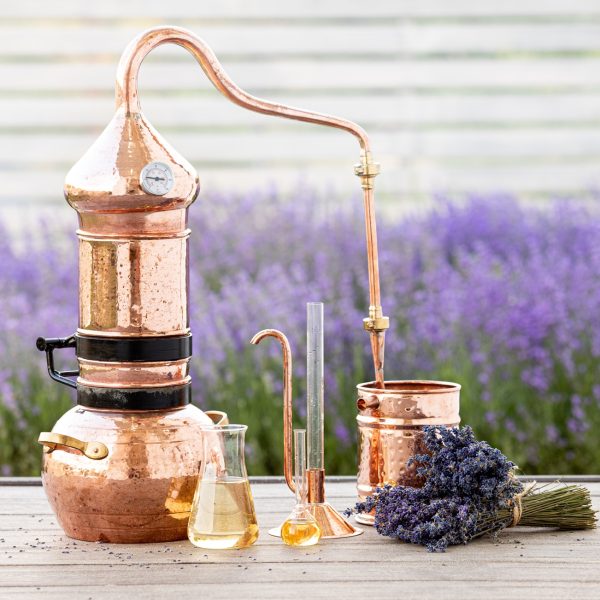



Exploring the ways herbal medicine can be integrated into a nutritional therapy practice to support digestion, absorption and aid overall treatment outcomes.
What is nutritional therapy?

Nutritional therapy is my primary discipline, and it makes sense to me. It hacks into something that most people do each day — eating — and aims to improve the quality of each of these encounters with food, making them more nourishing.
Working in health stores whilst studying, offered an exceptionally wide range of encounters with people’s health problems and the multifarious ways in which these needed to be tackled.
Despite nutritional therapy being the discipline that called me most, it became apparent that there’s a place for more than just dietary guidance when coaxing a body back into balance. Having had the joy of working in a health food cooperative that stocked jars of herbs and spices sold by the ounce, the very simple ways that herbs could produce mild but meaningful results, weaving a comforting base of support on which to build the dietary improvements, went on to inform my practice as a nutritionist.
Historical herbs

This wasn’t anything in the realm of being a trained herbalist, but instead following in the tradition of herbal use over the centuries — use what nature’s made available, in simple forms such as herbal teas or tisanes.
One of the many things to love about using herbs is that they have been around for so long that we now know a great deal about what they do and don’t achieve. Back in the days when natural medicine was the only option, herbs that caused horrible side effects, killed more than they cured, or didn’t work at all were unlikely to have been handed down to following generations.
Our ancestors did the hard work, and from their traditional usage and written records we can learn what is worth using and how best to employ it.
Understanding the supportive potential of food in the body’s healing processes, as nutritional practice does, allows for an appreciation of the value of herbal preparations derived from nature, minimally processed, and benefitting from an affinity with receptor sites within the human digestive system (2).
Whilst digestive processes are being strengthened during the initial stages of a client’s programme, remedies that contain the same components as foods (and many herbal remedies are familiar for their culinary roles) have the potential to absorb more easily than supplements created from non-food materials. This is particularly the case where remedies are minimally processed, using traditional extraction methods, rather than focusing on individual constituents (3).
An interesting example of this is seen in the case of the well-recognised herbal medicine, Echinacea purpurea. Research shows that although specific alkylamides could be shown to exhibit greater activity than others in vitro, their overall effect was greater when they were part of a whole extract (4).
Additionally, herbal remedies with their excellent safety profile and rich historical background can give hope to clients in the early stages of their nutritional programmes, supporting compliance and investment in the process of healing.
Low hurdle herbs

In practice, it is uncommon for clients to arrive at our clinics at the first signs of trouble. Instead, they tend to come once other avenues have proven unsuccessful, so they have a string of unproductive strategies behind them, with their expectations blighted and fear of failure heightened. All of which adds stress to their original situation, which may well have had stress as one of its causative factors.
Vicious circles abound in many conditions that are regularly encountered in clinic. These circumstances don’t call for complicated, high hurdle programmes, but instead simple tactics that will interrupt vicious circles without adding to the stress. Herbs fit excellently into this space.
What’s more, they are often fast-acting and give the client the first hint that things may improve – that their body is capable of feeling better again; and this glimpse of a positive outcome is extremely important for boosting confidence and moving the client into a more optimistic place. A growing body of research is showing that positive emotions can have a positive effect on physical conditions (5).
Getting to the guts of the issue
Hippocrates is also credited with the concept that what is important is “not what a person eats, but what they absorb”. It’s not possible to confirm his authorship, but whoever said it first, it’s extremely relevant to all those wondering why their dietary efforts are not paying off.
It’s not uncommon to encounter people who make huge efforts to eat a pure and blameless diet of lightly steamed organic goodness, and yet never seem well. Similarly, there are those who fret continually in an effort to hit all the nutritional targets, but never appear to reap the rewards of their diligent exertion. For a practitioner to add more dietary regulations or exhortations to these situations increases the client’s stress levels and thereby increases the problem, because stress is notoriously detrimental to digestive function, diverting energy to everything except the ability to turn food into nourishment.
“What some call health, if purchased by perpetual anxiety about diet, isn’t much better than tedious disease.”— George Dennison Prentice
Other strategies are needed to improve digestion in such scenarios, once the reason for the initial lack of absorption has been pinpointed.
It might be a stressful lifestyle or a particularly traumatic time from which the client hasn’t recovered; or medication that has undermined digestive power; or a bout of H. pylori with antibiotic treatment from which gut flora are still reeling. It could equally be poor eating habits: the ‘how’ of eating carries importance as well as the ‘what’. Eating on the run, or mobile meals in minutes are not conducive to digestive diligence.
A case study: Addressing stress

To take an example of stress affecting absorption, and stressful solutions aggravating the situation, my client Anna (I have used a different name) came into clinic literally in tears, after a food allergy test done elsewhere had thrown up multiple ‘allergies’ that left her with a frightening vision of minimal food options. Already very slim and of a nervous disposition, it was clear that worrying about her diet was just adding to the strain.
So, for the first phase of her programme, we used passionflower (Passiflora incarnata), an excellent remedy for anxious clients, due to its gentle action and lack of common side effects (6).
Passionflower is best-known for its relaxing nervine properties and as a mild sedative. It is also antispasmodic, which helps contribute to its calming effect. It is indicated for conditions with restless agitation, exhaustion with muscular twitching or a tendency towards spasms. It has anodyne and anxiolytic properties, and acts as a cerebral vasorelaxant (7).
Anna was adamant she didn’t want to take pharmaceutical medication for her nervous system, due to fear of side effects, in particular any negative effect on her ability to concentrate. As research has shown that passionflower can reduce symptoms of generalized anxiety disorder without impairing job performance, this was one concern dispelled (8).
Reducing daytime stress often helps improve sleep, which in turn promotes more daytime resilience (9). Anna certainly improved quickly, and having more energy enabled her to focus better on our other strategies, which featured more dedicated attention to how she ate. Gradually, her digestive responses reactivated, no longer turned off by adrenalin surges, and she found she could eat most foods when calm and happy.
A case study: Back to sleep

Another client, Lisa (not her real name), had been told that a viral infection was probably to blame for her exhaustion. The virus hadn’t been identified, despite numerous tests, but her doctors felt this was the most likely cause. She was, however, not sleeping much at all, due to the pain of a hip that was due for replacement. Until the operation, we used a fresh arnica (Arnica montana) extract gel topically, and a devil’s claw (Harpagophytum procumbens) extract orally. Both of these have rapid-acting anti-inflammatory actions that don’t lose efficacy with repeated use, as many painkilling medications do (10,11).
Both these herbs are available as products with Traditional Herbal Registrations (THRs), making it very easy for non-herbalist practitioners to recommend, as they come with Patient Information Leaflets explaining the safety profile and giving contact details for additional information. THRs are worth looking out for, as they are also tested rigorously for quality and safety.
An anti-inflammatory diet, high in antioxidants and elements such as ginger (Zingiber officinale) and rosemary (Rosmarinus officinalis), was also a focus in Lisa’s programme. Rosemary is rich in flavonoids such as diosmetin that have anti-diarrhoeal and spasmolytic activities (12); whilst its rosmarinic acid content makes it anti-inflammatory for the gut lining, as well as calming digestive irritability (13). Ginger’s anti-inflammatory and antioxidant properties are accredited to its gingerols; whilst its zingerone content calms nausea (14). Ginger is generally carminative for the digestive system, and can reduce pressure on the lower oesophageal sphincter, with beneficial effects shown on dyspepsia and bloating (15).
With the reduction in pain came improved sleep and better energy levels for Lisa.
Do be bitter

The classic scenario of poor digestion causing poor absorption, leading to nutritional deficiencies epitomises the benefits of herbal remedies. Stocking up with nutritional supplements or making radical dietary changes is problematic at the start of these cases (although supplements in liquid form often work when solid formats are not broken down well). Instead, whilst starting the process of introducing the client to good eating mechanics (sit down, relax, focus on your food, chew, take your time, don’t wash your food down with drinks…), we use bitter herbs such as gentian (Gentiana lutea) and blessed thistle (Cnicus benedictus), taken as drops before meals.
Foods and herbs containing bitter compounds are thought to regulate metabolic and digestive functions via activation of a family of oral taste type 2 bitter receptors (16). More simply, the bitter taste initiates digestive processes in the mouth and stomach that then trigger healthy digestive responses further down the digestive system (17). What’s more, it’s an exceedingly easy ask for the client. Often they actually appreciate the bitter taste, as their body welcomes the digestive support.
The average Western diet is tragically lacking in bitter flavours, and as the client’s digestive response improves, foods with bitter elements such as chicory, radicchio, and artichoke can be gently introduced, taking over from the bitter tonic. Many clients will, however, keep a bitter remedy to hand for weak moments, when a busy schedule or temporary dietary hitch throws them back in their progress.
Make mine a herbal
Using herbs in this way is simple, it’s satisfying, and very welcome in the complex world of today to be reminded of our roots in the earth and our fundamental connection to plants.
References
- Smith CM. Origin and uses of primum non nocere–above all, do no harm! Journal of clinical pharmacology. 2005;45(4):371-377. https://doi.org/10.1177/0091270004273680
- Depoortere I. Taste receptors of the gut: emerging roles in health and disease. Gut. 2013;63(1):179-190. doi:https://doi.org/10.1136/gutjnl-2013-305112
- Zhao Q, Luan X, Zheng M, et al. Synergistic Mechanisms of Constituents in Herbal Extracts during Intestinal Absorption: Focus on Natural Occurring Nanoparticles. Pharmaceutics. 2020;12(2):128. https://doi.org/10.3390/pharmaceutics12020128
- Modarai M, Gertsch J, Suter A, Heinrich M, Kortenkamp A. Cytochrome P450 inhibitory action of Echinacea preparations differs widely and co-varies with alkylamide content. Journal of Pharmacy and Pharmacology. 2007;59(4):567-573. https://doi.org/10.1211/jpp.59.4.0012
- Doan S, MacDonald S, Swaminathan K. The Socialization of Positive Emotions: Implications for Physical Health and Psychological Adjustment. Mental Health & Prevention. Published online March 2023:200272. https://doi.org/10.1016/j.mhp.2023.200272
- Harit MK, Mundhe N, Tamoli S, et al. Randomized, Double-Blind, Placebo-Controlled, Clinical Study of Passiflora incarnata in Participants With Stress and Sleep Problems. Curēus. Published online March 20, 2024. https://doi.org/10.7759/cureus.56530
- Bone K, Mills S. Principles and Practice of Phytotherapy: Modern Herbal Medicine. 2nd ed. Edinburgh Churchill Livingstone, Elsevier; 2013.
- Akhondzadeh S, Naghavi HR, Vazirian M, Shayeganpour A, Rashidi H, Khani M. Passionflower in the treatment of generalized anxiety: a pilot double-blind randomized controlled trial with oxazepam. Journal of Clinical Pharmacy and Therapeutics. 2001;26(5):363-367. https://doi.org/10.1046/j.1365-2710.2001.00367.x
- Kalmbach DA, Anderson JR, Drake CL. The impact of stress on sleep: Pathogenic sleep reactivity as a vulnerability to insomnia and circadian disorders. Journal of sleep research. 2018;27(6):e12710. https://doi.org/10.1111/jsr.12710
- KNÜSEL O, Klein P, Suter A. AtroMed-Gel bei rheumatischen Beschwerden am Bewegungsapparat. SONDERDRUCK AUS ARS MEDICI. Published online 2006.
- Warnock M, McBean D, Suter A, Tan J, Whittaker P. Effectiveness and safety of Devil’s Claw tablets in patients with general rheumatic disorders. Phytotherapy Research. 2007;21(12):1228-1233. https://doi.org/10.1002/ptr.2288
- Naqvi S, Rehman NU, Azhar I, Palla A. Unraveling the multi-faceted role of Rosmarinus officinalis L. (rosemary) and diosmetin in managing gut motility. Journal of ethnopharmacology. 2024;332:118395. https://doi.org/10.1016/j.jep.2024.118395
- Li K, Wu J, Xu S, Li X, Zhang Y, Gao X. Rosmarinic acid alleviates intestinal inflammatory damage and inhibits endoplasmic reticulum stress and smooth muscle contraction abnormalities in intestinal tissues by regulating gut microbiota. Microbiology Spectrum. 2023;11(5). https://doi.org/10.1128/spectrum.01914-23
- Lemlem Gebremariam Aregawi, Teferi Gebru Gebremeskel, Zoltan C. Preventive and Therapeutic Effects of Ginger on Bowel Disease: A Review of Clinical Trials. Pharmacological research Modern Chinese medicine. 2024;12:100457-100457. https://doi.org/10.1016/j.prmcm.2024.100457
- Nikkhah Bodagh M, Maleki I, Hekmatdoost A. Ginger in gastrointestinal disorders: A systematic review of clinical trials. Food Science & Nutrition. 2019;7(1):96-108. https://doi.org/10.1002/fsn3.807
- Behrens M, Meyerhof W. Oral and Extraoral Bitter Taste Receptors. Results and problems in cell differentiation. Published online September 4, 2010:87-99. https://doi.org/10.1007/978-3-642-14426-4_8
- McMullen MK, Whitehouse JM, Towell A. Bitters: Time for a new paradigm. Evidence-Based Complementary and Alternative Medicine. 2015;2015(1):1-8. https://doi.org/10.1155/2015/670504