
















The sustainability of myrrh, a dryland tree of resilience and value, is examined through its harvesting practices, climate vulnerability, and community-based stewardship.
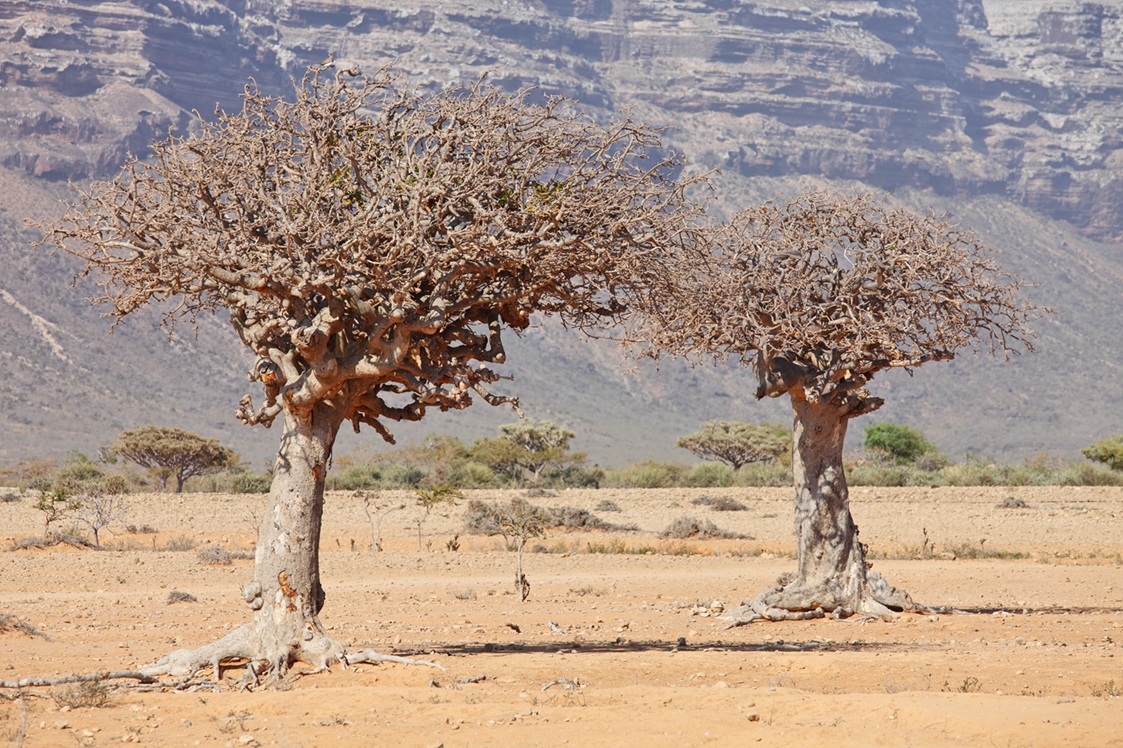
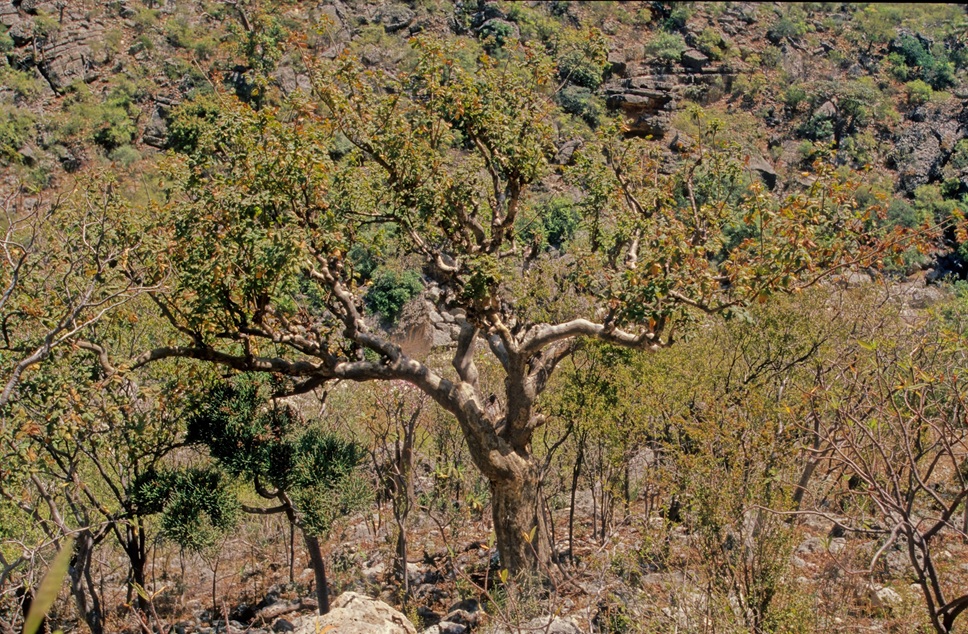
The myrrh tree Commiphora myrrha (syn. C. molmol) survives in some of the most unforgiving landscapes on earth. Native to the Horn of Africa and parts of the Arabian Peninsula, it grows in semi-desert scrub, rocky escarpments, and stony limestone hillsides where soils are shallow, alkaline, and low in organic matter. Rainfall in these regions is often less than 200–300 mm per year, arriving in short, unpredictable bursts followed by prolonged drought.
Daytime temperatures frequently exceed 40°C in the hot season, while exposed sites endure intense solar radiation, desiccating winds, and high evapotranspiration. Although it is a heat-adapted species, desert nights and highland margins can occasionally bring temperatures down close to 0°C, and brief cold snaps can dip a few degrees below freezing — conditions that would damage many tropical trees.
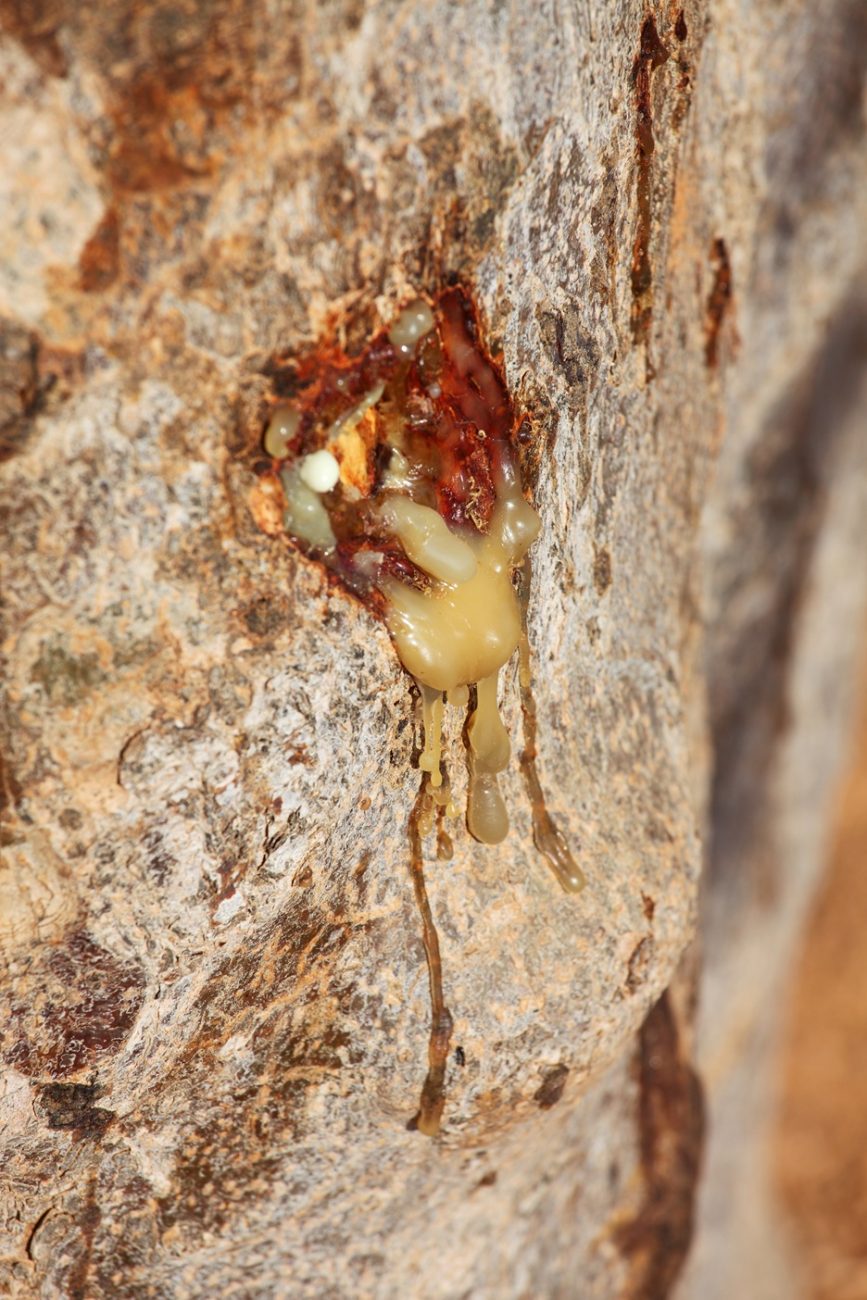
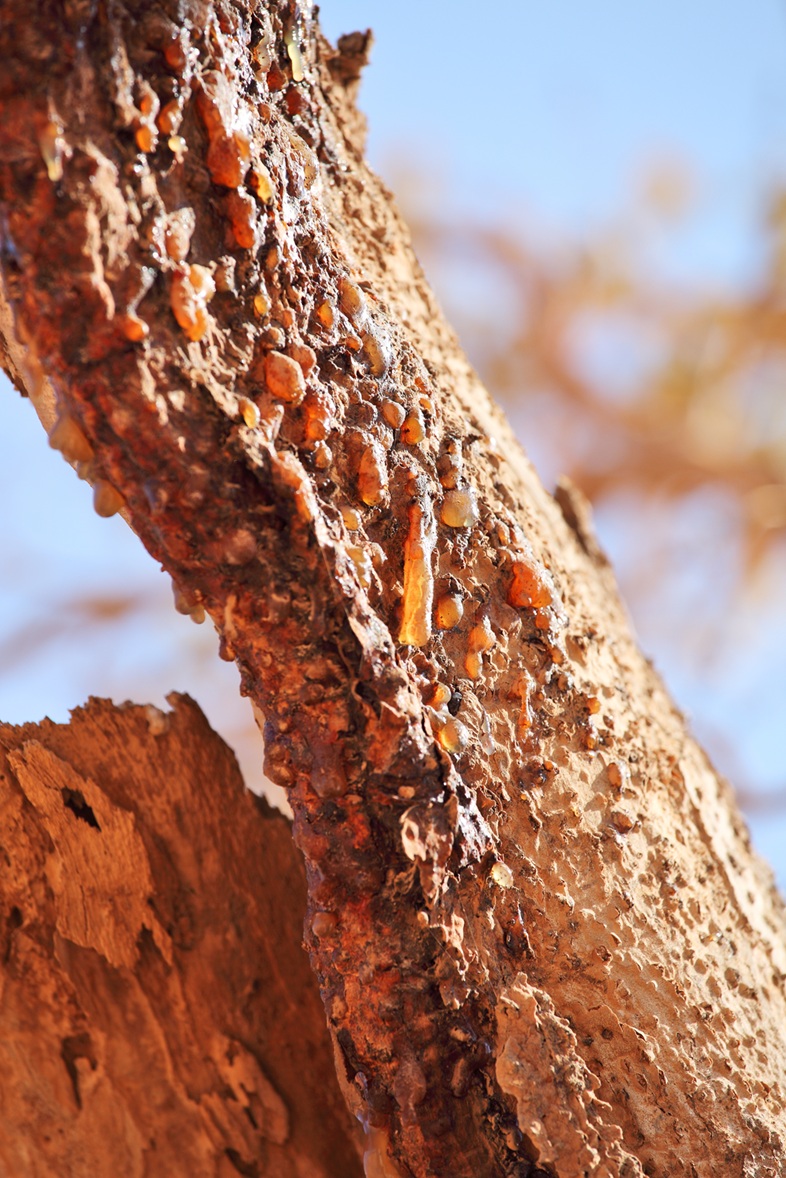
Grazing pressure from livestock and browsing wildlife adds further stress. Yet, myrrh persists: it sheds its leaves to conserve moisture, stores water in its swollen stems, and anchors itself into rock fissures where few other woody species can survive. When cut, the trunk and branches emit a viscous pale-yellow sap that hardens into reddish-brown tear-shaped masses. This is the material harvested, and commonly sold as myrrh. Myrrh has been known to people of various cultures from ancient times.
It is perhaps one of the oldest traded goods and once held the same value as gold. It is very fragrant, bitter, and acrid in taste. When burned, myrrh produces a characteristic odour. The name myrrh is related to the Arabic mur and the Hebrew mar, meaning ‘bitter’ (1).
Historical significance and traditional use
Since ancient times, this resin has been valued for its medicinal properties, with the Sumerians using it for the treatment of tooth infection and intestinal worms as far back as 1100 BC (2). In the bible it is famously mentioned as one of the three gifts the wise men brought to the birth of Jesus.
In ancient Egypt, it was used as an ingredient in embalming fluid, in the Middle East its use included the treatment of wounds and to fight infections, and in Ayurvedic medicine, myrrh has long been used to treat problems such as gingivitis, mouth ulcers, and pharyngitis (3). Today, it is still commonly used as an analgesic, antiseptic, astringent, anthelmintic, carminative, emmenagogue, and as an expectorant (2).
Further to its value as medicine, myrhh has a long history of use as an incense and perfume. The world’s oldest perfume factory, dating back over 4,000 years to 1850 BCE, was discovered in Pyrgos-Mavroraki, Cyprus, by Italian archaeologists in 2003–2004. This massive Bronze Age industrial site featured dozens of stills, mixing bowls, and funnel bottles. Scents were created using various ingredients, including lavender, rosemary, pine, coriander, and myrrh.
Today myrrh can be commonly found in incense, cosmetic products, perfumes, mouthwashes and toothpastes, soaps and shampoos, aromatherapy products and as a flavouring agent in beverages, candy, baked goods, chewing gum, gelatins, frozen desserts, puddings, soft drinks, and meat products all over the world (4). This shows that while perhaps myrrh is not seen in the same way as it was thousands of years ago, it is still a highly valued commodity.
The Commiphora genus
There are over 200 different species of myrrh, though Commiphora myrrha is the most commonly used species worldwide. Guggul (Commiphora wightii) is the more commonly used species of myrrh in the Ayurvedic tradition.
And Opoponax (Commiphora guidotti) is very commonly used in the perfume industry, and has a much sweeter aroma than C. myrrha. Balm of Gilead (Commiphora gileadensis) is, just like myrrh mentioned in the Bible, and has a history of use in Christian, Jewish and Muslim traditions where it was used as a medicine.
Disruptions to growing regions, communities and harvesting practices
Most of the myrrh (C. myrrha) used today comes from the regions of Somalia and Ethiopia, with about 90% percent of the world’s myrrh supply coming from Somali trees (1).
Similar to frankincense, myrrh used to be harvested by semi-normadic pastoralist clans, who followed traditional rules around the harvest process, which would allow the continued co-existence with these trees. However, instability in recent Somali history, has increased levels of poverty, corruption and war, creating circumstances in which unsustainable harvesting practices arise more readily and the continuity of traditional ecological knowledge is threatened (1).
Additionally, dryland areas in Kenya, Ethiopia and Somalia are experiencing increased overgrazing from livestock, leading to increased damage and subsequent deforestation in those areas. Overgrazing, harvest of firewood, deforestation, forest fires and climate change are currently the biggest threats to those ecosystems, advancing the process of desertification (5).
Socio-economic pressures and the Somali gold rush
In 2018, a gold rush emerged in parts of Somalia, leading to the uprooting of centuries-old trees in the search of gold. Some of the people digging had previously been part of semi-nomadic pastoralist communities, but because of ever-changing climate conditions, decided to give up their peripatetic lifestyles. Now, many live settled in the mountains, wishing they could return to their nomadic lives. The gold rush also brought more violence to the region, increasing instability, as competition over access to newly discovered resources intensified(6).
Yet, some nearby communities still exist in close harmony with these trees, maintaining systems of stewardship in which knowledge of sustainable harvest practices is passed down through generations (6). Usually these people live in remote areas, and are not well connected to other villages or the outside world. As such, the resin is sold on to middlemen who hold a lot of power in terms of the price for the resin. All of which, gives little power and resource to wild harvesters themselves. Tappers and graders tend to see a fraction of the price on the market, with $10 /kg.
Approximately 30% of the price margin goes to the people tapping, the other approximately 70% to the urban merchants, selling on the resin (7). Additionally, it is estimated that 60% of the myrrh sold goes through illegal channels (7). The often opaque and complex nature of global supply chains, combined with the remote locations where myrrh trees grow and the resin harvested, makes transparency very difficult to achieve.
Myrrh resin, as well as other tree resins and gums, also represents an increasingly important source of income for these local communities, supporting livelihood diversification and risk management strategies (7). In response to these challenges, several companies and organisations that have committed themselves to more equitable practices and have obtained FairWild certification for their myrrh resins.
Value networks, certification and future sustainability
FairWild is a certification body, which combines social and ecological factors and specialises in certifying wild-harvested products — a market with very difficult parameters, as every plant and every ecosystem brings its own requirements, which need to be taken into account when assessing the sustainability of its trade. One company that has gained the FairWild certification for their resins is IHSAN Resins Society Limited.
Made up of farmers, farm laborers unions and local traders of gums and resins harvested from the Horn of Africa region, this society brings together farmers and local traders, and reduces the negative impacts that middlemen often have. It is a supplier of a variety of types and grades of resins — including frankincense, myrrh, opoponax and gum arabic — and has been FairWild certified since 2023 (8,9).
Several other companies, such as Nagaad Resins and Gums, Kobac General Trading and other myrrh traders are also FairWild certified and supply these resins from these regions (7). As is often the case, when an opportunity is created for the people involved in the growing and harvesting of medicinal plants are able to organise and communicate with one another about their needs and challenges, they are better positioned to secure fairer compensation for their labour. This in turn creates more spaciousness to discuss, refine and implement sustainable harvest practices.
Myrrh, as well as frankincense, grows in climates that are very challenging to life. Not just for the trees, but also for the people living alongside them, facing hot climates, droughts, and little fertile soil for permanent agriculture. Despite this, people and trees have lived alongside each other in these areas for thousands of years, and the tree resin, perhaps one of the most ancient things to be traded across continents, remains an important resource to humans all over the world.
Now is a crucial time to pay attention to the trade of myrrh and the conditions that make it possible for us to use it whilst living so far away from the source of this resin. Currently, C. myrrha is not officially classified as globally endangered nor threatened (10). However, it is facing challenges in multiple, interconnected ways.
The harsh environments in which it grows are amongst the least able to buffer the impact of climate change and are already experiencing increased levels of drought. In regions where water is already so sparse, shifts in rainfall can determine whether ecosystems persist or not. These environmental pressures also contribute to broader socio-political instability, such as the change in land use.
While the social sustainability of myrrh production remains uncertain on a larger scale, local community projects, particularly those working together with certification schemes such as FairWild, offer promise. These approaches can both sustain the ecological resource while also offering fairer pay and improved living conditions for those involved in the stewardship of the trees and the harvest of the resin.
At a time of such global interconnectedness, supporting local communities who are maintaining sustainable relationships with these species is important now more than ever, not only for their livelihoods but for the continued availability of this incredibly valued natural resource.
References
- Small E. Frankincense and myrrh — imperilled divine symbols of religion’s duty to conserve biodiversity. Biodiversity. 2017;18(4):219-234. https://doi.org/10.1080/14888386.2017.1370390
- Batiha GE, Wasef L, Teibo JO, et al. Commiphora myrrh: a phytochemical and pharmacological update. Naunyn Schmiedebergs Arch Pharmacol. 2023;396(3):405-420. https://doi.org/10.1007/s00210-022-02325-0
- Blumenthal M, Goldberg A, Brinckmann J, eds. Herbal Medicine: Expanded Commission E Monographs. American Botanical Council; 2000.
- Engels G, Brinckmann J. Myrrh Commiphora myrrha family: Burseraceae. HerbalGram. 2012;(93):1-4.
- Hassan BA, Glover EK, Luukkanen O, et al. The role of Boswellia and Commiphora species in rural livelihood security and climate change adaptation in the Horn of Africa: case study of north-eastern Kenya. Int J Soc For. 2011;4:86-112.
- Harper M. The Somali gold rush endangering frankincense and myrrh. BBC News. January 2023. https://www.bbc.com/news/world-africa-64162379
- Gizaw AW, Pretzsch J, Kassa H, Teketay D. Socio-ecological significance of collection and marketing of ancient forest commodities: the case of myrrh and opoponax in the dryland areas of southeastern Ethiopia. Paper presented at: Tropentag; September 17-19, 2014; Prague, Czech Republic.
- FairWild Foundation. Myrrh. Accessed April 15, 2026. https://www.fairwild.org/ingredients/myrrh
- Ihsan Resins Society. About. Accessed April 15, 2026. https://www.irsociety.ltd/about/
- Royal Botanic Gardens Kew. Commiphora myrrha (T.Nees) Engl. Plants of the World Online. First published in A.L.P.P. de Candolle & A.C.P. de Candolle, Monogr. Phan. 4: 10 (1883). Accessed February 28, 2026. https://powo.science.kew.org/taxon/urn:lsid:ipni.org:names:127741-1