










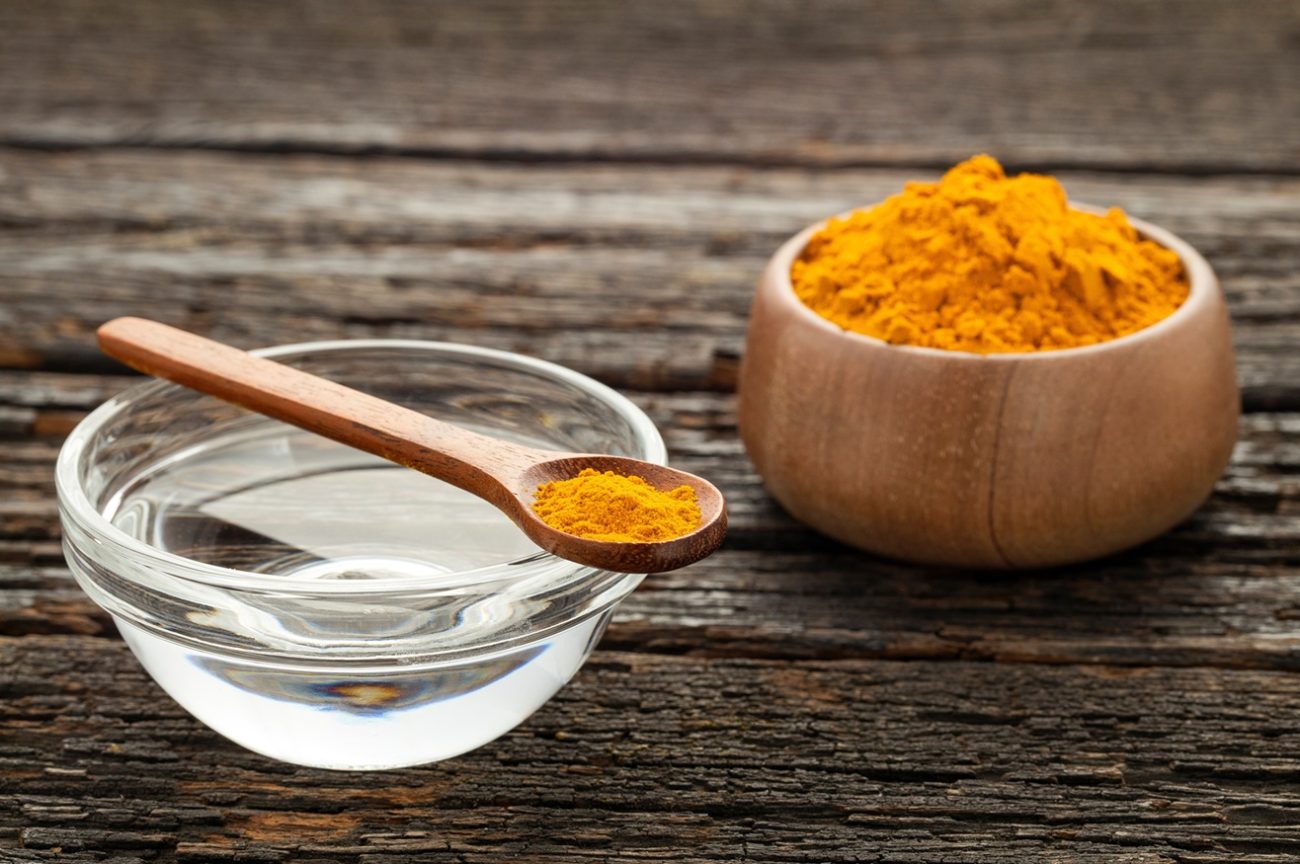
An overview of how solvent systems influence phytochemical yield, with insights into solubility, polarity, extraction variables, and their impact on herbal efficacy.
Herbal preparations are complex mixtures of phytochemicals dissolved (and sometimes suspended) in a fluid. The solvent (or solvent system, if more than one fluid is involved) influences the concentrations of various classes of phytochemicals in the product.
A fundamental principle is that herbs are not soluble; herbalconstituents are soluble.
Medicinal plants contain multiple classes of phytochemicals, with varying solubilities. Extraction is the process of moving those groups of molecules out of the plant matrix and into a solvent; and different solvents select for different groups of constituents.
Solubility is a spectrum
Constituents are often described as water-soluble, alcohol-soluble, or oil-soluble. But solubility behaves more like a continuum. A constituent may be somewhere on the spectrum of sparingly to highly soluble in any given solvent. Rather than asking “is this constituent water-soluble?” the question becomes, “from this herbal matrix, how soluble is this constituent in water, at this temperature, and using this extraction method?”
This is why changing the solvent and extraction method can change the focus and function of a herbal medicine. A standard infusion emphasises constituents that dissolve readily in hot water. Are these the constituents (and associated actions) that we desire in a particular medicine? A tincture made with a given menstruum extracts a different spectrum of constituents from the same herb. Which constituents will we focus on when we adjust the ethanol percentage of the menstruum? An infused oil of that herb will capture yet a different spectrum of constituents, therefore featuring different actions and energetics than the infusion or tincture.
Polarity: The first principle behind solvent choice
The main influence on solubility is polarity — a property arising from a molecule’s electron distribution. If this distribution is unbalanced (i.e., there is internal charge separation) we have a polar compound. If the distribution is perfectly balanced, we have a nonpolar molecule. And, as with solubility, polarity is a spectrum. Any phytochemical or solvent falls somewhere along the continuum.
The key to solubility is matching the polarity of the solvent to the polarity of the constituents we desire to extract. The old aphorism “like extracts like” applies: higher-polarity solvents (like water) focus on higher-polarity constituents, while lower-polarity solvents (like fixed oils) favour lower-polarity constituents.
Relative polarity of solvents
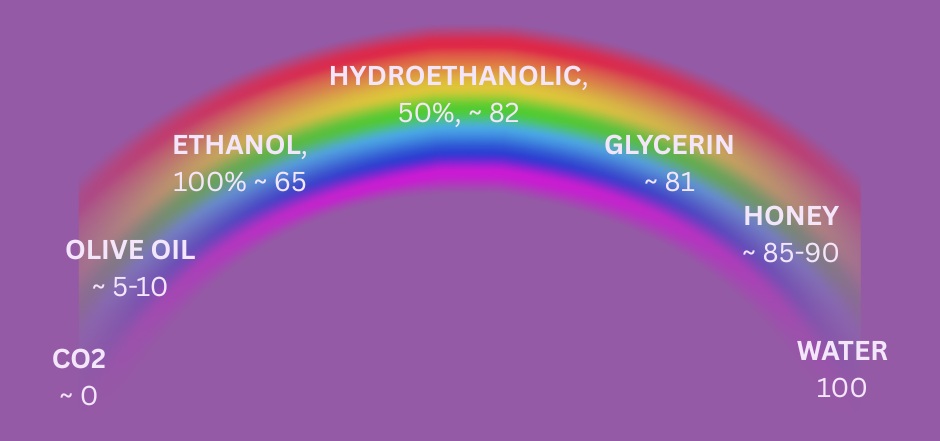
If you think of water as being 100% polar, then glycerin would be about 81% as polar as water. Pure ethanol would be about 65% as polar as water. These solvents are close enough that they will intermix with each other. Each of these solvents targets a particular group of constituents but there is overlap in what they will extract. Fixed oils and carbon dioxide (CO₂) extract lower-polarity constituents don’t easily mix with water, vinegar, glycerol or ethanol.
| Solvent / menstruum | Relative polarity |
|---|---|
| Water | 1.00 |
| Vinegar (like water but also acidic) | ~ 1 |
| Glycerin (glycerol) | 0.81 |
| Ethanol (100%) | 0.65 |
| Olive and other fixed oils | ~ 0 |
| Carbon dioxide (CO₂) | ~ 0 |
Why hydroethanolic tinctures are so versatile
A tincture is made with a hydroethanolic solvent system (menstruum) containing both mid-polarity ethanol and high-polarity water. By adjusting the ethanol (EtOH) percentage, we are tuning the overall polarity of the menstruum. More EtOH in the menstruum → lower polarity; less EtOH → higher polarity. This is one reason tinctures are so versatile — by choosing the right EtOH–water ratio, we design the menstruum to selectively extract constituents by polarity matching. In other words, menstruum composition strongly influences the phytochemical profile of the resulting tincture (1,5).
Hydroethanolic solvents
“K” is one way to quantify polarity. Since water is highly polar and ethanol (EtOH) is moderately polar, mixing them together in different proportions will create a menstruum with a specific polarity. The higher the % EtOH, the lower the polarity of the hydroethanolic solvent system (menstruum). We tincture different herbs with different % EtOH to match the polarity of the constituents we want to extract from those herbs.
| EtOH / Water | ~ K | EtOH / Water | ~ K |
|---|---|---|---|
| 100% water | 80 | 60% EtOH | 47 |
| 10% EtOH / 90% H2O | 74.5 | 70% EtOH | 41.5 |
| 20% EtOH | 69 | 80% EtOH | 36 |
| 30% EtOH | 63.5 | 90% EtOH | 30.5 |
| 40% EtOH | 58 | 95% EtOH | 27.8 |
| 50% EtOH | 52.5 | 100% EtOH | 25 |
The significance of yield
In herbal pharmacy, “yield” indicates the amount of finished tincture collected. But from a phytochemical perspective, “yield” usually refers to the concentration of a constituent in the product. A high constituent yield is often but not always better. For example, an extraction rich in astringent tannins may be more appropriate in some cases (surface inflammation, excessive secretion) and less appropriate in others (dry conditions, sensitive digestive mucosa). What matters is whether the preparation delivers the appropriate concentration of the desired spectrum of constituents for a particular therapeutic application.
Other factors that influence constituent yield
Polarity is central, but several additional factors can influence the concentration of constituents in our extractions:
Temperature
Heat is a kind of kinetic energy that physically increases the extraction of most constituents. At the same time, some kinds of constituents are sensitive and will degrade with excessive heat. We learn to choose the optimal temperature for an extraction solvent, and to apply heat for the right period of time (e.g., infusion vs. decoction).
Time
Longer contact between solvent and herb generally enhances extraction up to a point, but the optimal time is influenced by factors including plant matrix, surface area, agitation, constituent class, and type of preparation.
Surface area
Chopping, grinding, or powdering increases surface area of the plant matrix, facilitating solvent–constituent contact and enhancing extraction. Very fine powders, however, can complicate filtration.
Agitation
Shaking or stirring increases kinetic jostling between solvent and constituents, usually accelerating extraction and constituent yield.
Pressure
Increasing pressure (e.g., in a tightly closed canning jar or electric pressure cooker) usually enhances extraction.
Plant matrix
Constituents may extract somewhat differently depending on how they are packaged within plant tissues. Delicate structures like flowers yield their constituents more readily than tough structures like seed coats or root barks. Cellular structure and co-constituents such as mucilages, tannins, and resins can also alter extractability.
Taken together, these variables should be considered as part of the extraction method; they help explain why preparations of the same herb in the same solvent can be noticeably different. The combination of botanical quality, solvent, and extraction method largely determines constituent yield and product quality.
Choosing a solvent
Water
Water excels for higher-polarity constituents such as mucilages, polysaccharides, sugars, and some kinds of glycosides. It is the preferred solvent for making teas, infusions, and decoctions. Hot water almost always works better than cold water.

Hydroethanolic solvent systems (menstrua)
Lower % EtOH generally favours more polar compounds; higher % EtOH extracts lower-polarity constituents. Rather than a single “correct” percentage for each herb, it’s more accurate to think in ranges that can be adjusted to extract particular constituent families. Depending on your menstruum composition, you can create multiple different medicines from a single herb.
Glycerin and honey
Glycerin is a viscous and polar solvent, often used when alcohol is not desired. It can extract many water-soluble constituents along with a moderate concentration of aromatics, though it is generally less efficient than ethanol for lower-polarity constituents. However, its extraction spectrum can be increased considerably by employing heat, pressure, and agitation. As a solvent, honey behaves similarly to glycerin.
Vinegar
Vinegar is an acidic aqueous solvent. Acidity can change the solubility of certain constituents, particularly alkaloids, by shifting them into more water-soluble ionic forms (1,4). Traditional vinegars and oxymels (made by combining infused vinegars and honeys) offer versatile, alcohol-free alternatives to hydroethanolic tinctures or glycerites.
Fixed oils
Botanical oils such as olive, safflower, or coconut are both therapeutic substances and low-polarity solvents. Herb-infused oils feature low-polarity, lipophilic constituents including many terpenoids and some phenolics, making them valuable for topical preparations. Culinary preparations such as infused ghee or vinegar-and-oil salad dressings can also double as herbal products. Oils are generally unsuitable solvents for mineral salts and polar constituents including mucilages and glycosides.
Supercritical carbon dioxide
Supercritical carbon dioxide (CO₂) extraction is sometimes used for low-polarity constituents (e.g., gingerols from ginger (Zingiber officinale) curcuminoids from turmeric (Curcuma longa), cannabinoids from hemp (Cannabis sativa)). This modern method uses high-pressure, low-temperature conditions, with the advantage that CO₂ leaves no solvent residue in the finished product. CO₂ extracts are good at preserving the characteristic flavours and aromas of herbs. They are especially suitable for use in highly concentrated formulas delivered in capsules. (2)
Examples of solvent selection and constituents
Betalains are the vivid, water-soluble pigments responsible for red-violet and yellow-orange colours in plants such as beetroot (Beta vulgaris) and prickly pear (Opuntia ficus-indica) fruit, as well as edible greens including red orach (Atriplex hortensis var. rubra) and purslane (Portulaca oleracea). These medicinal food-herbs (and their betalains) have antioxidant, anti-inflammatory, and broad-spectrum bioprotective effects. (3)
Betalains are highly polar. This predicts several practical outcomes:
- They extract readily into water and other higher-polarity solvents such as lower % EtOH menstrua. Betalain extraction decreases as EtOH percentage increases.
- Glycerin and honey can be suitable solvents, especially when gently warmed to decrease their viscosity.
- Vinegar (which is mostly water) is a good solvent for betalains.
- Betalains are not lipophilic; they do not extract well into fixed oils.
As another example, echinacea (Echinacea spp.) contain several important groups of constituents — immunomodulating polysaccharides (IP), alkamides, and polyphenols including phenolic acids and flavonoid glycosides. Each group has a characteristic polarity range (4). IP are quite polar and most soluble in hot water; alkamides have moderate polarity and favour 50–60% EtOH menstrua; and the polyphenols are mid- to higher-polarity constituents that extract fairly well with both hot water and lower % EtOH.
Since all these constituents are bioactive, which solvent is “best”? We could bypass this question by delivering a dose of the tincture in a water-based extract like an infusion or decoction!
References
- Lee JE, Jayakody JTM, Kim JI, et al. The influence of solvent choice on the extraction of bioactive compounds from Asteraceae: a comparative review. Foods. 2024;13(19):3151. https://doi.org/10.3390/foods13193151
- Uwineza PA, Waśkiewicz A. Recent advances in supercritical fluid extraction of natural bioactive compounds from natural plant materials. Molecules. 2020;25(17):3847. https://doi.org/10.3390/molecules25173847
- Sadowska-Bartosz I, Bartosz G. Biological properties and applications of betalains. Molecules. 2021;26(9):2520. https://doi.org/10.3390/molecules26092520
- Petrova A, Ognyanov M, Petkova N, Denev P. Phytochemical characterization of purple coneflower roots (Echinacea purpurea (L.) Moench.) and their extracts. Molecules. 2023;28(9):3956. https://www.mdpi.com/1420-3049/28/9/3956
- Ganora L. Herbal Constituents: Foundations of Phytochemistry. 2nd ed. Louisville, CO: HerbalChem Press; 2021. https://www.herbalconstituents.com/book