



These five herbs call on the comforting qualities of nature to support mood and lift the spirits during the dark winter months.
The depths of winter can be a challenging period for many, the lack of sunlight and reduced daylight hours can have a detrimental impact on the mental health and mood of a large proportion of the population. Prescriptions for antidepressants are on the rise, with a notable peak identified during the winter months, and lower rates during the summer (1). There are those diagnosed with clinical depression, for which medication is essential, however antidepressants are increasingly being prescribed for those who are experiencing periods of low mood or stress (2).
The natural way to lift your spirit

Where low mood and melancholia has not reached the status of clinical depression, there are remedies derived from nature which offer natural approaches to lifting the spirits. In observing the cyclical patterns of nature, we can be afforded some comfort in the knowledge that as humans, we are a part of this cycle and feeling the need for rest and a turning inwards is a reflection of this rhythm. At the very darkest, coldest, lifeless part of the year when many animals hibernate and are in a state of metabolic depression, studies have demonstrated neurobiological similarities to clinical depression, including changes in cortisol, neurotransmitters, metabolism and other biomarkers (3). Occurring at the same time, seeds and rootstocks are also at their most potent, conserving energy to use later for spring growth (4).
Hibernating animals rest in the awareness that they will emerge with the next turn of the seasons. For many centuries humans have adapted to the cold, quiet darkness with a shared instinct to foster joy, connection and ritual such as the northern hemisphere midwinter festivals, Christmas, the Roman Saturnalia, Jewish Hannukah, Slavic Koliada, pagan Yule, Persian Yalda, or Asian Dongzhi, are all a call for celebration and community. Earlier in the season the Hindu festival Diwali symbolizes the victory of light over darkness and good over evil. Often the best way to beat the winter blues is in accepting the inherent cyclical nature of the world, and that darkness has its role in the cycle as the precursor of light and life.
Being able to get out for a walk in nature, taking a moment to observe and be present with the plants, can be enormously enriching and mood enhancing, offering a subtle but profound healing opportunity. Nature can also be brought into the home— in Japan, small gardens are often found on doorsteps, balconies and small corners, bringing life to dense urban landscapes. Tending a garden, even in pots, is a great source of serenity. The act of walking can also be significant as exercise is an efficient and rapid way to stimulate neurotransmitters including serotonin and dopamine which are responsible for uplifting mood (5).
Winter is kapha time in Ayurveda

In respecting the cycle of the seasons one is also in connection with the natural instinct to sleep and eat more. In Ayurveda winter is known as kapha time, time to build resources for the hungry gap in spring, when historically people would have worked hard to get the crops in and be left with limited food supplies. A gentle increase in body weight during winter is a normal physiological response to reduced activity, daylight and hormonal shifts, this often reverses itself in spring (6). Similarly, the need for extra sleep and change is impacted by lower light and colder temperatures (7).
The following plants bring some of the comforting qualities of nature to support the body and mind during the winter period. Each is a powerful tool for lifting the spirits. The best approach is to get to know each herb as an individual first. Ideally, make a single preparation, perhaps a cup of strong tea or decoction, and build up towards a higher dose, the maximum from the range provided below. Taken in this form, at robust levels, benefits can be rapidly felt and it is soon possible to work out which is most helpful. They can be experimented with to discover which ones resonate best with the body’s constitution.
These herbs are not antidepressants in the conventional sense. Instead, in different ways they strengthen the constitution, offer a sense of calm and an ability to cope better, whilst also reducing inflammatory pressures on the brain.St John’s wort, widely thought of as a herbal antidepressant, is traditionally used as a tonic specific for the winter months to help bring in the light, offering a feeling of resilience (8).
For more in depth information on these herbs, please see our herbal monographs.
Five mood-enhancing herbs

Brahmi (Bacopa monnieri)
A classic Ayurvedic brain tonic, and saponin-rich adaptogen, Brahmi appears to work in a number of ways to protect brain cells and improve cognitive functions, especially when these are challenged by long-term stresses, illnesses and ageing (9). It has been used to help recover from chronic fatigue and associated low energies. Brahmi is also calming and helps directly in anxiety and tension conditions, and in helping cope with stress (9,10).
The recommended dose is 2–6 grams of the dried leaf per day, either as tea or, as popularly taken in India, several teaspoons of the fresh leaf juice (9). Dosages are meant as a guideline only, and it is recommended to consult a medical herbalist for safety considerations.
Cinnamon (Cinnamomum verum)
This common spice offers an organoleptic treat, with good quality cinnamon stimulating the taste buds and warming the body. Cinnamon is particularly useful in facilitating recovery from illness or chronic fatigue, and especially for those who are particularly prone to feeling the cold (8) It helps restore a healthy appetite and reduce digestive problems such as sluggish digestion that can be associated with being run down. To increase the heating quality and stimulate more warmth, combine it with fresh ginger (Zingiber officinale) in a tea. Cinnamon can be combined with any of the other herbs on this list as a stimulating, warming remedy (9).
Take a teaspoonful of freshly powdered cinnamon (Ceylon cinnamon has the most complex flavour profile), add 50 ml of boiling water, stir and steep for 5–10 minutes and sip. Feel the mix of spicy and sweet tones reverberating at the back of the mouth, with a slightly woody quality, followed by a warmth emanating from the chest chest. A slight bitterness can be experienced afterwards, with a profound sense of warmth moving throughout the entire body.
The suggested dose of cinnamon powder is up to 8 grams per day (9).
Gotu kola (Centella asiatica)
This popular traditional Asia restorative tonic is revered in Asia for ‘opening the mind’, sometimes accompanying meditative practices as a tea. Taken in this way, gotu kola offers an initial bitter flavour, followed by an aromatic sweetness. It has a particular effect in supporting cognitive function, including improving memory and concentration, especially when these are compromised by increased stress (9,10).
The dose starts at 3 grams of dried leaf per day, titrating up to 30 grams, if the initial dosage has proved effective with no unwanted side effectsGotu kola is traditionally consumed as a tea (8–10).
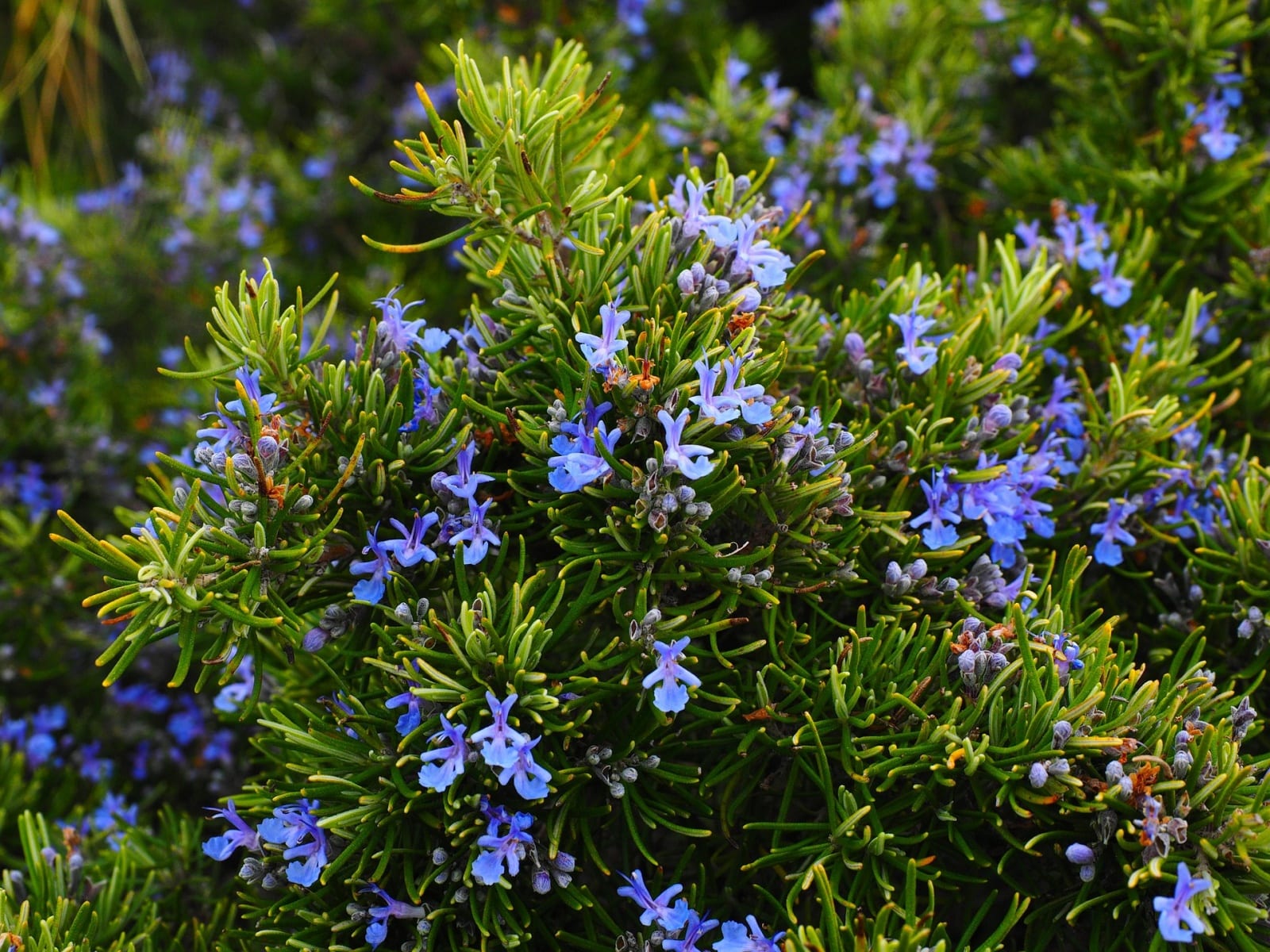
Rosemary (Salvia rosmarinus)
There is something inherently uplifting about the smell and taste of this common garden herb— it can be felt heading straight to the brain. Rosemary is an excellent tonic to raise spirits and boost recovery after illness or periods of low energy. Even inhaling the fresh leaf from a garden or window box will stimulate mental energy and the tea taken internally will expand on this effect.
There is promising evidence that rosemary may reduce inflammatory pressures on the brain now implicated in many conditions associated with low mood and depression, including chronic fatigue syndrome, dementia as well as clinical depression. Further research indicates it can improve cognitive performance in the elderly adding to its reputation as a brain tonic (11).
Taking rosemary as a tea can be overpowering, however very uplifting. The dose is up to 4 grams a day of the dried leaf (9).
St. John’s wort (Hypericum perforatum)
This is often described as the herbal antidepressant, however it has a much wider range of actions than its mood enhancing properties. The herb and flowers of St. John’s wort have been used in European traditions to relieve nervous tension and anxiety. Importantly, this calming effect is combined with underlying restorative benefits and the plant was also used as a convalescent treatment for melancholic conditions, depression and recovering from illness or trauma (8–10).
This makes St John’s wort ideal in situations where tension and exhaustion combine. Its most useful modern application is towards a programme of recovery from chronic fatigue conditions. It also has a long reputation as a support to those experiencing symptoms during the menopause (8,10).
Note that St John’s wort has been shown as an active inducer of drug metabolism, so it may reduce the activity and active life of many medicines. It is wise to avoid in conjunction with medications and consult a medical herbalist for further guidance (8–10). it if there are any powerful treatments underway, where reducing the effect of a medicine may be critical.
St John’s wort can come in a variety of preparations, including powder, tincture and tea. It is recommended to combine the herb with others as a tea, for flavour considerations, however the easiest is to take it as a tincture. The traditional calming and tonic dose was the equivalent of 2 to 5 grams of the dried leaf and flowers per day (9).
References
- Heald A, Stedman M, Farman S, Ruzhdi N, Davies M, Taylor D. Seasonal Variation in Antidepressant Prescribing. The Primary Care Companion For CNS Disorders. 2021;23(2). https://doi.org/10.4088/pcc.20m02790
- Clery E, Morris S, Cooper C, Das-Munshi J, McManus S, Weich S. Mental health treatment and service use. Adult Psychiatric Morbidity Survey: Survey of Mental Health and Wellbeing, England. Published online 2025.
- Tsiouris JA. Metabolic depression in hibernation and major depression: An explanatory theory and an animal model of depression. Medical Hypotheses. 2005;65(5):829-840. https://doi.org/10.1016/j.mehy.2005.05.044
- Klupczyńska EA, Pawłowski TA. Regulation of Seed Dormancy and Germination Mechanisms in a Changing Environment. International Journal of Molecular Sciences. 2021;22(3):1357. https://doi.org/10.3390/ijms22031357
- Ren J, Xiao H. Exercise for Mental Well-Being: Exploring Neurobiological Advances and Intervention Effects in Depression. ProQuest. 2023;13(7):1505. https://doi.org/10.3390/life13071505
- Fahey MC, Klesges RC, Kocak M, Talcott GW, Krukowski RA. Seasonal fluctuations in weight and self-weighing behavior among adults in a behavioral weight loss intervention. Eating and Weight Disorders – Studies on Anorexia, Bulimia and Obesity. Published online May 15, 2019. https://doi.org/10.1007/s40519-019-00707-7
- Honma K, Honma S, Kohsaka M, Fukuda N. Seasonal variation in the human circadian rhythm: dissociation between sleep and temperature rhythm. American Journal of Physiology-Regulatory, Integrative and Comparative Physiology. 1992;262(5):R885-R891. https://doi.org/10.1152/ajpregu.1992.262.5.r885
- Hedley C, Shaw N. Plant Medicine. (Waddell G, ed.). Aeon Books; 2023.
- Bone K, Mills S. Principles and Practice of Phytotherapy: Modern Herbal Medicine. 2nd ed. Edinburgh Churchill Livingstone, Elsevier; 2013.
- Mcintyre A. Complete Herbal Tutor : The Definitive Guide to the Principles and Practices of Herbal Medicine (Second Edition). Aeon Books Limited; 2019.
- Rahbardar M, Hosseinzadeh H. Therapeutic effects of rosemary (Rosmarinus officinalis L.) and its active constituents on nervous system disorders. Therapeutic effects of rosemary (Rosmarinus officinalis L) and its active constituents on nervous system disorders. 2020;23(9). https://doi.org/10.22038/ijbms.2020.45269.10541