


Recent changes to medicinal mushroom regulations have impacted access to turkey tail and cordyceps. This article discusses safety legislation and the value of working with medical herbalists.
Herb and mushroom regulations in the news
In the last few months of 2025 in the UK, there was a newspaper article warning of the dangers of herbal supplements and a spate of blog and social media posts outraged about the Food Standards Agency (FSA) preventing sales of certain medicinal mushroom products. These events highlight the challenges associated with navigating the complex regulatory environment around herbal and fungal products and the tension between empowering people to have the freedom to access products while ensuring that the public are safe.
Access to medicinal mushrooms
In December 2025, there were several social media posts and blogs about the banning of certain medicinal mushrooms from the UK market. A manufacturer was asked by the FSA to remove turkey tail (Trametes versicolor) mushrooms and cordyceps (Cordyceps militaris) mushrooms from their website. This is not the first time a producer has been caught out in the last few years, and the Advertising Standards Authority (ASA) wrote an article to provide guidance for companies wanting to use medicinal mushrooms in 2024 (1).
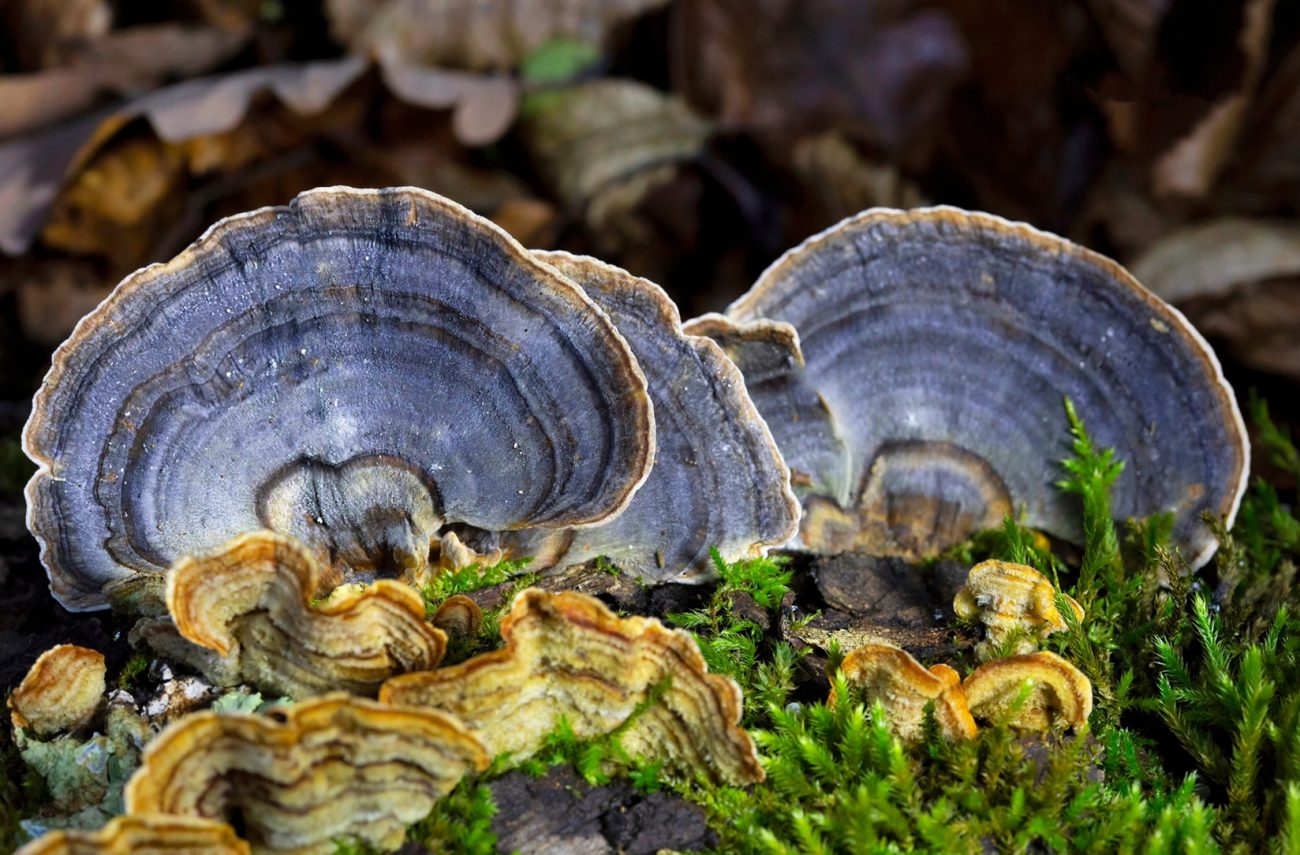
Turkey tail is a beautiful stripey fungus that grows across multiple parts of the globe and is thought to have benefits for the immune system (2). Its traditional use is best documented from China and Japan, but despite being a UK native fungus, there isn’t any documented traditional use of it in the UK. Modern research has focused on its use as an adjuvant to cancer chemotherapy (3).
Cordyceps militaris is a species of cordyceps that has gained popularity as an alternative for Cordyceps sinensis (4). Cordyceps sinensis has become harder to find in the wild due to overharvesting in its native China and Tibet. The militaris species has become popular more recently, as its short lifecycle lends itself well to being cultivated for commercial purposes on grain substrate (4). This relative novelty is likely to be why it has been flagged as of unknown safety (Cordyceps sinensis is acceptable in food supplements), despite some evidence of its low toxicity (5).
In the UK, over-the-counter herbal and mushroom supplements are sold as food supplements, which means that they are regulated by the FSA. The FSA aims to ensure that any items that are sold as food or food supplements are guaranteed to cause no harm. Whether a product has a health benefit is not considered. Since Brexit, the UK largely uses the European Food Standards Agency (EFSA) criteria for managing food legislation (6). This is simply because it was co-created with the UK and building legislation up from scratch would involve a huge amount of work.
This separation of food from medicine in legislation is historical and practical — to preclude inaccurate, misleading, or completely unfounded claims, such as drinking bicarbonate of soda daily will cure cancer, or lemon juice will melt belly fat. However, it does mean that supplement companies who research the evidence for their herbal products and carefully formulate a capsule that they believe will provide benefit, can’t claim the type of benefit that would be considered medicinal. In the same way that a medicine can only be used to treat conditions where there is substantial evidence that it has a therapeutic effect.
It is important to remember that when herbalists prescribe and dispense herbs, they are considered medicine. When herbs are sold in a shop or a market without a consultation, they are considered food supplements, even if they are identical to what a herbalist would prescribe after a consultation.
When a supplement company is banned from selling something that isn’t really a food, or from making a claim that implies it is a medicine, it isn’t the same as preventing the public from accessing natural medicines. Medicinal herbs and mushrooms are still available to forage and purchase — over-the-counter for those that have been proven to be safe to use without medical advice or monitoring, or via a herbalist following a consultation as part of a bespoke prescription for those with restrictions. This ensures safe access to foods and medicines, which, on the whole, is a system that works well.


Herbal safety in the news
At least every few years there is a dramatic and sensationalist newspaper article about the dangers of herbal supplements. They comment on a handful of reports or a single account of people developing signs of liver harm.
Some common culprits include turmeric, green tea extracts and ashwagandha. Often, when a negative effect happens, the person affected has taken a high-dose concentrated extract of the herb. Though, this isn’t always the case. Sometimes a reasonable dose of herb has caused a reaction.
It is very hard to attribute effects like raised liver enzymes to a specific medicine, food or herb. So, in many situations, there’s no certainty about what has caused the negative reaction.
Unexpected liver toxicity
Idiosyncratic (unpredictable) drug-induced liver injuries (DILIs) are rare, but can be very serious (7). They likely result from a combination of complex interactions between multiple metabolic pathways that are unique to the individual involved and can involve reactive metabolic products, increases in reactive oxidative species, accumulated toxic metabolites or immune cascades being triggered (7).
The drugs that most commonly cause DILI vary from country to country, with the most common culprits in the UK being antimicrobials and non-steroidal anti-inflammatories (7). In China, traditional Chinese medicine (TCM) is responsible for a majority of cases (7). In the US, antimicrobials and herbal dietary supplements are recorded as being responsible (7); it has been estimated that 20% of DILI in the US involve botanical dietary supplements, potentially alongside pharmaceutical drugs (8). Whether these differences in reported incidents are genuinely due to differing reactions in certain countries, or the different ways that adverse events are treated and reported is impossible to know.
Minimising risk by monitoring outcomes
The global herbal supplement industry is worth nearly US$8000 million (9). While most companies start out with lofty intentions to improve lives and have a positive impact on health, their overall purpose of selling products means that they always need more customers. Herbal products are not universally suitable for everyone; but without advice or clinical guidance an individual can purchase herbal preparations online not knowing whether it is appropriate for them, potential reactions to expect, or what might be cause for concern.
Negative effects can and do very occasionally occur when a herbalist prescribes a herb for an individual. Yet, medical herbalists are trained to be aware of possible side effects and can advise their clients to anticipate potential outcomes. With regular check-ins with a herbalist, changes can be monitored and a prescription adjusted if the collaborative team of herbalist and client suspect that something isn’t right.
Use herbs safely and value qualified herbalists
Resources such as the Our Health Directory from the College of Medicine, herbalist-led foundation courses in herbal self-care, and reliable information from the American Botanical Council and Herbal Reality are essential for people to feel empowered to look after themselves and their families. However, there will always be limits to what can be managed without professional clinical training.
The skill, knowledge and experience of medical herbalists are a rich resource to be respected and trusted. Taking herbs and medicinal mushrooms under the guidance of a trained, supported and insured herbalist offers a safer means to explore these medicines, than to buy a product off the shelf that has been marketed via social media.
References
- Advertising Standards Authority. Shroom for Improvement? Navigating the advertising rules for functional mushrooms. 2024. https://www.asa.org.uk/news/shroom-for-improvement-navigating-the-advertising-rules-for-functional-mushrooms.html
- Herbal Reality. Turkey Tail monograph. 2023. https://www.herbalreality.com/herb/turkey-tail/
- Habtemariam S. Trametes versicolor (Synn. Coriolus versicolor) Polysaccharides in Cancer Therapy: Targets and Efficacy. Biomedicines. 2020;8(5):135. Published 2020 May 25. https://doi.org/10.3390/biomedicines8050135
- Behrens, J. The Sustainability of Cordyceps. 2024. https://www.herbalreality.com/herbalism/sustainability-social-welfare/species-specific-sustainability/the-sustainability-of-cordyceps/
- Chrysostomou PP, Freeman E, Murphy MM, Chaudhary A, Siddiqui N, Daoust J. A toxicological assessment of Ganoderma lucidum and Cordyceps militaris mushroom powders. Front Toxicol. 2024;6:1469348. Published 2024 Oct 30. https://doi.org/10.3389/ftox.2024.1469348
- Verkerk, R. Navigating the regulatory landscape: An essential update for UK and EU herbal practitioners. 2025. https://www.herbalreality.com/herbalism/quality/navigating-the-regulatory-landscape-an-essential-update-for-uk-and-eu-herbal-practitioners/
- Andrade RJ, Chalasani N, Björnsson ES, et al. Drug-induced liver injury. Nat Rev Dis Primers. 2019;5(1):58. Published 2019 Aug 22. https://doi.org/10.1038/s41572-019-0105-0
- Koturbash I, Yeager RP, Mitchell CA, et al. Botanical-induced toxicity: Liver injury and botanical-drug interactions. A report on a society of Toxicology Annual Meeting symposium. Regul Toxicol Pharmacol. 2024;153:105708. https://doi.org/10.1016/j.yrtph.2024.105708
- Global Market Statistics. Herbal Supplements Market Overview. 2025. https://www.globalmarketstatistics.com/market-reports/herbal-supplements-market-14939x