







Hayfever season has come round again, and again, as we can’t seem put the whole TCM chats down, the talk amongst our therapy group of friends turns to supporting our clients with the classic symptoms of itchy nose and eyes, runny nose, sneezing, wheezing, muzzy head and fatigue.
My friend Lara Servoille, who has set up practice in Sligo on the West Coast of Ireland, told me how she had treated rhinitis successfully, not just with internal herbs but also with a nasal oil to apply directly inside the nose. In supervision with Dr Andrew Flower at the White Crane Academy, we discussed the principle of treating the Ben (root) and the Biao (manifestation) of the condition, and how treating one year seemed to have benefit in the moment, and also to show fewer symptoms the next year round. We also discussed the time frame of treating the Ben well before the Biao comes apparent, and how to consolidate treatment once the symptoms subside.
Presentation and case history

My client is a male Tai Chi teacher in his 40’s. When he came to see me mid-March, it was four weeks before his hayfever symptoms usually presented. Every year in mid-April he would start to experience an itchy, hot sensation in his chest, itchy red eyes, sleep disturbance, strong fatigue, an upward heat sensation and tension in his neck.
Worryingly, a sneeze or cough could trigger severe asthma, which could become so bad that he would need to go to hospital. While his asthma could also be triggered by emotional stress or starting exercise without warming up, outside of this month he had no presentation of asthma at all, and is a very fit and healthy Tai Qi instructor. His asthma when triggered was controlled by an inhaler, although it still meant sleepless nights wheezing, worse between 3 – 5 am. Overall his symptoms were worse for stress, eating ‘Damp’ forming foods and eating after 5:30 pm. He had suffered since he was 7 years old.
He had other symptoms outside of hayfever season. The skin on his face and hands could become red and itchy especially after washing if he didn’t use an emollient. At the turn of the season between Winter to Spring, and Summer to Autumn, he had painful red spots around his nose, which would resolve after 7 days. He had eczema in his left ear for the last 2 years, which could become itchy, red, and with some exudient, and had occasional ear infections. He had a regular, almost involuntary light cough, night sweats 2/3 times a week, occasional palpitations and was a light sleeper. In response to grief, he had a tendency to plan and had some childhood experiences which may have had an impact on his Lung and Kidney energy systems, with two near drowning accidents and some difficult news at seven years old that a family member had had a severe accident.
Having had a look at his tongue, I could see that it was swollen, with red sides and tip, small red dots, a slightly pale body with a slight yellow coating on the back of the tongue.
The swollen tongue indicates Damp from Spleen Qi deficiency, the red sides an indicator of Liver Qi Stagnation. The red tip shows Heat in the Heart and Lung, and the red dots suggest hidden Heat.
Overall the main diagnosis that I based his formula on was Lung Heat (preponderance to hayfever, the spots around his nose at the change of the seasons, and the red tip on his tongue), Liver Qi Stagnation (red tongue sides, response to grief being to plan, his symptoms being exacerbated by stress and the involuntary cough), Lung Qi Deficiency leading to a weakened ‘Wei’ or defensive Qi, and Spleen Qi deficiency leading to Damp. When his hayfever symptoms appeared I would add the diagnosis of ‘Wind Heat invasion’.
To start with I leaned on ancient formulas that are traditionally used to treat seasonal rhinitis, to help support the immune system, to tonify the lungs, to course the Liver Qi, and a newer formula ASHMI used to treat asthma (6).
Bu fei san (7) is classically used to tonify the lungs, Si ni san (8) to course the Liver Qi and Yu ping feng san (9,10) which translates as the Jade Screen formula, has been used for generations to help guard against, amongst other things, respiratory illness including rhinitis. The core dynamic of this formula is to strengthen the inner while releasing the exterior, which allows the Lung energy system to be tonified to help against invasion, while supporting the Wei Qi to release any first level impact that invasion has on the body, disallowing the invasion to go deeper internally and helping to prevent worsening health issues.
Taking inspiration from those formulas, I tailored a unique formula for my client adding in herbs that have empirically been show to help with rhinitis, choosing herbs from the Tonify Qi, Release the Exterior, Tonify Blood, (which helps to nourish and cool the system), Clear Heat, Clear Heat and Damp, Drain Damp, Resolve Phlegm and Regulate Qi categories from our extensive notes at the White Crane Academy (11).
When creating the formula, I use dosage based on how many grams of raw herbs I would use if I were boiling up the herbs to create his medicine each day. As we are using concentrated granules, we then reduce that down to a ratio of between 5/7:1, meaning that for our first herb of Huang Qi, while I would have used 21 grams of raw herb, in his daily formula he will be taking between 3 – 4 grams of concentrated granules.
Investigations
By the time hayfever presents, it is the end result of a cascade of events, which has right in the background, the constitution of a person based on their genetic makeup. This shows it’s effect in the Kidney energy system of the body.

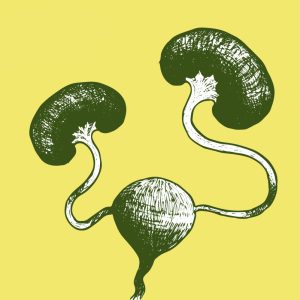
The function of the Kidney energy system (1) can be divided into the Yin as the material foundation and the Yang which provides the motive forces for all the physiological processes of the body, and can be likened to the oil and the flame in the pilot light of the whole system. The Kidneys have a special connection to the Lungs, in that the Lungs send moisture down to the Kidneys, and the Kidneys grasp the Lung energy like an anchor. Impairment of this relationship can lead to both Heat in the system, as well as the Lung energy ‘rebelling’ upward causing congestion in the chest, resulting in breathlessness and asthmatic conditions.
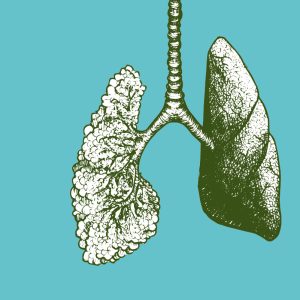
The Lung energy system (2) governs Qi and respiration and controlling dispersing and descending energy patterns in the body, and has a connection to the nose. It can be equated to oxygenating the nutrient rich blood (provided by the Spleen) which is then spread around the body. This Lungs are also in charge of dispersing the ‘Wei’ (protective) Qi around the body. If this Qi dynamic is impaired it makes it easier for external pathogens (which include viruses and bacteria) to invade. The first indicator of this are the symptoms of the common cold.
The Spleen energy system (3) of the body is central to the dynamic of Qi transformation in the body as the source of Qi and Blood, with all other organ systems depending on them for their nourishment, and the quality of the ‘Gu Qi’ or energy from our nutrition is crucial for proper physiological activity. The Spleen’s connection to the lungs is not only by providing ‘Gu Qi’ but also in it’s role of transforming and transporting fluids, which if impaired will result in accumulation or dehydration of fluids, or ‘Damp’, and this damage to the fluid physiology can obstruct the Lung energy system.
The Liver energy system (4) is in charge of the smooth flow of Qi, with a synergistic relationship with the Lung. The Liver sends Qi ‘up’ (energetically not anatomically) and the Lung descends Qi, so disharmony in one dynamic will unbalance the other. Stress over a long period of time that is not expressed constrains the Liver, leading to Liver Qi Stagnation. This impairs the Lung’s descending Qi dynamic leading to stuffiness in the chest, involuntary light cough as well as a strange feeling in the throat that there is something they can’t swallow – called ‘plum pit stone’ stone. Initially this can show up as cough, and over a long period of time can become a piece of the puzzle in asthmatic conditions. Stagnant Liver Qi can also lead to Heat, leading to Heat in the Lung, which can dry the delicate lung tissue (5).
Traumatic experiences in childhood that combine shock and grief can injure the Lung energy system of the body, and prolonged overthinking and stress, and over exertion can be a strain on the Spleen energy system.
During hayfever seasons, pollen acts as an ‘external invasion’, finding an easier route in as the Wei Qi is impaired, and with the Lung Qi not descending, and Heat and Damp rising to the head the classic symptoms of Hayfever present with itchy nose and eyes, runny nose, sneezing, wheezing, muzzy head and fatigue.
Diagnosis
- Lung Qi Deficiency
- Liver Qi Stg
- Lung Heat
- Spleen Qi Deficiency leading to Damp
Approach to treatment
- Tonifying Lung Qi Deficiency
- Move the Liver Qi
- Clear Heat
- Clear Damp
First prescription
| Chinese name | Quantity (g) | Herb Qualities | Reason they were used |
|---|---|---|---|
| Huang qi (Radix astragali, Astragalus root / milk-vetch root 黄芪 | 21 | Herbs that Tonify Qi Sweet, slightly warm, enters the Lung and Spleen | Tonifies Wei Qi, stabilizes the exterior and tonifies the Lungs. Strengthens the Spleen, raises the Yang Qi of the Spleen and Stomach, tonifies Wei Qi, stabilizes the exterior and tonifies the Lungs (aids circulation of moisture downward from the face). |
| Bai zhu (Atroctylodis macrocephalae, White atractylodis rhizome) 白术 | 15 | Herbs that Tonify Qi Bitter + Sweet, Warm, enters the Spleen and Stomach | Strengthens the Spleen, tonifies Qi. stabilises the exterior and stops sweating. |
| Fang feng (Radix saposhnikoviae, Siler, Ledebouriella root) 防风 | 15 | Warm Herbs that release the exterior Sweet + Acrid, warm, enters Bladder, Liver, Spleen and Lung | Releases the exterior and expels External Wind. |
| Sang bai pi (Cortex mori, White mulberry root bark) 桑白皮 | 12 | Herbs that Transform Phlegm and Stop Coughing Sweet, Cold, enters the Lung | Drains Heat from the Lungs, descends Lung Qi and stops cough and wheezing |
| Ren shen (Radix ginseng, Ginseng root) 人参 | 6 | Herbs that Tonify Qi Sweet, slightly bitter, warm, enters the Lung and Spleen | Tonifies Lung Qi |
| Shu di huang (Radix rehmanniae preparata, Prepared Chinese foxglove root) 熟地黄 | 9 | Herbs that Tonify Blood Sweet, warm, enters Heart, Kidney and Liver | Nourishes Yin and arrests cough and wheezing. |
| Di gu pi (Cortex lycii, Wolfberry root bark) 地骨皮 | 12 | Herbs that Clear Heat from Deficiency Sweet and Bland, Cold, enters the Lung, Liver and Kidney meridians | Clears and drains Heat in the Lung – for Lung Heat cough, wheezing and asthma |
| Lu gen (Rhizoma phragmitis, Reed rhizome) 地骨皮 | 12 | Herbs that clear Heat and Drain Fire Sweet, Cold, enters the Lung and Stomach | Clears Heat and irritability from the Lungs and Stomach, generates fluids for acute Lung Heat |
| Jiao gu lan (Rhuizoma seu herba gynostemmmatis, Gynostemma) 绞股蓝 | 12 | Herbs that Tonify Qi Slightly Bitter, Cold, enters the Lung and Heart meridians | Tonifies Qi, moistens the Lungs, generates body fluids and dispels Phlegm – for chronic asthma, impaired respiratory function and a sensation of chest congestion from Deficiency |
| Chai hu (Bupleurum chinense, Bupleurum root, Red thorowax root) 柴胡 | 12 | Herbs that release the exterior Bitter and Acrid, Cool, enters the Gallbladder, Liver, Heart Protector and Triple Heater | Disperses Wind-Heat, regulates (Liver) Qi, relieves Stagnation and eliminates Heat, resolves Phlegm and congestion |
| Bai shao (Paeonia lactiflora, White peony root) 白芍 | 12 | Herbs that tonify Blood Bitter and Sour, Cool, enters the Liver, Spleen and Lung | Nourishes the Liver, nourishes the Blood, regulates menstruation, astringes and protects the Yin, calms Liver Yang, alleviates pain and adjusts the Ying and Wei |
| Qing pi (Pericarpium citri reticulate viride, Immature tangerine peel) 青皮 | 6 | Herbs that Regulate Qi Bitter+Acrid, Warm, enters the GB, Liver and Stomach | Dries Dampness, transforms Phlegm spreads Liver Qi |
| Ling zhi (Ganoderma, Reishi mushroom) 灵芝 | 15 | Herbs that settle the spirit Sweet and Bitter, Neutral, enters the Heart, Liver, Lung | Tonifies the Lung Qi, transforms Phlegm and stops cough and wheezing |
| Ku shen (Radix sophorae falvescentis, Sophora root) 苦参 | 6 | Herbs that Clear Heat and Dry Damp Bitter, Cold, enters the Bladder, Heart, Liver, Large Intestine, Stomach, SI | Clears Heat and dries Dampness for bronchial asthma |
| Fu ling (Scierotium poriae, Cocos poria) 茯苓 | 12 | Herbs that Drain Damp Sweet and Bland, Neutral, enters the Heart, Spleen, Kidney and Lung | Leaches out Dampness by promoting urination |
| Gan cao (Radix glycyrrhizae, Liquorice root) 甘草 | 6 | Herbs that Tonify Qi Sweet, Neutral, enters the Heart, Lung, Spleen, Stomach. Talk about Saponins | Tonifies the Spleen, augments Qi and moderates and harmonizes the properties of other herbs. |
6-herb formula to help classic hayfever symptoms
- Diagnosis: Wind Heat Invasion
- Treatment principle: Expel wind invasion (release the exterior)
| Chinese name | Quantity (g) | Herb quality | Reason they were used |
|---|---|---|---|
| Cang er zi (Xanthium sibiricum) 苍耳子 | 9 | Herbs that release the exterior Sweet, Bitter, Warm, Toxic Enters the Lung | Expels Hind and Damp, and opens the nasal passages |
| Xin yi hua (Flos magnoliae lilliflorae) 辛夷 | 9 | Herbs that release the exterior Spicy, Warm Enters the Lung and Stomach | Expels Wind and Cold, unblocks the nasal passages |
| Bai zhi (Radix angelicae dahuricae) 白芷 | 9 | Herbs that release the exterior Pungent, Warm, Enters the Lung and Stomach | Expels Wind, eliminates Damp, unblocks the nasal passages |
| Bo he (Herba menthae haplocalycis) 薄荷 | 6 | Herbs that release the exterior Pungent, Cold Enters the Lung and the Liver | Disperses Wind-Heat, cools and clears the head and eyes, benefits the throat, relieves Liver Qi Stagnation |
| Huang qin (Radix scutellariae baicalensis) 黄芩 | 9 | Herbs that Clear Heat and Dry Damp Bitter and Cold GB, LI, LU, ST | Clears Heat and Dries Dampness |
| Lu lu tong (Fructus liquidambaris taiwaniae) 路路通 | 6 | Herbs that move the Blood and stagnation Bitter and Neutral Liv St | Expels Wind and promotes water metabolism, for nasal congestion, treats nasal allergies |
Follow-up prescriptions
First catch-up
On our first catch up after two weeks he said that his lungs had felt a lot clearer after a couple of days of taking the herbs. After 10 days on the herbs that his night sweats had stopped. As he was still two weeks away from when his hayfever symptoms usually started, I gave him another two weeks of his main formula, as well as a 5 day supply of his hayfever symptom herbs to have in stock. While his lungs felt generally ok, he was beginning to feel a little lethargic, which was usually an early sign that his symptoms were starting.
Second catch-up
Our second catch up was mid-April, right at the time when he usually started to experience the classical hayfever symptoms. This year, however they had not started even when he had been outside near pollen, and the cherry tree in his back garden was in full blossom. He was sleeping well, not feeling fatigued, the night sweats continued to be resolved and the eczema in his ear had cleared up. While his lungs were mainly clear during the day, and he was going to sleep feeling clear, he was starting to wake up with a slightly heavy sensation in his chest.
Follow-up prescriptions with rationale for changes
Third catch-up
On our next catch up at the beginning of May, when he was usually halfway through his hayfever season. None of the classic symptoms had really kicked in, however his chest was not feeling so great. Over the last few days he had woken up wheezing, which he had needed to treat with his inhaler, and he was finding the middle of the night between 3 – 5 the worst time. He was generally well during the day, with a slight itch in his chest and slight wheeze, although if he coughed it quickly turned into a hot wheezy cough with a small amount of mucus. He had an oppressive sensation in his sternum, with a metal taste when he coughed. I wrote a new formula which switched from trying to prevent the hayfever symptoms to directly addressing the asthmatic cough. This we prescribed for 10 days.
Stop asthma cough formulation
| Herbs to Stop Cough, descend Qi, resolve Phlegm, resolve Heat in the Lung | Hou Po 9 Xing Ren 9 Pi Pa Ye 9 Bai Bu 9 Lu Gen 15 Ting Li Zi 9 Bai Qian 9 |
| Herbs to Release the Exterior | Fang Feng 9 |
| Herbs to Restore Lung Qi dynamic | Zhi Ke 9 Jie Geng 6 Gua Lou Pi 20 |
| Herbs to Nourish Lung Qi, and Lung Yin | Tai Zi Shen 15 Nan Sha Shen 12 |
| Herbs to Resolve Phlegm | Zhe Bei Mu 15 Ban Xia 12 |
| Herbs to Clear Heat and dry damp, plus Ashmi Formula | Huang Qin 12 Ku Shen 9 Ling Zhi 15 Gan Cao 6 |
Final outcome
Fourth catch-up
After four days on the stop cough formula, we had a quick catch up to see how he was doing with the stop cough herbs. He said his cough was 90% resolved, with a residual tightening at the end of his outbreath. We agreed to catch up four days later in time to send him follow on herbs, in case we needed to continue treatment.
Fifth and final catch-up
After four more days, his cough was completely resolved, and his breathing had returned to normal. We agreed to leave the herbs for the time being, with a caveat that if his breathing worsened at all for 7 days after the herbs had finished, then we would return to herbs to finish the treatment off.
Overall this was clinically a good result, with the main formula having success with his hayfever symptoms, and a reduction in his experience of asthma. This seemed to protect him from experiencing the classic symptoms of itchy nose and eyes, runny nose, sneezing, wheezing, muzzy head and fatigue. It also helped to clear other symptoms of nights sweats and the eczema in his ear.
However, on reflection we could have prepared a formula earlier on to focus more deeply on treating an asthmatic cough, ready to take in case the asthma did become more of a problem, which it had done. There is a principle of treating what we see, and because the asthma symptoms in earlier years seemed to come on after the hayfever symptoms, what had happened here was that the asthma still presented, despite not such a strong presentation of the classic hayfever symptoms.
For the following year, I would recommend that we start treating with a main formula again to protect the Lungs a good eight weeks before he usually gets symptoms, in his case mid-February.
I would also give him the smaller ‘hayfever symptoms’ formula as well in case the classic symptoms present, and three days’ worth of a small generic anti-asthma cough prescription to take in case the asthma started to present, giving us enough time to create a more bespoke formula.
References
- Maciocia, Giovanni. The Foundations of Chinese Medicine. Churchill Livingstone 1989 p95
- Maciocia, Giovanni. The Foundations of Chinese Medicine. Churchill Livingstone 1989 p83
- Maciocia, Giovanni. The Foundations of Chinese Medicine. Churchill Livingstone 1989 p60
- Maciocia, Giovanni. The Foundations of Chinese Medicine. Churchill Livingstone 1989 p77
- Maciocia, Giovanni. The Foundations of Chinese Medicine. Churchill Livingstone 1989 p63
- NCBI:Journal of Alternative and Complementary Medicine: article provided courtesy of Mary Ann Liebert Accessed 03/05/2021 <https://www.ncbi.nlm.nih.gov/pmc/articles/PMC2830609/#:~:text=ASHMI%20is%20composed%20of%20three,TCM)%2014%2Dherb%20formula.>
- American Dragon 2017, accessed 03/05/2021< https://www.americandragon.com/Herb%20Formulas%20copy/BuFeiTang.html>
- American Dragon 2017, accessed 03/05/2021< https://www.americandragon.com/Herb%20Formulas%20copy/SiNiSan.html>
- American Dragon 2017, accessed 03/05/2021 <https://www.americandragon.com/Herb%20Formulas%20copy/YuPingFengSan.html>
- ITM Online, accessed 03/05/2021 http://www.itmonline.org/arts/jadescreen.htm
- https://whitecrane.academy/