

Herbal supplements are popular and accessible herbal medicines, being so widely available online. This article explores their quality issues and how to discern which are best to buy.
The food supplement industry is experiencing remarkable growth in the UK, fuelled by increasing public interest in health, longevity, and natural remedies. Sales were estimated at just under $5 billion (USD) in 2024 (1), and sources suggest that more than 20 million people in the UK take supplements daily (2).
This rapid expansion reflects not only consumer demand but also the ease with which supplements can be purchased, especially through online retailers. Yet, alongside this growth lies a complex set of challenges concerning product quality, authenticity, and regulatory oversight — issues that many consumers remain unaware of.
Online retail of herbal supplements
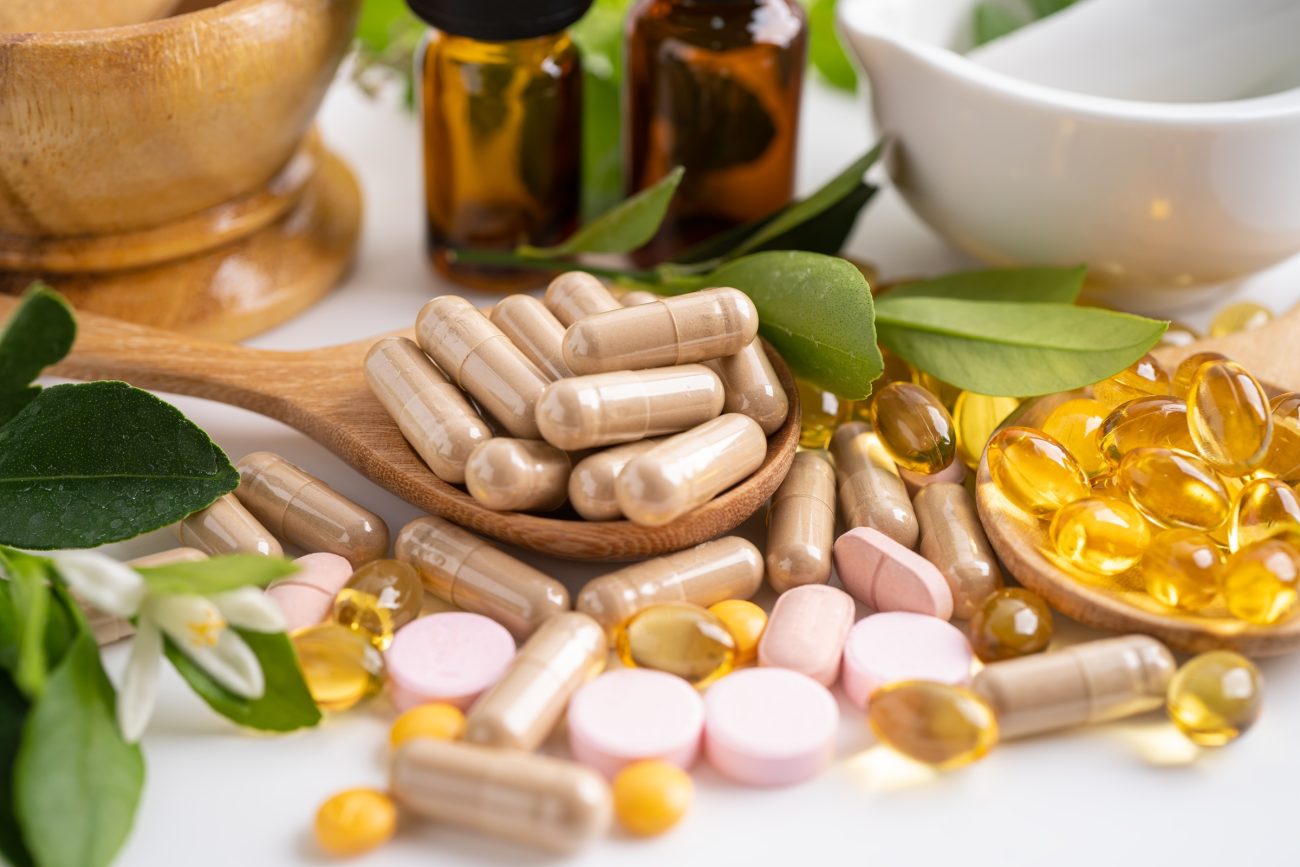
Traditionally, herbal supplements were purchased from local health food shops or high-street retailers, where trained staff might answer questions or guide customers toward reputable brands. Today, however, more people are buying supplements online, often from marketplaces offering thousands of products with little or no meaningful governance.
The convenience and sheer range of options have undoubtedly contributed to rising consumption, but they also introduce significant risks. One of the core issues is that the internet provides access to products that may not be subject to the same controls as those sold in stores. As a result, the quality, purity, and even identity of these products can vary widely. This is not to say that all online products are inferior — many excellent, well-established brands operate online — but consumers may assume that all supplements are equivalent, when in reality the variability is substantial.
Further complicating matters is the growing problem of counterfeit products, where consumers believe they are purchasing a reputable brand but are unknowingly buying falsified goods (3).
Regulatory frameworks for herbal products

In response to quality concerns surrounding herbal medicines specifically, the UK adopted the Traditional Herbal Medicinal Products Directive (THMPD) in 2011. This directive established a licensing scheme designed to ensure the quality and safety of herbal medicines based on documented traditional use.
Products registered under this scheme are assessed according to standards similar to those applied to pharmaceuticals, giving consumers confidence in their identity, purity, and safety. Importantly, the directive grants companies’ permission to make medicinal claims — such as that it ‘aids digestion’, ‘promotes sleep’ or ‘relieves fatigue’ — provided these claims are grounded in long-standing traditional use. Any product on the UK market that makes such claims must hold a Traditional Herbal Registration (THR) in order to be legally sold (4).
Food supplements, however, fall under a different regulatory category. Although quality standards exist, the requirements are considerably less rigorous than those prescribed for THR-registered herbal medicines. Enforcement is also far weaker: products found to be adulterated, contaminated, or improperly labelled may remain available online for months, and sometimes reappear even after removal. This patchy oversight creates an environment where poor-quality products can circulate freely, often without consequence.
Quality issues in herbal supplements
Research conducted at the UCL School of Pharmacy and the University of Westminster has shed light on the scale of the problem, uncovering numerous issues with supplement quality across a range of popular herbal products. These issues include poor extraction methods resulting in low concentrations of key active compounds, high levels of pesticides, contamination with aflatoxins, and deliberate adulteration intended to reduce production costs and inflate potency claims.

Ginkgo
For example, analysis of ginkgo (Ginkgo biloba) supplements revealed that many products contained added rutin — a cheap flavonoid (as it is abundant in low cost plant sources) — used to artificially boost total flavonoid levels. This allows manufacturers to claim, misleadingly, that their product contains the minimum 24% flavonoids expected of standardised ginkgo extracts.
Some products even included plant species with similar chemical profiles, added as cheaper substitutes for G. biloba. In one particularly concerning case, a product marketed as ginkgo contained none of the plant at all, but instead consisted solely of 5-hydroxytryptophan, a naturally occurring compound with reported antidepressant effects (5).
Rhodiola
A similar problem arose with rhodiola (Rhodiola rosea), a plant long valued in traditional medicine for its adaptogenic properties. Testing revealed that many products either contained or were partially substituted with Rhodiola crenulata, a related species native to China (6). Although chemically similar, R. crenulata lacks rosavin, the compound most strongly associated with the recognised therapeutic effects of R. rosea. Because R. rosea commands a higher price on the global market, substituting or mixing it with R. crenulata provides an economic incentive for manufacturers seeking to reduce costs. While the presence or absence of rosavin can be used to distinguish between the species, the increasing practice of blending the two makes accurate identification more challenging.
St John’s wort
In the case of St John’s wort (Hypericum perforatum), product quality was again highly inconsistent. Many supplements purchased through UK-based websites — but originating from the United States — contained food dyes added to mimic the ultraviolet absorbance of hypericin, one of the plant’s principal active compounds (7).
By absorbing UV light at the same wavelength as hypericin, these dyes allowed manufacturers to create the illusion of higher potency. This type of adulteration not only misleads consumers but also deceives analysts relying on basic UV assays, unless more sophisticated analytical methods are used.
Ashwagandha
Ashwagandha (Withania somnifera) also displayed significant quality variation. Its chemical composition differed markedly from product to product, largely due to differences in extraction methods. Traditional extraction techniques in Asia typically use water, whereas many Western manufacturers use alcohol, altering the phytochemical profile of the final extract. Additional issues included poor labelling, poor tablet disintegration, and, in two cases, contamination with aflatoxins (8).
Although ashwagandha has been banned in Denmark due to concerns about liver toxicity, it is unclear whether these adverse reactions reflect the herb itself or contaminants such as aflatoxins. Another possibility is that non-traditional extraction methods may produce more lipophilic compounds capable of crossing cell membranes more readily, thereby altering the herb’s safety profile
How to find quality products

The effectiveness of any herbal product is inherently tied to its quality. Yet the average consumer may struggle to distinguish a high-quality herbal supplement from a poor one. One strategy is to buy products that are certified organic, which ensures that the ingredients are grown without synthetic pesticides and according to strict guidelines.
However, organic certification alone cannot guarantee appropriate manufacturing processes or freedom from adulteration later in the supply chain. Still, companies that invest in organic certification may be less likely to cut corners elsewhere, simply because they are already committed to meeting demanding production standards.
Another pragmatic approach is to choose well-known brands that are also available in major high-street shops, rather than unfamiliar brands sold exclusively online. Products that have undergone the additional scrutiny required to appear in retail stores may, on average, be more reliable than those available only through online marketplaces with little vetting.
Medical herbalists can offer valuable guidance on where to purchase herbs from, and may also suggest alternative preparations — such as teas, tinctures, and glycerites — which are less subject to adulteration than supplements (owing to the herbs being powdered and concealed).
Not only do many herbalists offer products that they have foraged, grown and/or prepared themselves, they will have experience with products from various suppliers and brands. As such, with insight into which products are the highest quality, medical herbalists are a reliable resource to find safe and efficacious herbal medicines. Explore our resources pages to find a herbalist.
Regulation
International sourcing further complicates quality assurance. While many countries have robust regulatory frameworks for herbal products, the capacity of authorities to enforce these regulations varies widely. Online marketplaces, in particular, offer a loophole through which products can be sold into markets where they might not meet local standards. It is not uncommon for products removed from an online platform due to illegal labelling or identified quality problems to reappear months later, sometimes under slightly altered branding or via a different seller.
In the UK, some degree of industry self-regulation exists. Several organisations offer membership to companies that demonstrate appropriate governance standards and a commitment to producing safe, legally compliant products. These associations — such as the Proprietary Association of Great Britain (PAGB) (9), the Health Food Manufacturers’ Association (HFMA) (10), and the Council for Responsible Nutrition UK (CRN-UK) (11) — enforce strict membership criteria.
While they do not manage day-to-day operations or monitor internal quality systems, they provide an additional layer of accountability. When a product is made by a company affiliated with one of these bodies, consumers can have greater confidence in its authenticity, accuracy of labelling, and legal compliance.
Ultimately, responsibility for regulating food supplements in the UK falls to the Food Standards Agency (FSA), whose mission is to ensure that all food products — including supplements — are safe and of appropriate quality (12). Given the enormous size of the supplement market, the FSA increasingly depends on consumers and industry professionals to report concerns. Its confidential reporting systems allow individuals to notify authorities about mislabelling, substitution, contamination, or other forms of food crime without revealing their identity.
Summary
In conclusion, the food supplement market is characterised by a high degree of variability. A higher price does not necessarily indicate higher quality, and two products claiming to contain the same herb may differ dramatically in composition, potency, and safety.
Quality problems range from low concentrations of active ingredients to species substitution, adulteration, pesticide contamination, and the presence of harmful toxins. Therefore, whenever questioning whether a medicinal plant is good, bad, or ineffective, the only meaningful answer is: Which product?
References
- Grand View Research. UK Dietary Supplements Market Size, Share & Trends Analysis Report, 2025‑2033. Market report. Accessed January 11, 2026. https://www.grandviewresearch.com/industry-analysis/uk-dietary-supplements-market-report
- Health Food Manufacturers’ Association (HFMA). Health of the Nation Survey 2021. Published 2021. Accessed January 11, 2026. https://hfma.co.uk/wp-content/uploads/2021/03/hfm_health-of-the-nation_17.pdf
- Intellectual Property Office. The Effect of Counterfeit Goods. Published 2024. Accessed January 11, 2026. https://www.gov.uk/government/publications/meta-counterfeit-and-piracy-campaign/the-effect-of-counterfeit-goods
- Medicines and Healthcare products Regulatory Agency (MHRA). Herbal Medicines Granted a Traditional Herbal Registration (THR). Published 2025. Accessed January 11, 2026. https://www.gov.uk/government/publications/herbal-medicines-granted-a-traditional-herbal-registration-thr
- Booker A, Frommenwiler D, Reich E, Horsfield S, Heinrich M. Adulteration and poor quality of Ginkgo biloba supplements. J Herb Med. 2016;6(2):79‑87. https://doi.org/10.1016/j.hermed.2016.04.003
- Booker A, Jalil B, Frommenwiler D, et al. The authenticity and quality of Rhodiola rosea products. Phytomedicine. 2016;23(7):754‑762. https://doi.org/10.1016/j.phymed.2015.10.006
- Booker A, Agapouda A, Frommenwiler DA, Scotti F, Reich E, Heinrich M. St John’s wort (Hypericum perforatum) products: an assessment of their authenticity and quality. Phytomedicine. 2018;40:158‑164. https://doi.org/10.1016/j.phymed.2017.12.012.
- Kartbayeva E, Seitimova G, Khondkar P, et al. Withania somnifera (Ashwagandha): product quality and implications for consumer safety. Presented at: Joint Symposium on Chinese Medicine, Natural Products, Free Radical Research & Traditional and Complementary Medicine; October 23‑25, 2025; Taichung, Taiwan.
- Proprietary Association of Great Britain (PAGB). PAGB. Accessed January 11, 2026. https://www.pagb.co.uk/
- Health Food Manufacturers’ Association (HFMA). HFMA. Accessed January 11, 2026. https://hfma.co.uk/
- Council for Responsible Nutrition UK (CRN‑UK). CRN‑UK. Accessed January 11, 2026. https://crnuk.org/
- Food Standards Agency (FSA). Food Standards Agency. Accessed January 11, 2026. https://www.food.gov.uk/