


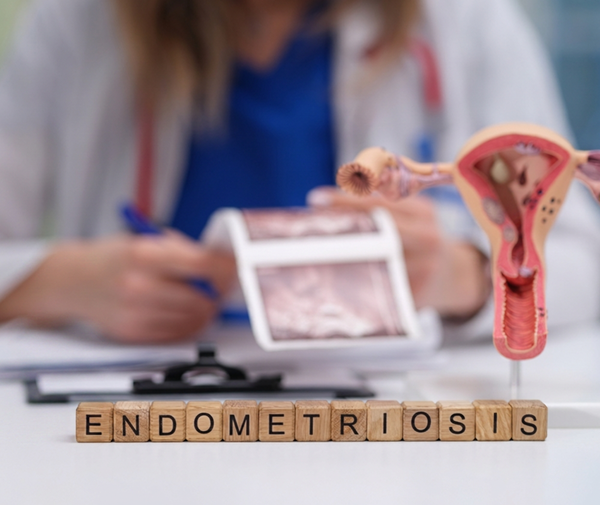



High FSH (follicle-stimulating hormone) is one of many frustrating reasons which can lead to female infertility. Unfortunately what modern medicine can do is limited. Hormone Replacement Therapy (HRT) is used as a main treatment method. It helps to regulate menstruation and relieve some of the symptoms, however, this treatment does not necessarily improve poor ovarian reserves. The artificial oestrogen sends signals to the brain that it doesn’t need to stimulate the ovaries to produce oestrogen, which in turn causes a hormonal imbalance.
Meanwhile, there are shortcomings of HRT, such as many side effectives, limited indications and many relative contraindications. The original problem is quick to recur after stopping the medicine, and there is a potential risk of cancer.
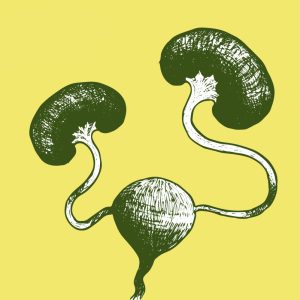
Clinical research shows Traditional Chinese Medicine (TCM) is an effective treatment method for high FSH. In TCM theory, the kidney is the organ in charge of reproductive hormones and other organs. Therefore, the key point of treating infertility due to high FSH is to nourish the kidney to support oestrogen.
Meanwhile, strengthening the Spleen-Qi and promoting the blood to nourish the uterus and ovaries. Together this restores the ovarian function, thickens the uterine lining, rectifies the hormonal imbalance, reduces the FSH level, and achieves the ultimate goal of treating infertility.
Presentation and case history
Female patient, 33 years old
Married for 5 years. Has been trying to get pregnant for 2 years. Husband doesn’t have any health problems.
One year she started to have late menstruation, menstruating only every 2 to 3 months. The last period was 20 days ago, light pinkish, very small amount, no clots, no special uncomfortable sensation before or during period.
Her menstruation used to be regular, lasting 5days and happening every 25days.
Had miscarriage 5 years ago.
She had an oophorectomy on her right ovary for an ovarian cyst more than 10 years ago, and experience reduced menstrual flow after surgery.
Currently, she gets tired easily, feels cold easily, her lower back and knees are weak. Her appetite and sleeping are fine, her bowel movements and urination are fine and she has an average body shape.
Patient was looking for herbal medicine treatment to avoid the use of any HRT.
Investigations
- Tongue: Light pinkish tongue body with thin whitish coating
- Pulse: Deep and thin in general, weak in the Chi
- Lab: Follicle-stimulating hormone (FSH) 22.33mIU/mL; Luteinizing hormone (LH) 15.03mIU/mL; Estradiol (E2) 234pmol/L; Progesterone 0.52nmol/L; Testosterone 0.70nmol/L; Prolactin 9.87 μg/L
- Transvaginal ultrasound: Endometrium 8mm
Diagnosis
Infertility due to Kidney-Yang and Kidney-Essence deficiency
Approach to treatment
According to TCM, the kidneys support all other organs. Kidney Yin, Yang and Essence nourish, warm and moisturize the organs, tissues and meridians. In this case, a major ovarian surgery damaged the patient’s Kidney-Essence. As a result, menstruation was delayed, and the amount of blood was reduced. It even caused amenorrhea.
There was no blood present in Chong (Penetrating) and Ren (Conception) meridians. Therefore, the uterus and ovaries’ function started to decline. The balance of hormones was disturbed. All of these could be the reason for High FSH.
The pinkish tongue body indicates Qi and blood deficiency. The deep and thin pulse is the result of this deficiency condition. There is a weak pulse in Chi points to the kidney which is the main organ involved.
Following the TCM diagnosis method, taking all the symptoms into consideration, Kidney-Yang and Kidney-Essence deficiency is the final diagnosis of this case.
First prescription
Treatment principle: Nourishing Kidney-Yang and Kidney-Essence, regulating Chong ((Penetrating Vessel) and Ren (Conception Vessel)
Herbal formula: Er Xian Tang modification
Herbal ingredients (granule)
| Herbal name | Dosage | Function |
|---|---|---|
| Xian mao (Rhizoma curculiginis, Golden Eyegrass) | 20 g | Warm Kidney-Yang, Nourish Kidney-Essence, strengthen Ming-Men (life-gate), regulate Chong and Ren |
| Xian ling pi (Herba epimedii, Epimedium) | 20 g | |
| Ba ji tian (Radix morindae officinalis, Morinda Root) | 20 g | Nourishe Kidney-Yang, support Xian Mao and Xian Ling Pi |
| Dang gui (Radix Angelicae sinesis, Chinese Angelica) | 15 g | Warm and nourish Blood to help regulating Chong and Ren |
| Shan zhu yu (Fructus corni, Dogwood fruit) | 20 g | Nourishe Liver and Kidney, restrain the leakage of Kidney-Essence |
| Zhi Mu (Rhizoma anemarrhenae, Anemarrhena tuber) | 9 g | Nourish Kidney-Yin, Clear deficiency-fire |
| Huang bai (Cortex phellodendri, Corktree bark) | 9 g | |
| Gou qi zi (Fructus lycium barbarum, Wolfberry fruit) | 30 g | Nourish Kidney and Liver, enhance Kidney-Essence |
| Tu si zi (Semen cuscutae, Dodder seeds) | 30 g | |
| Gan cao (Radix glycyrrhizae, Liquorice root) | 9 g | Harmonise all herbs |
Dissolve granules in 250 ml warm water, twice daily.
Treatment plan
- Less cold, raw, greasy food
- Soy milk and royal jelly regularly
- Proper exercise
Other medications and treatments
No other medications or supplements.
Follow-up appointments

Second appointment (two weeks since last appointment)
Her last period was 5 days ago, the amount increased, there was a fresh red colour, she still experienced tiredness, and her lower back sore and weak.
- Tongue: Light reddish body, thin white coating
- Pulse: deep and thin, weak in the Chi
Updated prescription from last formula to nourish kidney, promote blood and enhance essence
- Remove: Tu si zi
- Add:
- Mu dan pi (Cortex moutan, Tree peony bark) 15 g
- Nv zhen zi (Fructus ligustri lucidi, Grassy privet) 30 g
- Han lian cao (Herba ecliptae, Eclipta) 30 g
- Bai shao (Radix paeoniae alba, White peony root) 30 g
- Shu di huang (Radix rehmanniae preparata, Chinese foxglove root-cook) 20 g
Third appointment (two weeks since last appointment)
She feels breast tenderness and feels irritable and anxious.
- Tongue: Light reddish body, thin white coating
- Pulse: Deep and thin
Updated prescription from last formula
Add to formula:
- Chai hu (Radix bupleuri, Thorowax root) 15 g
- Xiang fu (Rhizoma cyperi, Cyperus tuber (Nut grass)) 20 g
- Yi mu cao (Herba leonuri, Motherwort) 30 g
The patient was asked to check her FSH levels.
Fourth appointment (two weeks since last appointment):
The tiredness, soreness and weakness lower back and knees were slightly better, her sleeping was not good, and her appetite, bowel movement and urination were normal.
- Tongue: Light reddish body, thin whitish coating
- Pulse: Deep and slow
- FSH 11.02 mIU/ml
Updated prescription from last formula
- Remove: Xiang fu and Yi mu cao
- Add:
- Bai zhu (fried) (Rhizoma atractylodis macrocephala, White atractylodes tuber) 20 g
- Dang shen (Radix codonopsis, Codonopsis root) 20 g
- Du zhong (Cortex eucommiae, Eucommia bark) 20 g
Final outcome: After four months of TCM treatment
During a following up appointment, this patient mentioned that she did not have her periods for 55 days. She felt that her throat and mouth were dry, and had insomnia with lots of dreams. Occasionally her lower back was sore. She became pregnant.
- Lab: Progesterone 63.8 nmol/L
- Ultrasound: Early intrauterine pregnancy, fetal buds and fetal heartbeat can be seen.
We continued to protect the fetus with Traditional Chinese Medicine and after 9 months pregnancy, a baby girl was born via vaginal delivery.
This is a very successful and typical example of using Traditional Chinese medicine to treat female infertility with high FSH. TCM has significant clinical effects in terms of treatment whilst avoiding the disadvantages of HRT.