


Male infertility is a common reproductive health concern worldwide. This article outlines its epidemiology, clinical classification, and interpretation in traditional Chinese medicine, including the roles of Kidney function and jing.
Understanding male infertility
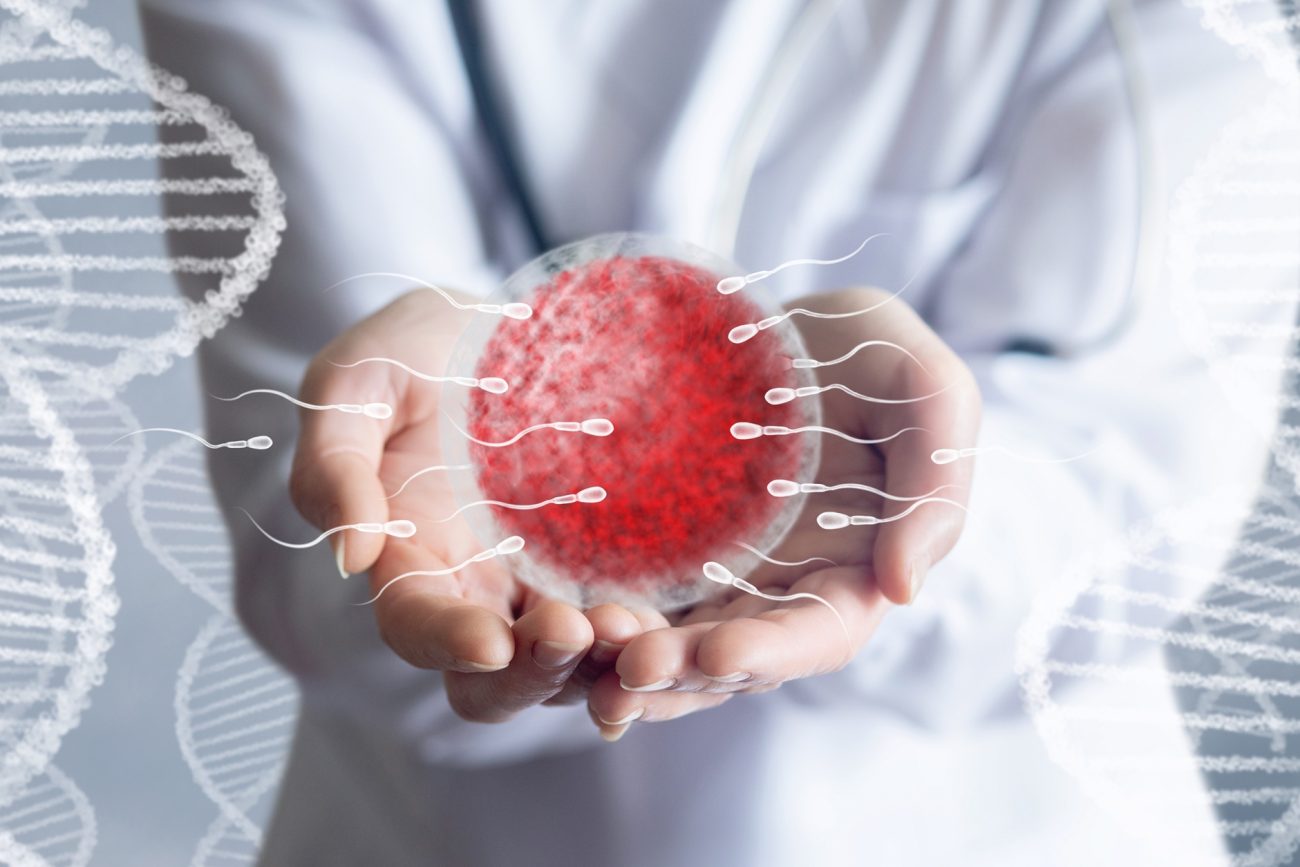
Male infertility refers to a man’s inability to get a female partner pregnant despite engaging in regular unprotected intercourse for at least a year. Globally, around 1 in 6 people of reproductive age — men and women — will experience infertility at some point during their lifetime (1). Approximately 7% of all men are affected by infertility (2). In UK alone, around 10.1% of men report having experienced infertility (3).
Male infertility is predominantly categorised by reproductive history or reproductive history. According to reproductive history classification, there are two types of male infertility:
- Primary infertility — when a couple has never had children, either together or in previous relationships and struggle with infertility (4).
- Secondary infertility —when the couple has already had children together or have done so separately in previous relationships, but are are having trouble (4).
When classified by underlying cause, male infertility can be defined as:
- Pre-testicular — caused by systemic or hormonal conditions
- Testicular — owing to issues with the testes impacting spermatogenesis
- Post-testicular — from pathophysiologies affecting sperm transport or ejaculation (2)
How does male infertility work?
While Western medicine looks into sperm count (oligospermia or azoospermia), motility, and morphology as indicators of male infertility. Chinese medicine offers a different insight into male infertility; it views male infertility as a result of deeper imbalances within the body, instead of a single disease.
Kidneys are of utmost importance when addressing male infertility. Kidneys store jing, which is essentially an essence that a man acquires from his parents. Inherited weak jing can be due to poor parental health at conception, maternal illness during pregnancy, premature birth, or inherited genetic weakness.
Jing plays a very important role in growth, development and fertility. A man’s fertility is strong, when his Kidney jing is strong and Kidney yang is healthy.
Weak Kidney jing can affect:
- Production of healthy active sperm
- Sperm count, motility, and structure
- Erectile dysfunction or premature ejaculation
- Libido
- Hormonal balance
Age also plays a factor in jing, levels of jing created by the Kidneys begin to decline with age. If jing becomes insufficient or damaged, sperm count drops, motility weakens, and morphology becomes abnormal. Even DNA integrity within the sperm declines with age (5).
Understanding the root causes of infertility in men

The root cause of male infertility in Chinese medicine often starts with Kidney jing deficiency. Jing is the foundation and the root nutrition that is essential for healthy sperm production and overall male fertility. If jing is deficient or weak it further leads to imbalances in Kidney yang or Kidney yin.
If Kidney yin and yang are balanced, a man’s sperm production and overall fertility will be healthy and functioning well. Kidney yang deficiency diagnosis occurs when there isn’t enough warmth in the body. Warmth is required to convert jing into active healthy sperm. In the same way, Kidney yin deficiency diagnosis occurs when the body is lacking cooling and nourishing support. Cooling support is required for healthy sperm.
Along with Kidney, other organs such as Liver, Spleen and Heart also play a part in male infertility. In Chinese Medicine, the Liver is linked to emotion and is in charge of flow of qi. When the mind and body experience emotions such as anger, stress, frustration, Liver qi can stagnate, which affects the flow of qi to the reproductive organs. This was also found in a study in which liver qi stagnation was identified as a common TCM syndrome associated with male infertility (6).
Spleen turns food into qi and Blood and moves nutrients throughout the body. When there is Spleen deficiency nutrients don’t reach the Kidneys to support sperm production. This was also confirmed by a clinical analysis of 500 infertile men where Spleen deficiency was one of the pattern diagnoses (7).
When Liver qi stagnation or Spleen deficiency are left untreated, they can turn into damp heat (inflammation) affecting sperm quality and motility even further.
Along with weak jing being inherited from parents, jing can become weak or deficient from a range of different factors such as chronic overwork or long term stress, age, poor nutrition, chronic illness, excessive sexual activity. Therefore, addressing the root case in restoring male reproductive health is vital not just the symptoms.
Signs and symptoms
Kidney yang deficiency will show symptoms such as:
- Low sperm motility
- Low libido
- Erectile dysfunction
- Frequent urination
- Fatigue
Kidney yin deficiency will show symptoms such as:
- Poor sperm quality
- Low semen volume
- Premature ejaculation
- Cold hand and feet
Herbs to support male infertility
As male fertility is closely linked to Kidney jing, Chinese medicine recommends herbs that have the ability to tonify the Kidneys, promote blood circulation, balance yin yang and clear Damp heat also known as inflammation.

Red sage (dan shen, Salvia miltiorrhiza)
Salvia miltiorrhiza is a herb that is rich in antioxidant and offers anti-inflammatory properties (8). In Chinese medicine, it is used for male infertility with the goal of tonifying the Kidneys, promoting blood circulation, and clearing damp-heat (inflammation) to repair the function of the sperm.
Goji berry (gou qi zi, Lycium barbarum)
Goji berries strengthen jing (especially Kidney jing), which is the root foundation and the nutrition that is essential for healthy sperm production and overall male (9). Goji berries are recommended for age-related jing/fertility decline. It also nourishes Kidney yin so it makes a great herb for male infertility arising due to Kidney yin deficiency.
In a clinical trial in men with varicocele, goji berry improved antioxidant enzyme activity and reduced oxidative stress markers (MDA), and was associated with significant improvements in sperm count, motility, morphology, and testosterone levels compared with placebo (10).
Chinese dodder (tu si zi, Cuscuta chinensis)
Tu si zi has the ability tonify Kidney yang, support jing, improve semen quality, protect sperm from oxidative/inflammatory damage, and overall male reproductive health. This was confirmed by research which found that Cuscuta chinensis flavonoids significantly reduced oxidative stress, increased reproductive hormone levels, improved sperm motility and density, and reduced sperm apoptosis in male mice (11).
Astragalus (huang qi, Astragalus membranaceous)
Astragalus is a popular TCM herb used to enhance Kidney jing indirectly, it also tonifies qi, strengthens the Spleen and Kidney, promotes blood circulation, all of which help with male fertility. Huang qi also has antioxidant and anti-inflammatory properties. Studies have shown that astragalus increased sperm count and motility in mice while affecting genes involved in spermatogenesis, as well as significantly increasing human sperm motility in vitro compared with control. (12,13).
Holistic solutions

Weak or deficient jing, along with other deficiencies can be addressed with diet and lifestyle changes along with herbal remedies. Acupuncture is a popular treatment for male infertility. A systematic review found that acupuncture may improve male fertility by enhancing semen quality, including sperm count and motility, potentially through hormonal regulation and reduced inflammation (14). Echoing this, another study in 2022 concluded that acupuncture showed a “significant positive effect” on clinical outcomes in male infertility (15).
Diet is another major factor. In TCM, food is a daily medicine. Diet for male infertility focuses on rebuilding Kidney jing, Kidney yang, yin as well as Liver qi and Spleen. Here are some foods recommended based on your diagnosis and root cause.
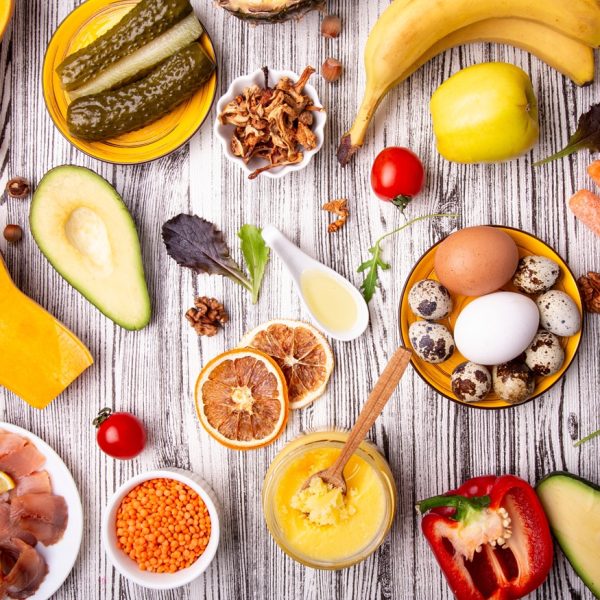
- Support jing: Eating warm, nutrient-dense foods such as bone broth, eggs, black beans, walnuts, seeds, seafood, and slow-cooked meats helps nourish Jing
- Support Kidney yang: Lamb, beef, shrimp, cinnamon, ginger, leeks, chestnuts
- Support Kidney yin: Black sesame seeds, tofu, duck, eggs, spinach, asparagus
- Support Liver qi: Green leafy vegetables, beetroot, turmeric, peppermint tea, lemon
- Strengthen the Spleen: Rice, oats, millet, sweet potatoes, squash, carrots
References
- World Health Organization. Infertility Prevalence Estimates, 1990–2021. World Health Organization; 2023. https://www.who.int/publications/i/item/978920068315
- Krausz C. Male infertility: Pathogenesis and clinical diagnosis. Best Practice & Research Clinical Endocrinology & Metabolism. 2011;25(2):271-285. https://doi.org/10.1016/j.beem.2010.08.006
- Datta J, Palmer MJ, Tanton C, Gibson LJ, Jones KG, Macdowall W, Glasier A, Sonnenberg P, Field N, Mercer CH, Johnson AM, Wellings K. Prevalence of infertility and help seeking among 15 000 women and men. Hum Reprod. 2016;31(9):2108–2118. https://doi.org/10.1093/humrep/dew123
- World Health Organization. Infertility fact sheet. World Health Organization; November 28, 2025. https://www.who.int/news-room/fact-sheets/detail/infertility
- Petersen CG, Mauri AL, Vagnini LD, Renzi A, Petersen B, Mattila M, Comar V, Ricci J, Dieamant F, Oliveira JBA, Baruffi RLR, Franco Jr JG. The effects of male age on sperm DNA damage: an evaluation of 2,178 semen samples. JBRA Assist Reprod. 2018;22(4):323‑330. https://doi.org/10.5935/1518‑0557.20180047
- Zhang Z, Yang J, Kong T, Wang C, Ning P, Chen X, Li X, Jia Y, Chen X, Liu S, Zhang Y. Traditional Chinese Medicine syndrome elements of male infertility revealed by latent tree model analysis. J Tradit Chin Med. 2018;38(6):926‑935. https://doi.org/10.1016/S0254‑6272(18)30993‑2
- Yu X‑J, Yu Q‑X, Chang D‑G, Li J‑J, Li Y, Dong L. Distribution of traditional Chinese medicine syndrome types of male infertility in Chengdu area. Zhonghua Nan Ke Xue. 2019;25(10):909‑913. PMID:32233223.
- Zhang Y, Li X, Wang Z. Antioxidant activities of leaf extract of Salvia miltiorrhiza Bunge and related phenolic constituents. Food Chem Toxicol. 2010;48(10):2656-62. https://doi.org/10.1016/j.fct.2010.06.036
- Ma D, Li D, Du G, Liu S, Wang A, Chang H, Lv H, Wang H, Wang F, Guo J. Therapeutic mechanisms of Lycii Fructus in male infertility: a comprehensive review. Front Pharmacol. 2025;16:1613156. https://doi.org/10.3389/fphar.2025.1613156
- Mehdikhanloo M, Raeef AA, Mohammadi N, Mahmoodi M, Nasirzadeh M, Mohammad‑Sadeghipour M, Hajizadeh M. The effects of Lycium barbarum polysaccharide on oxidative stress and sperm health in varicocele patients: a randomized clinical trial. Tissue Cell. 2026;98:103160. https://doi.org/10.1016/j.tice.2025.103160
- Li X, Zhang Y, Wang W, et al. Protective effects of Cuscuta chinensis flavonoids on bisphenol A-induced reproductive toxicity in male mice. Reprod Toxicol. 2023;114:91‑101. https://doi.org/10.1016/j.reprotox.2023.04.006
- Wonnam Kim, Do Rim Kim, Mun Seog Chang, Seong Kyu Park. Astragalus membranaceus augment sperm parameters in male mice associated with cAMP-responsive element modulator and activator of CREM in testis. J Tradit Complement Med. 2015;6(3):294-298. https://doi.org/10.1016/j.jtcme.2015.10.002
- Hong J-S, Lee I-S, Lee S-B, et al. Astragalus membranaceus stimulates human sperm motility in vitro. (Study using sperm migration method). Fertil Steril. 1992;58(4):abstract. PMID:1471613.
- Feng J, He H, Wang Y, Zhang X, Zhang X, Zhang T, Zhu M, Wu X, Zhang Y. The efficacy and mechanism of acupuncture in the treatment of male infertility: a literature review. Front Endocrinol (Lausanne). 2022;13:1009537. https://doi.org/10.3389/fendo.2022.1009537
- Feng J, He H, Wang Y, Zhang X, Zhang X, Zhang T, Zhu M, Wu X, Zhang Y. The efficacy and mechanism of acupuncture in the treatment of male infertility: A literature review. Front Endocrinol (Lausanne). 2022;13:1009537. https://doi.org/10.3389/fendo.2022.1009537