










Prep time: 5 minutes | Cooking time: 3 hours | 1 litre | Intermediate level | Vegetarian
A warming, aromatic and spicy homemade medicinal mushroom chai syrup recipe, to use in drinks or desserts throughout the winter months to support immunity and encourage circulation.
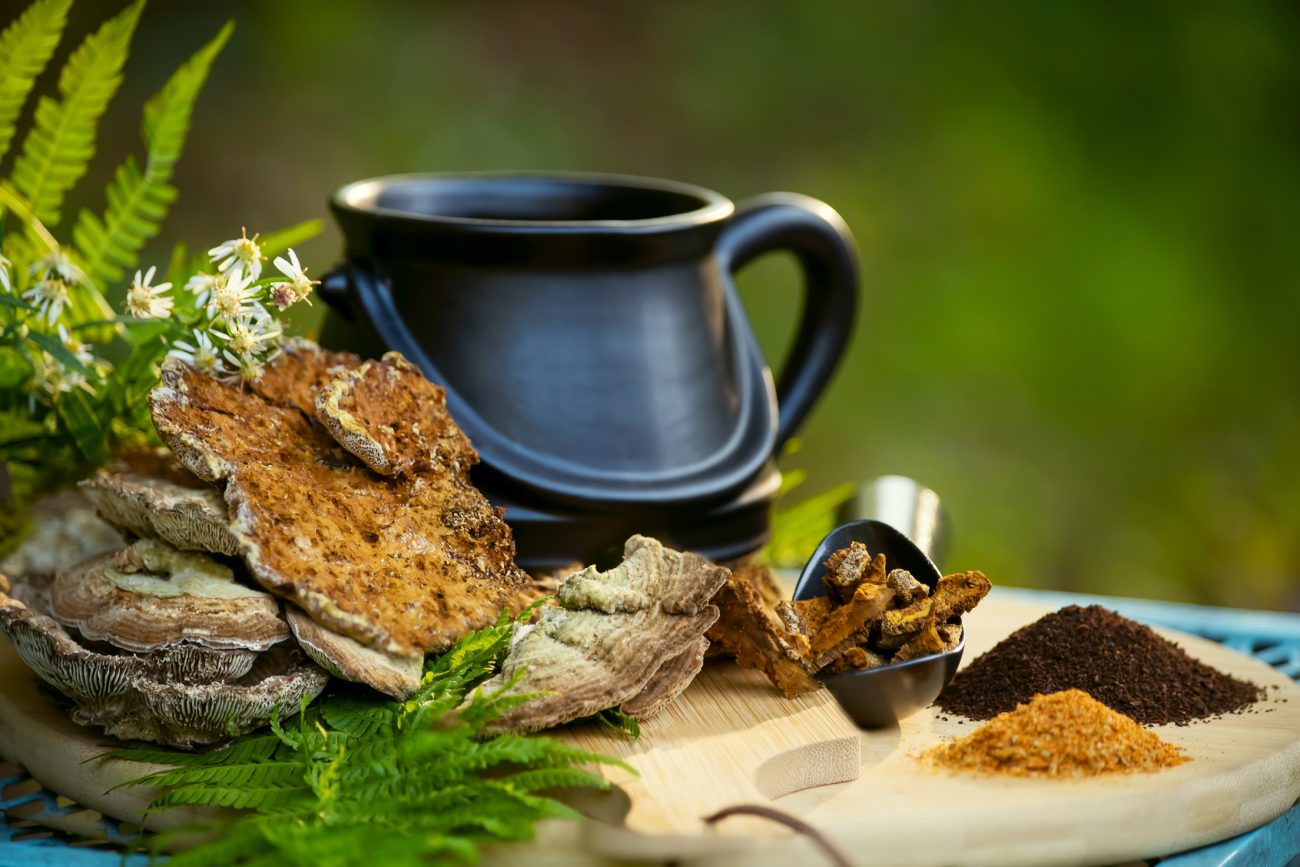
This medicinal mushroom chai syrup is a rich and nutritious addition to a winter wellbeing kit. The warming aromatic spices of cardamom (Elettaria cardamomum), cinnamon (Cinnamomum verum), nutmeg (Myristica fragrans), cloves (Syzygium aromaticum), star anise (Illicum verum), ginger (Zingiber officinale) and black pepper (Piper nigrum) help to warm and invigorate the body by encouraging circulation and stimulating the immune system (1).
The addition of medicinal mushrooms, such as reishi (Ganoderma lucidum), turkey tail (Trametes versicolor), birch polypore (Fomitopsis betulina) and artist’s conk (Ganoderma applanatum) stimulate immune function, and can be used preventatively as well as for acute infections with a slight increase in dosage (2). Some of these mushrooms grow wild in the UK, and can be foraged with safe and correct identification throughout the autumn and winter months — for further guidance read our article on Foraging medicinal fungi in October.
This syrup can be added to black tea or rooibos for a gentle immune supporting and warming effect; or, used on its own with a cup of milk for a homemade chai. It can also be used to drizzle over fruit and desserts for an aromatic and spicy flavour.
Ingredients
- 10 g turkey tail mushroom
- 10 g reishi
- 10 g artist’s conk
- 10 g birch polypore
- 20 g fresh ginger
- 1 tbsp dried orange peel
- 10 green cardamom pods
- 2 cinnamon sticks
- 8 cloves
- 3 star anise
- 2 tsp black pepper
- Pinch nutmeg
- 500 ml local organic raw honey (use agave as an alternative for vegan diets)
- 1 litre filtered water
- Muslin cloth
How to make mushroom chai
- Combine all of the mushrooms in a saucepan and cover with one litre of water.
- Bring to a boil then turn down the heat to a gentle simmer.
- Simmer gently for 1.5–2 hours on a low heat, making sure to top up with extra water if needed.
- There will, ideally be between 600–700 ml of liquid remaining.
- Add all the remaining ingredients aside from the honey back into the decoction.
- Simmer gently for another 10–15 minutes, being careful that the mixture doesn’t boil.
- Allow to cool slightly, then strain the mixture through fine muslin.
- There should be roughly 500 ml mixture remaining.
- Add in 500 ml honey and stir gently to dissolve. Taste the mixture, and add more honey if desired.
- Pour into sterilised glass jars, label and store in the fridge.
Serving suggestions
- Add 30 ml (two tablespoons) to a cup of black tea and milk.
- Add 50 ml to a cup of milk and gently mix for a cup of mushroom chai.
How to store your mushroom chai syrup
The more honey added, the longer the syrup will last. A 1:1 honey to liquid ratio will last roughly one month in the fridge.
Medicinal benefits of mushroom chai
Turkey tail
Found growing wild in the UK, turkey tail is a medicinal mushroom which is most renowned for its effect on supporting immune function. The polysaccharides — PSP and PSK stimulate NK (natural killer) cells, T cells, B cells and macrophages, indicating its support for both innate and adaptive immunity (3).
Reishi
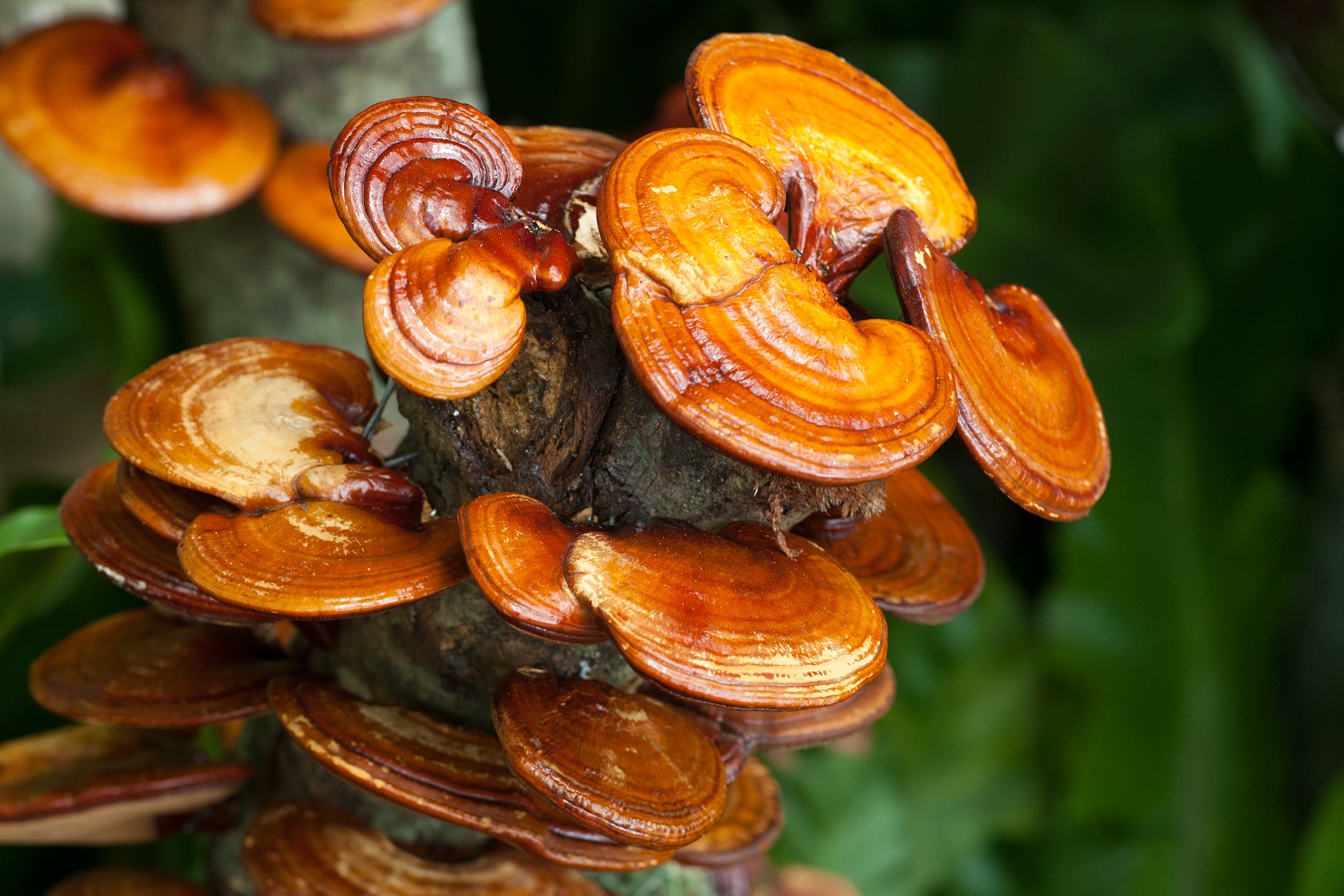
The polysaccharides and beta-glucans in reishi stimulate key immune cells including macrophages, NK cells, T and B lymphocytes. They also modulate inflammatory cytokines, acting as an immunomodulator (4).
Birch polypore
Birch polypore has antimicrobial, anti-inflammatory and immunomodulatory effects. The beta glucans, similarly to reishi, also act to stimulate key immune cells including macrophages and NK cells in turn increasing phagocytosis and thus helping to fight infection and inflammation (5).
Artists conk
A well known remedy in traditional folk medicine, the artist’s conk is a distant relative of reishi and exhibits many similar actions on the immune system (2). It has been shown in modern research to have antibacterial, anti-inflammatory and antioxidant actions (6,7).
Ginger
A warming, pungent circulatory stimulant, ginger is a key herb for supporting the immune system due to its antibacterial, antiviral and anti-inflammatory actions. It helps to increase absorption, settle the digestive system and expel mucus from the lungs (1,8).

Nutmeg
Most well renowned for its stimulating, supportive effect on the brain, nutmeg can be applied to promote circulation to the brain and easy anxiety. It can also be used to support digestive function, as well as be applied as a decongestant and antimicrobial for coughs and colds (8).
Cinnamon
Cinnamon is an aromatic bark which is used as a warming circulatory stimulant and immune support. Rich in volatile oils, this herb is powerfully antimicrobial, antiviral and antifungal, helping to clear infections, reduce fever and dry mucus (8).
Cardamom
Cardamom is a spicy aromatic used to warm, invigorate and support digestive function. The volatile oils also offer antimicrobial actions, specifically against gram-negative bacteria and fungi (8,9).
Cloves
A powerful antimicrobial, clove has been used in traditional medicine for its antibacterial and antifungal properties (8).
Star anise
Containing the constituent shikimic acid, star anise is well known to possess powerful antiviral properties against a range of different viruses. Its warming and aromatic compounds also help to support digestive function, and in the treatment of respiratory infections (1).
Black pepper
Adecongestant, expectorant and digestive stimulant herb, black pepper is a popular spice which offers energising, stimulating and warming properties to support the digestive, immune and respiratory systems (8).
FAQs
Is it safe to forage mushrooms?
Safely foraging for mushrooms is a skill that requires guidance and takes time to develop. Whilst the mushrooms listed in this recipe are relatively distinctive in the wild, it is advised to ensure 100% positive identification before consuming any mushroom that has been foraged.
Is it illegal to consume turkey tail in the UK?
As of 2025, turkey tail is now classified as a novel food. This means it is illegal to commercially distribute (including for free) any product containing turkey tail to the public. This legislation does not require individuals to obtain authorisation for foraging, possessing or privately consuming turkey tail. Medical herbalists can still legally prescribe and dispense this as a medicine for their patients (10).
How do I sustainably forage turkey tail?
Turkey tail is distinct from other mushrooms as it grows year round in the UK, with an increase in fruiting bodies in the autumn and winter. It typically grows on dead wood including oak, beech, birch, sycamore or hazel. Once the spores have entered the wood, it can take between 1–2 years before fruiting bodies are produced. When foraging, only collect turkey tail from dead logs, and aim to take no more than 20% of the fruiting bodies from that log. Using a basket or net bag allows the spores to keep spreading even after they have been foraged (11).
References
- Bone K, Mills S. Principles and Practice of Phytotherapy: Modern Herbal Medicine. 2nd ed. Edinburgh Churchill Livingstone, Elsevier; 2013.
- Hobbs C. Medicinal Mushrooms : An Exploration of Tradition, Healing, and Culture. Botanica Press; 2003.
- Saleh MH, Rashedi I, Keating A. Immunomodulatory Properties of Coriolus versicolor: The Role of Polysaccharopeptide. Frontiers in Immunology. 2017;8. https://doi.org/10.3389/fimmu.2017.01087
- Saha TK, Mariom, Rahman T, Moniruzzaman M, Min T, Hossain Z. Immuno-physiological effects of dietary reishi mushroom powder as a source of beta-glucan on Rohu, Labeo rohita challenged with Aeromonas veronii. Scientific Reports. 2023;13(1). https://doi.org/10.1038/s41598-023-41557-9
- Grunewald F, Steinborn C, Huber R, et al. Effects of Birch Polypore Mushroom, Piptoporus betulinus (Agaricomycetes), the “Iceman’s Fungus”, on Human Immune Cells. International Journal of Medicinal Mushrooms. 2018;20(12):1135-1147. https://doi.org/10.1615/intjmedmushrooms.2018029154
- Cheng M, Zhang L, Wang J, et al. The Artist’s Conk Medicinal Mushroom Ganoderma applanatum (Agaricomycetes): A Mycological, Mycochemical, and Pharmacological Values: A Review. International journal of medicinal mushrooms. 2024;26(7):13-66. https://doi.org/10.1615/intjmedmushrooms.2024053900
- Rijia A, Krishnamoorthi R, Rasmi M, Mahalingam PU, Kim K. Comprehensive Analysis of Bioactive Compounds in Wild Ganoderma applanatum Mushroom from Kerala, South India: Insights into Dietary Nutritional, Mineral, Antimicrobial, and Antioxidant Activities. Pharmaceuticals. 2024;17(4):509-509. https://doi.org/10.3390/ph17040509
- Mcintyre A. Complete Herbal Tutor : The Definitive Guide to the Principles and Practices of Herbal Medicine (Second Edition). Aeon Books Limited; 2019.
- Abdullah, Asghar A, Butt MS, Shahid M, Huang Q. Evaluating the antimicrobial potential of green cardamom essential oil focusing on quorum sensing inhibition of Chromobacterium violaceum. Journal of Food Science and Technology. 2017;54(8):2306-2315. https://doi.org/10.1007/s13197-017-2668-7
- Food Standards Agency. Novel foods authorisation guidance. Food Standards Agency. Published 2025. https://www.food.gov.uk/business-guidance/regulated-products/novel-foods-guidance
- Wild Food Uk. Turkeytail. Wild Food UK. Published January 12, 2022. Accessed January 5, 2026. https://www.wildfooduk.com/mushroom-guide/turkey-tail/